
Solar for a Ludhiana hosiery or textile unit — sized to how the floor actually runs
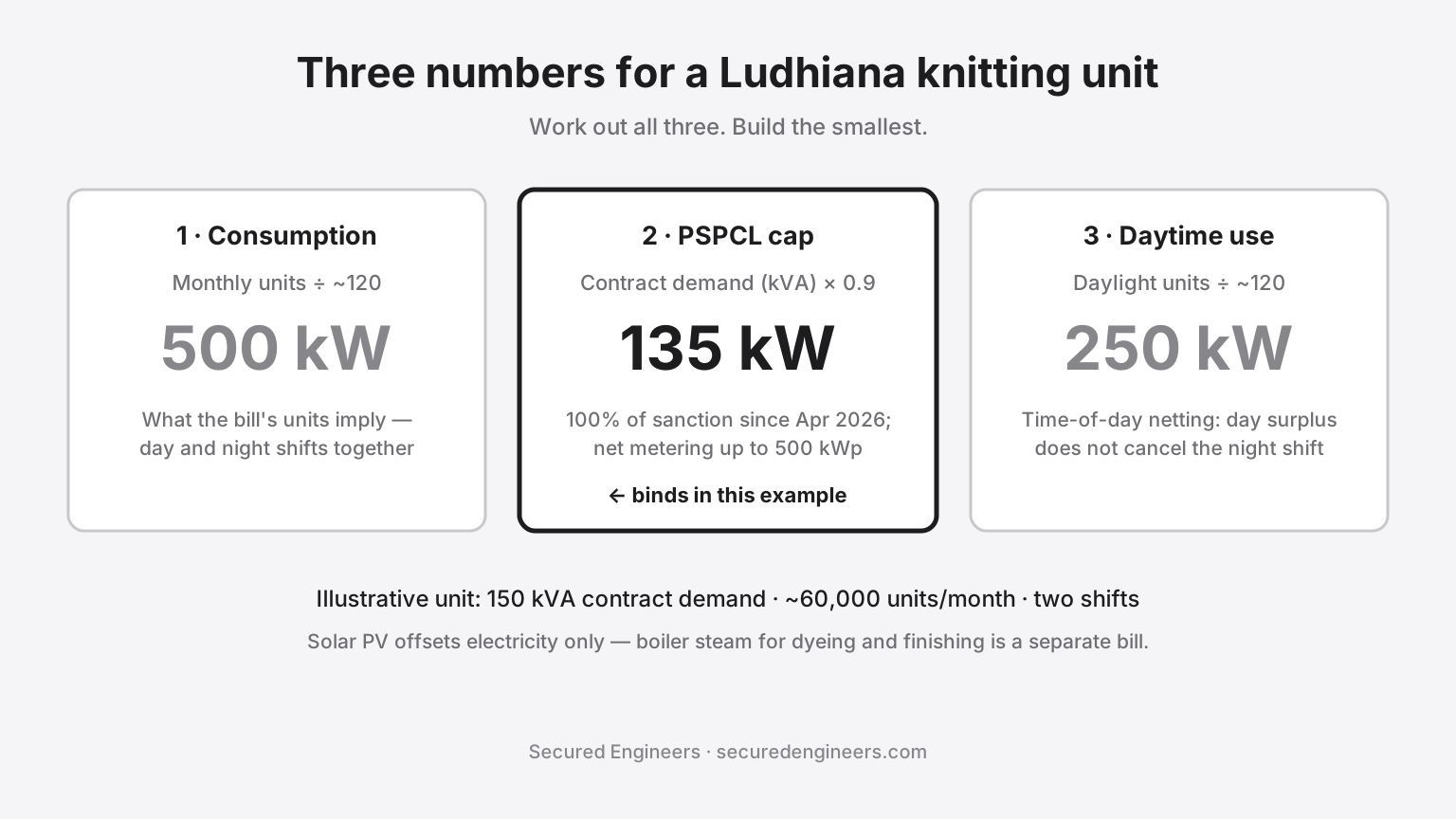
Ludhiana's knitting and hosiery units buy electricity in a pattern most solar proposals ignore. A proposal that starts from the roof, or from the monthly units on the bill, will usually size the plant too large for how the floor actually runs — and the extra capacity is exactly the part that earns the least.
This guide sets out what is different about a textile unit, what the Punjab rules now say, and the order we size in. The general method is in our guide to sizing solar from a factory electricity bill; this page applies it to the textile floor.
Start with the shift pattern, not the roof
A single-shift unit that runs 9 to 6 uses most of what a rooftop plant generates, as it generates it. A unit that knits through two or three shifts uses a large share of its electricity after dark, when the plant produces nothing. The monthly units on the two bills can be identical; the solar case is not.
That matters more in Punjab now because of how surplus is netted. Industrial consumers above 50 kVA — large supply above 100 kVA and medium supply from 50 to 100 kVA — are on a time-of-day tariff under the tariff order in force from 1 April 2026. Under the PSERC rooftop regulations, a time-of-day consumer's solar export is netted within each time block first. Daytime surplus does not cancel the night shift's consumption. It is carried forward within the settlement year, and whatever is still unadjusted at the end of the year is paid at 75% of the feed-in tariff.
So the useful question is not "how many units do we use?" but "how many units do we use while the sun is up?". Your bill splits consumption by time block; that split is the closest thing on paper to the answer.
Which part of the trade you are in changes the answer
"Textile unit" covers several different electrical profiles, and a Ludhiana proposal should start by naming which one it is looking at:
- Knitting. Circular and flat knitting machines with electronic drives, often running two or three shifts, with humidification and air compressors alongside. A large share of consumption can fall after dark.
- Dyeing and processing. Pumps, motors, blowers and effluent treatment run on electricity, but much of the energy goes into steam and hot water from the boiler — which solar PV does not supply.
- Garmenting and stitching. Many small machine loads plus lighting and cooling, usually a single day shift — the profile that self-consumes solar most completely.
- Finishing, packing and warehousing. Pressing, lighting and ventilation, often daytime-heavy but light overall.
Most units combine more than one of these on one connection. That is why the bill's time-block split matters more than the trade name.
Heat is not electricity
Dyeing, washing and finishing run on steam and hot water from a boiler. Rooftop solar PV generates electricity and does nothing for the fuel bill. In a processing unit the fuel can be the larger energy cost — which is a reason to look at heat recovery or solar thermal separately, not a reason to buy more PV.
What PV does offset is the electrical load: knitting machines and their drives, motors, pumps, blowers, air compressors, humidification plant and lighting. Several of those — compressors and humidification in particular — run through the working day and suit solar well. Size against them.
Three numbers, and you build the smallest
- Consumption capacity — monthly units ÷ about 120, the North India average a kilowatt of panels generates in a month (lower in the fog months, higher in summer).
- The PSPCL cap — since 11 April 2026, up to 100% of sanctioned load in kW, or contract demand in kVA × 0.9, measured as the inverter's AC rating. Net metering is limited to 500 kWp; above that, net billing or behind-the-meter arrangements apply. Separately, total rooftop solar on one distribution transformer may not exceed 80% of its rating, so a unit on a busy transformer can be held below its own figure.
- Daytime capacity — the units you consume in daylight ÷ about 120. On a multi-shift floor this is usually the smallest, and the one that should decide the plant.
A worked example — constructed, not a customer's bill
- Contract demand: 150 kVA
- Monthly consumption: about 60,000 units
- Shifts: two, with roughly half the consumption in daylight hours
Consumption capacity: 60,000 ÷ 120 = 500 kW. PSPCL cap: 150 kVA × 0.9 = 135 kW. Daytime capacity: 30,000 ÷ 120 = 250 kW. The cap binds: the plant is about 135 kW of inverter (AC) capacity — the DC array can be somewhat larger — roughly a quarter of what the monthly units suggest. At about 120 units per kW a month that is roughly 16,000 units, comfortably inside the 30,000 the floor uses in daylight, so on working days nearly all of it is consumed on site at the full tariff rather than exported. If this unit's sanction were raised, the daytime figure — 250 kW — would become the ceiling worth designing to, not the 500 kW the units imply.
The weekly holiday
A unit that closes one day a week generates on that day with almost nothing running. What happens to that output depends on the arrangement. Under net metering, it is exported, netted within its time block and carried forward; anything still unused at the end of the settlement year is paid at 75% of the feed-in tariff. Under a behind-the-meter arrangement, PSPCL approval is conditional on exporting nothing, and any injection is unpaid — so the plant has to be held back by a zero-export control on the holiday, and that lost output belongs in the sizing, not in a surprise after commissioning.
Seasonal production — read twelve months, not one
If your production builds up ahead of the selling season, one month's bill will mislead in either direction. Size from twelve months of bills. In Punjab the settlement year runs from 1 October to 30 September; the April-to-March year applies only to a short list of seasonal industries, such as cotton ginning and rice shelling, which does not include hosiery. Surplus from slack months carries forward inside the settlement year and, if it is still unused at the end, is paid at 75% of the feed-in tariff.
The roof, and the fire load under it
Many knitting units sit in older multi-storey buildings or in sheds added one bay at a time. Two checks come before any layout. Structure: whether the slab or the purlins carry the added dead and wind load. Shadow: water tanks, stair rooms and the neighbouring building's upper floors take more of a city roof than the brochure figure allows.
Three more things before any layout. Rights to the roof: many units rent their premises or share a building, so the roof owner's written consent — and a lease that outlasts the plant's payback — come first. Fragile roofs: asbestos-cement and older fibre-sheet roofs are not walked on or drilled; they need an engineer's assessment, and often the answer is a different roof, a new structure or no rooftop plant at all. Lint and dust: a knitting or processing unit puts fibre and dust onto its own roof, so cleaning access, a water point and a cleaning interval set from the first months of generation data should be part of the design, not an afterthought.
Then the fire load. Yarn, fabric and lint make a textile unit a high fire-load building. The DC cable route, the DC isolators and the module layout should keep clear of storage areas and leave access for fire-fighting — the same things your insurer and the fire inspection look at. We design solar and fire protection in Ludhiana from the same office, so the two are checked against each other rather than discovered at inspection.
Drives, capacitors and the power-factor line
Modern knitting machines and many motors run on electronic drives. Before adding a solar inverter or changing a capacitor bank, look at the power-factor line on the bill and, where the floor is drive-heavy, get the harmonics measured. It is cheaper to find an interaction on paper than to chase nuisance tripping after commissioning.
What to send us
Twelve months of PSPCL bills if you have them (all pages — the time-block split and the demand record are usually on the back), your sanctioned load or contract demand, how many shifts you run, and a few photos of the roof. That is enough for us to tell you which of the three numbers binds, what size that gives, and what we would need to check on site. If the honest answer is a smaller plant than the roof would carry, we will say so. Our Ludhiana solar page sets out the PSPCL steps and how to ask for a site-specific proposal.
Frequently asked
How much solar should a hosiery or knitting unit in Ludhiana install?
Work out three capacities and build the smallest. Consumption: monthly units divided by about 120, the North India average a kilowatt of panels generates in a month. The PSPCL cap: 100% of sanctioned load in kW, or contract demand in kVA multiplied by 0.9, with net metering limited to 500 kWp. Daytime use: only the share of your consumption that happens while the sun is up. On a unit running two or three shifts, the daytime figure is usually the one that decides it.
Does solar help a unit that runs a night shift?
Only for the daytime part of the load, and less than the monthly units suggest. Industrial consumers above 50 kVA in Punjab are on a time-of-day tariff, and under the PSERC rooftop regulations a time-of-day consumer's solar export is netted within each time block first. Daytime surplus therefore does not cancel night consumption. It is carried forward within the settlement year, and credit still unadjusted at the end of the year is paid at 75% of the feed-in tariff. A plant sized to the whole month's units sends more of its output into that lower-value bucket.
Can solar panels reduce our boiler or dyeing fuel cost?
No. Rooftop solar PV generates electricity. Steam and hot water for dyeing, washing and finishing come from the boiler and its fuel, and a PV plant does not touch that bill. Size PV against the electrical load — knitting machines, motors, pumps, blowers, compressors and lighting — and look at heat recovery or solar thermal separately if the fuel bill is the larger number.
Our production is seasonal. Does that change the size?
It changes how you read the bill. Size from twelve months of PSPCL bills, not from the busiest month. In Punjab the net-metering settlement year runs from 1 October to 30 September — the different April-to-March year applies only to a short list of seasonal industries such as ginning and rice shelling, which does not include hosiery — so surplus from slack months carries forward inside that year and is paid at 75% of the feed-in tariff if it is still unused at the end.
Is a textile unit's roof safe for solar?
Often, with two checks a generic proposal skips. First, structure: older multi-storey units and lean-to sheds need a load check before modules go up. Second, fire load: yarn, fabric and lint make a textile unit a high fire-load building, so the DC cable route, the DC isolators and the roof layout should keep clear of storage areas and leave access paths for fire-fighting. We design the solar and the fire protection from the same office, so those are checked together.
Related services
More insights
How to choose a solar EPC company in India — the checks that actually matter
Search that phrase and you get 'Top 10' lists written by solar companies about themselves. Here is the evaluation checklist instead — the one we'd want a buyer to run on us.
Solar EnergyThat Cheap Module Quote May Not Be an Eligible Module Anymore. ALMM List-II Changed the Rules.
From June 2026, ALMM compliance extends to solar cells (List-II), not just modules. A module that was fine to buy last year may now be ineligible for government schemes and net metering — and the cheapest quote on your table is the most likely to be built on non-compliant cells.