
Two pumps are not independent if one shared failure stops both
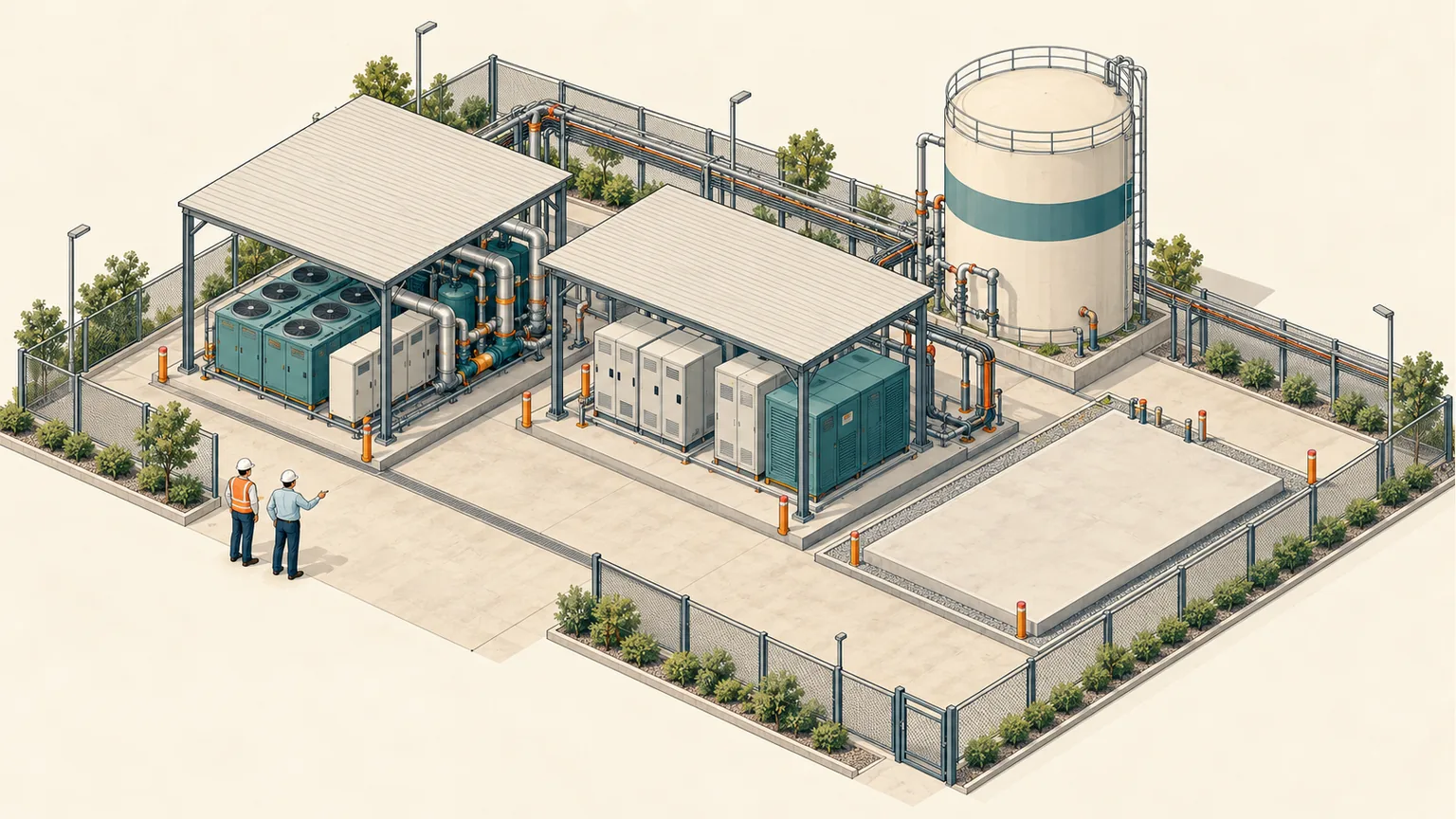
A drawing may show a duty pump and a standby pump, yet both can still depend on one vulnerable power source, controller or common pipe section. Equipment count alone does not describe service resilience.
Trace the required service from its source to the final user. Identify shared dependencies and the consequences of losing each one, including maintenance activities. Some common elements may be acceptable because the business can tolerate their interruption; others can undermine the reason for buying standby equipment. The decision must follow the operating requirement, not a blanket promise that duplication prevents downtime.
Ask the consultant to explain the remaining single points of failure and compare practical improvements. A change in isolation arrangement, control architecture or maintenance procedure may address a different risk from adding another machine. Where a dependency cannot be removed economically, define the recovery plan and the residual exposure so the owner makes an informed choice.
What to confirm before the next decision
- Trace shared power, controls, distribution and supporting utilities.
- Review failure and planned-maintenance cases separately.
- Record the interruption the business must still be prepared to accept.
Ask for this review output: A dependency map showing shared failure points, maintenance-isolation cases, acceptable interruption and practical risk-reduction options.
Discuss the consultancy scope
Share the service that cannot be interrupted and its current arrangement. Request a common-dependency review before purchasing more standby capacity. Request a scoped MEP review. Disciplines, inputs and deliverables are agreed before an appointment; installation and authority decisions are separate.
Continue with the related planning guide or see our MEP design and consultancy scope.
Background guidance: WBDG — Life-Cycle Cost Analysis, WBDG — Determine Project Performance Requirements. These support the planning principles; project requirements and local applicability must be confirmed by the responsible designers.
Do the controls survive when the main power disappears?
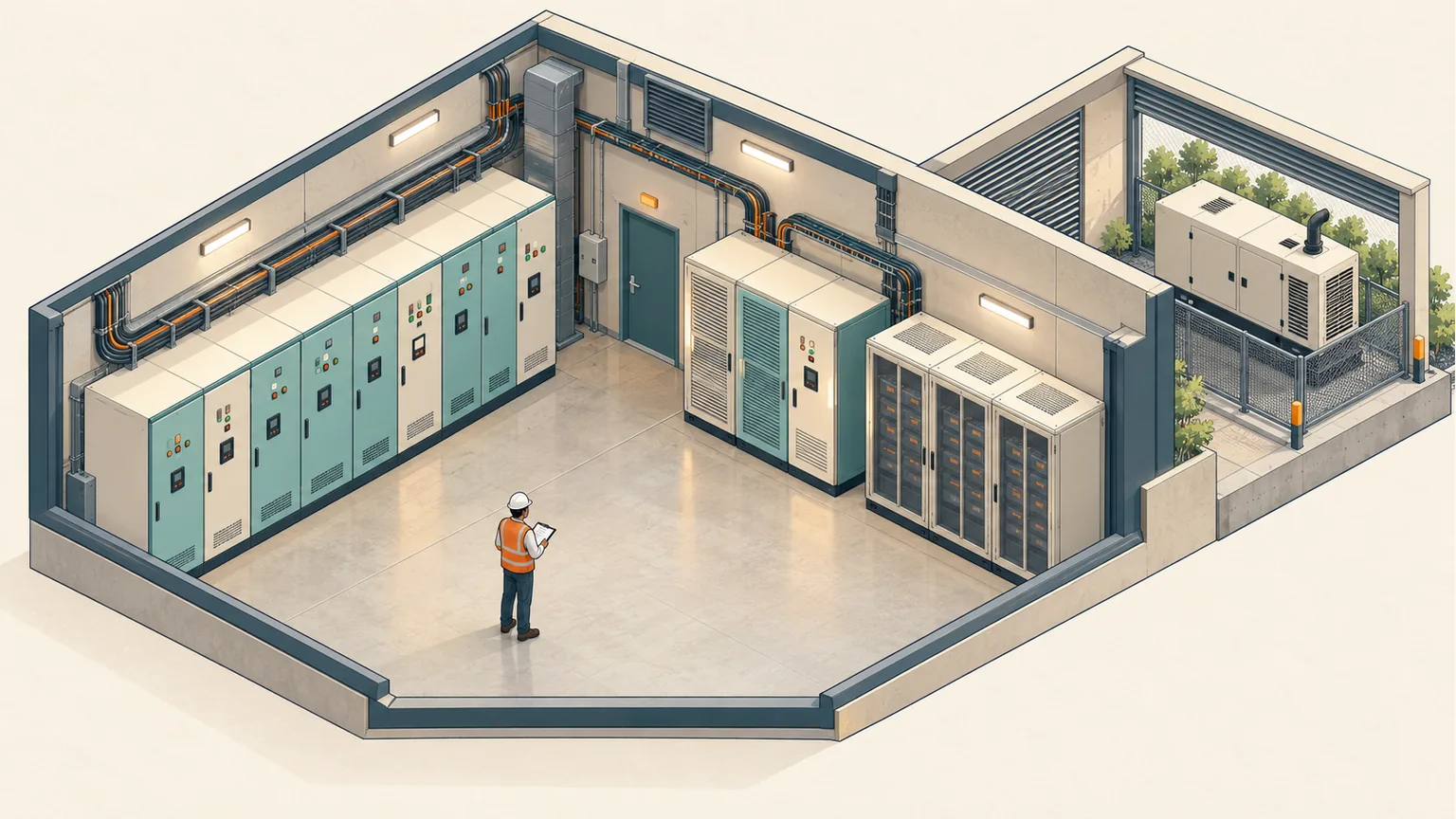
Trace control power separately from main power. Map the supplies to controllers, actuators, communications switches, sensors and interlocks that are necessary for the required operating sequence. Establish the intended response to loss of each supply. Some devices should fail to a defined state; others may need continuity. The responsible designer must determine that behaviour for the application.
The owner should ask for an interface test that proves the sequence, not just a list of backed-up equipment. Vendor packages often stop at their own terminals, leaving a small but consequential gap between systems. A control-power schedule makes these dependencies visible before commissioning becomes a series of unexplained failures.
What to confirm before the next decision
- Identify auxiliary supplies outside the main equipment package.
- Record the required response to power and communications loss.
- Verify recovery behaviour as well as initial transfer.
Ask for this review output: A control-power dependency schedule linking auxiliary supplies, required failure responses and recovery behaviour to integrated test evidence.
Discuss the consultancy scope
Provide the control architecture and critical operating sequences. Request a control-power dependency review. Request a scoped MEP review. Disciplines, inputs and deliverables are agreed before an appointment; installation and authority decisions are separate.
Background guidance: Schneider Electric — Characteristics of Particular Sources and Loads, Schneider Electric — Downstream LV Network Protection. These inform the review principles; local requirements, project applicability and any necessary approvals must be confirmed by the responsible specialists.
Related services
Related guides
- Your BOQ Said 1,000 M. Site Said 1,470 M. Who Pays for the Missing 470 M?
- Perovskite Cells Promise 30%+ Efficiency. Your Roof Doesn't Have Ten Years to Wait and See.
- The Future of MEP Engineering: 5 Technologies to Watch
- The MSME Act Just Changed. Here Is What It Means for a Factory Owner.
- The Chiller Gave Three Weeks of Warning Before It Failed. Nobody Was Listening.
- MEP Design for a High-Rise: Pressure Zoning, Fire Lifts and Vertical Distribution
Related on this site
- termPPA (Power Purchase Agreement)
- termMEPF
- termOpen Access (Solar)
- serviceStructured Cabling & Networking (Low Voltage / ELV)
- serviceInverters (String / Central) (Solar EPC)
- calculatorSolar Roof Load Calculator
- calculatorSolar Shadow Free Area Calculator
- buyer's guideHow to Select an MEP Contractor
- guideCTE/CTO pollution consent
- guideEnvironmental clearance (EIA 2006)
More on Project Delivery & Commercial · all insights