
The Panel Room Was Built and Tested in a Factory 200km Away. Who Inspects It Now?
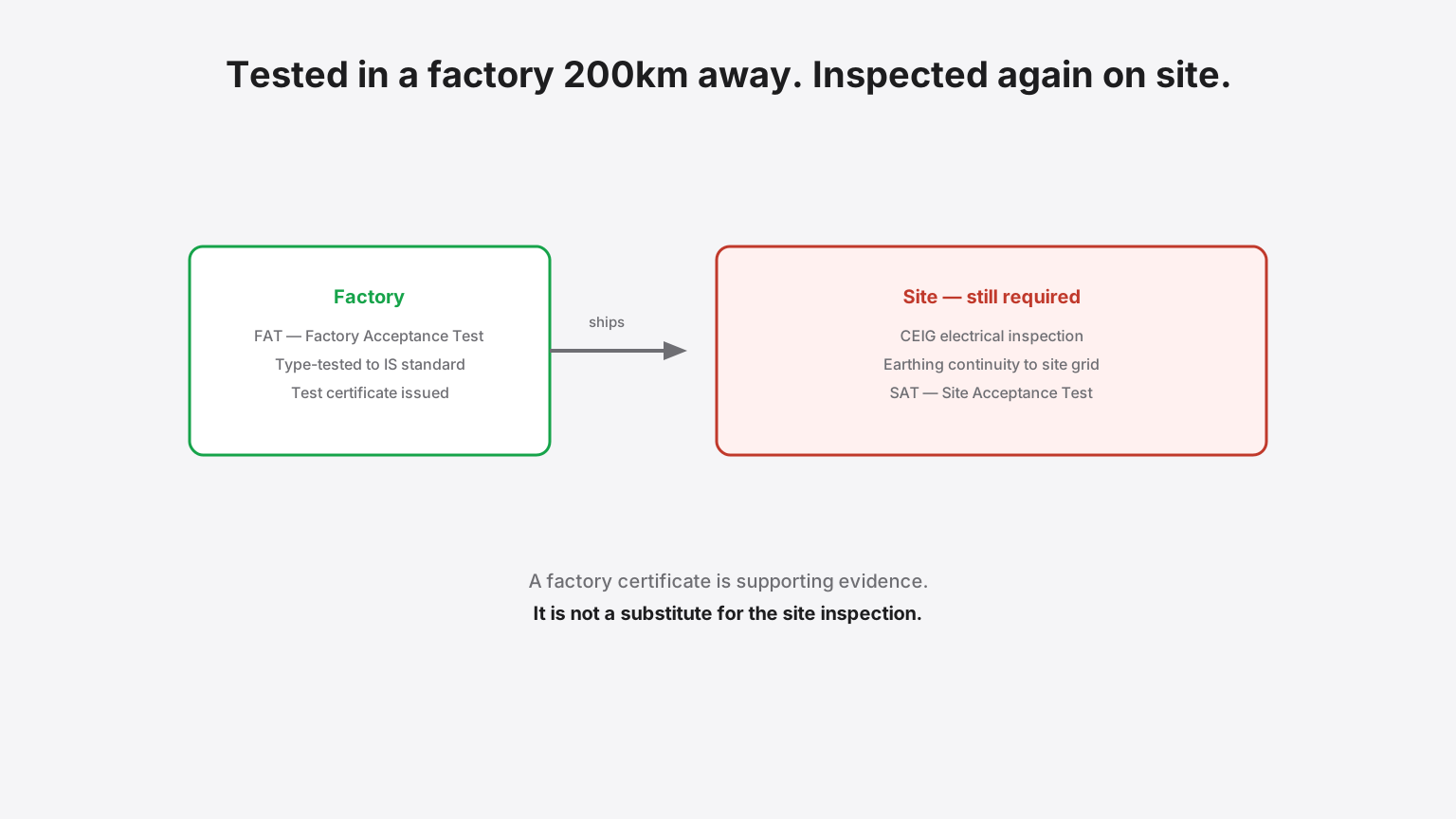
Prefabricated MEP — packaged pump skids, factory-assembled plant rooms, pre-wired LT panel assemblies shipped and dropped into place — is genuinely attractive for programme reasons: factory conditions produce more consistent quality, and site duration for that scope collapses from weeks to days. The question that gets asked too late is a regulatory one: a factory-tested assembly still needs to satisfy the site electrical inspector (CEIG) and the Fire NOC authority once installed — factory testing doesn't automatically substitute for site inspection.
What actually transfers from factory to site
| What factory testing can establish | What still needs site verification |
|---|---|
| Internal wiring correctness and workmanship (via a factory test certificate) | Correct site installation — termination, earthing continuity to the site earth grid, and cable entry sealing |
| Panel type-testing to the relevant IS standard | Whether the specific panel as installed matches the type-tested configuration — field modifications can invalidate the certification |
| Factory acceptance test (FAT) results for functional performance | Site acceptance test (SAT) — CEIG and most facility owners will still require this before energisation, regardless of FAT results |
A factory test certificate is genuinely useful evidence — it can speed up the site inspection by giving the inspector documented confidence in workmanship — but it is supporting evidence, not a substitute for the site inspection itself. Buyers who assume "factory-tested" means "site inspection skipped" are the ones who discover otherwise on commissioning day.
The logistics constraint that's easy to miss
A packaged skid or plant room has to physically reach the site and its final position — road width, turning radius, crane access and the building's own construction sequence all constrain what size and weight of prefabricated assembly is actually deliverable. A design finalised around a prefab assembly that turns out too large for the site access route is an expensive discovery to make after ordering rather than before.
Where prefab genuinely pays off
- Repeated, identical scope — multiple identical pump rooms or panel rooms across a multi-building campus, where factory consistency compounds across units.
- Site programme genuinely constrained — a congested urban site, or a live-facility retrofit where minimising on-site working time has real value beyond cost.
- Specialized environments — a controlled factory environment producing more reliable results than a dusty, temperature-variable site for precision assembly work.
What we do differently
Our electrical and turnkey EPC teams scope prefabrication decisions against actual site access constraints and CEIG's site-inspection requirements upfront — so a packaged assembly is chosen because it fits the site and the approval process, not just because the brochure looked efficient.
More insights
The Leak Started in March. You Found It in the August Water Bill.
Buried and concealed pipework fails silently. On an industrial site the loss is discovered by a bill, a wet patch or a sinkhole — all of them late. Flow monitoring finds it in days by watching for consumption that never stops.
IndustrialThe Rain Was Predictable. The Waterlogging Was a Design Choice.
July 2026's monsoon has brought building collapses in Delhi and Pune, a Pimpri-Chinchwad structure crushed by a garbage mound loosened by rain, and the same waterlogged roads reappearing in the same low-lying pockets they flood every single year. "This happens every year" is usually the sign of a stormwater and site-grading decision made once at design stage, never revisited, and now compounding with every monsoon since.