
Lessons from industrial MEPF project execution
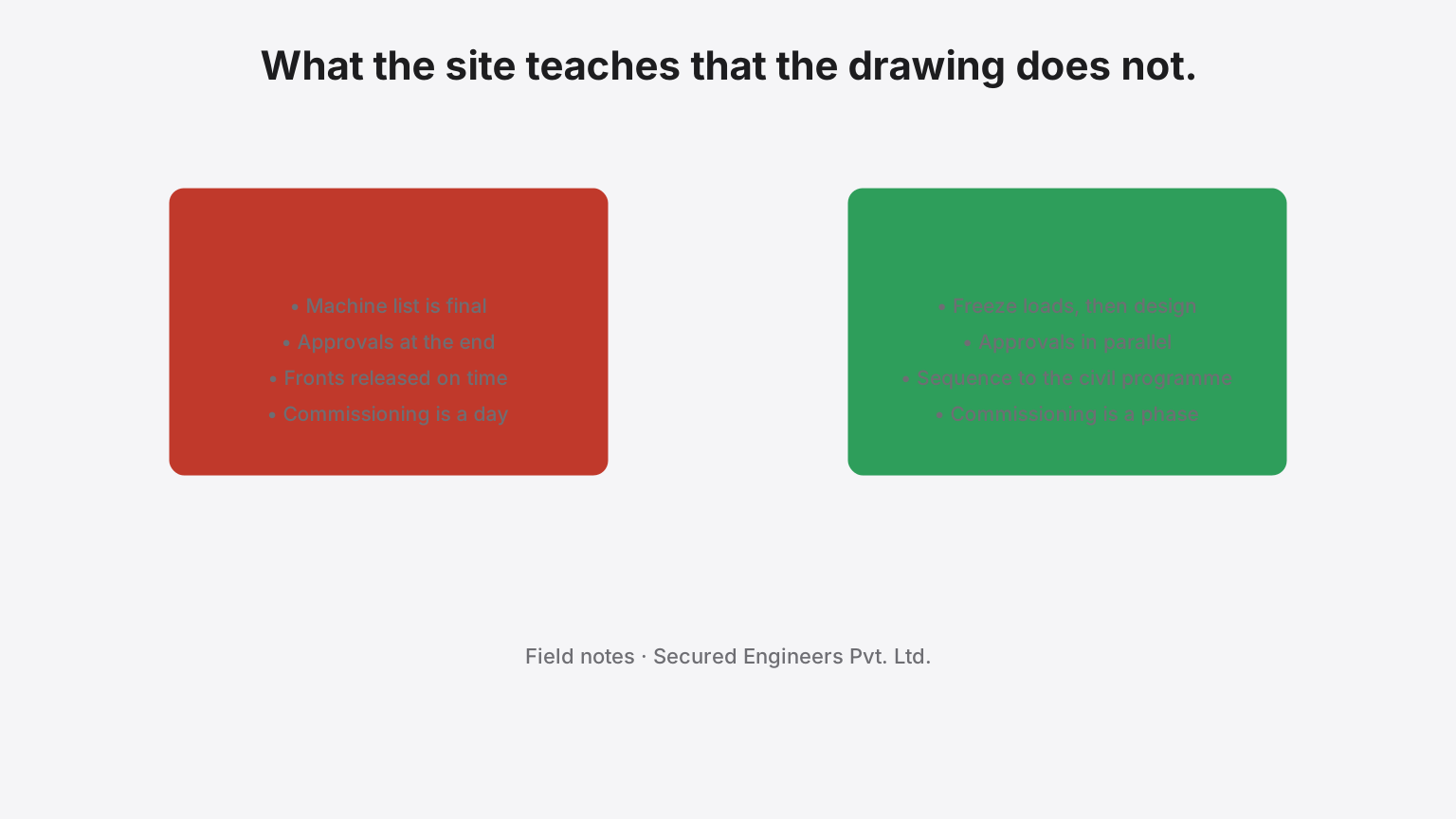
Every industrial MEPF project teaches the same lessons in a slightly different order. These are the ones our project engineers carry from one to the next, written as the practice they now follow rather than as the incidents that taught it.
1. Freeze the loads before the design, and expect them to move anyway
The machine list at award is not the machine list at commissioning. Transformers, DG sets, panels and cable are sized to a load, and a load that grows after procurement is a variation at best and a blocked energisation at worst. The practice: a signed load freeze before the single-line diagram is issued, a stated margin for growth, and a change procedure that prices a new machine before it is ordered.
2. Approvals run in parallel with procurement, not after execution
The provisional Fire NOC, the CEIG drawing approval and the DISCOM sanction each need drawings that exist only once the design is done, and each takes the authority's time. Filed as the equipment is ordered, they are ready when the installation is; filed after, they are the item on the critical path with nobody to blame but the sequence.
3. Sequence to the civil programme, in writing
MEPF cannot start until the civil contractor releases the front — the slab, the plant room, the trench — and a programme that assumes fronts on the day they are promised is fiction. The practice: a front-release schedule agreed with the civil contractor and the client, and a services programme built on it with float.
4. Coordinate the ceiling void before anything is fabricated
Ducts, cable trays, sprinkler mains, drainage and the beams they all have to pass. Resolved on a combined services drawing before fabrication, the clashes cost hours; resolved on site, they cost the sprinkler layout. See how we coordinate the trades.
5. Test as you go; record as you test
Under-slab drainage before the slab; cable insulation before termination; pipework pressure before it is concealed. The tests that cannot be repeated later are recorded at the time or never. And a test without a record does not exist for the CEIG, the fire officer or the handover.
6. Commissioning is a phase with its own programme
Individual systems, then the integrated cause-and-effect between fire alarm, HVAC, lifts and access control, then the authority inspections, then energisation. Compressed into the last fortnight, something is always untested at handover. The practice: a commissioning programme issued with the construction programme, with the permanent power date on it.
7. The pump room and the substation are the two rooms to get right first
Both are inspected by a statutory authority against approved drawings; both are the last things a client wants rebuilt. They are surveyed, drawn, approved and built before the rest of the services, because everything depends on them.
8. Handover is a document set, not a walk-round
As-builts, test certificates with values, the approvals file with renewal dates, warranties in one register, O&M manuals, training. Assembled through the project rather than at the end. The client will open this set for years; the walk-round is forgotten in a week.
9. Live plants are a different discipline
An expansion inside a running factory needs shutdown windows, temporary supplies and sequencing around production, agreed with the plant team before mobilisation. Improvised, they cost the client's output, which is the one cost no contractor can make good.
These lessons are why the turnkey lifecycle is laid out as fourteen stages with a deliverable at each, and why the buyer's guide asks for the machine list and the approvals status before a quotation.
Frequently asked
What is the most common cause of delay on an industrial MEPF project?
Approvals started late — the Fire NOC and CEIG treated as end-of-project formalities when both need drawings and design decisions taken months earlier — and, close behind it, commissioning compressed into the last fortnight.
Related services
Related guides
- The Site Is Insured. The Chiller That Failed on Test Is Probably Not.
- You Paid for 4,200 Metres of Cable. The Drawings Account for 3,600.
- Supplying a PSU? Your Invoice Now Has to Go on TReDS.
- The Duct and the Beam Both Fit. On Separate Drawings.
- The Thresholds Moved. Your Factory May Have Changed Category Without Doing Anything.
- Factory Licence in Maharashtra: DISH Process, Plan Approval and Stability Certificate
Related on this site
- termPPA (Power Purchase Agreement)
- termMEPF
- termOpen Access (Solar)
- serviceCCTV & IP Video Surveillance (Low Voltage / ELV)
- serviceBattery / Hybrid Storage (Solar EPC)
- calculatorProject Delay Cost Calculator
- calculatorSTP Capacity Calculator
- buyer's guideHow to Select a Fire Protection Contractor
- guideFire NOC for factories
- guideCEIG approval for factories
More on Project Delivery & Commercial · all insights