
Peak Shaving Is One Battery Use Case. Zero Tolerance for a Supply Gap Is a Different Design Problem.
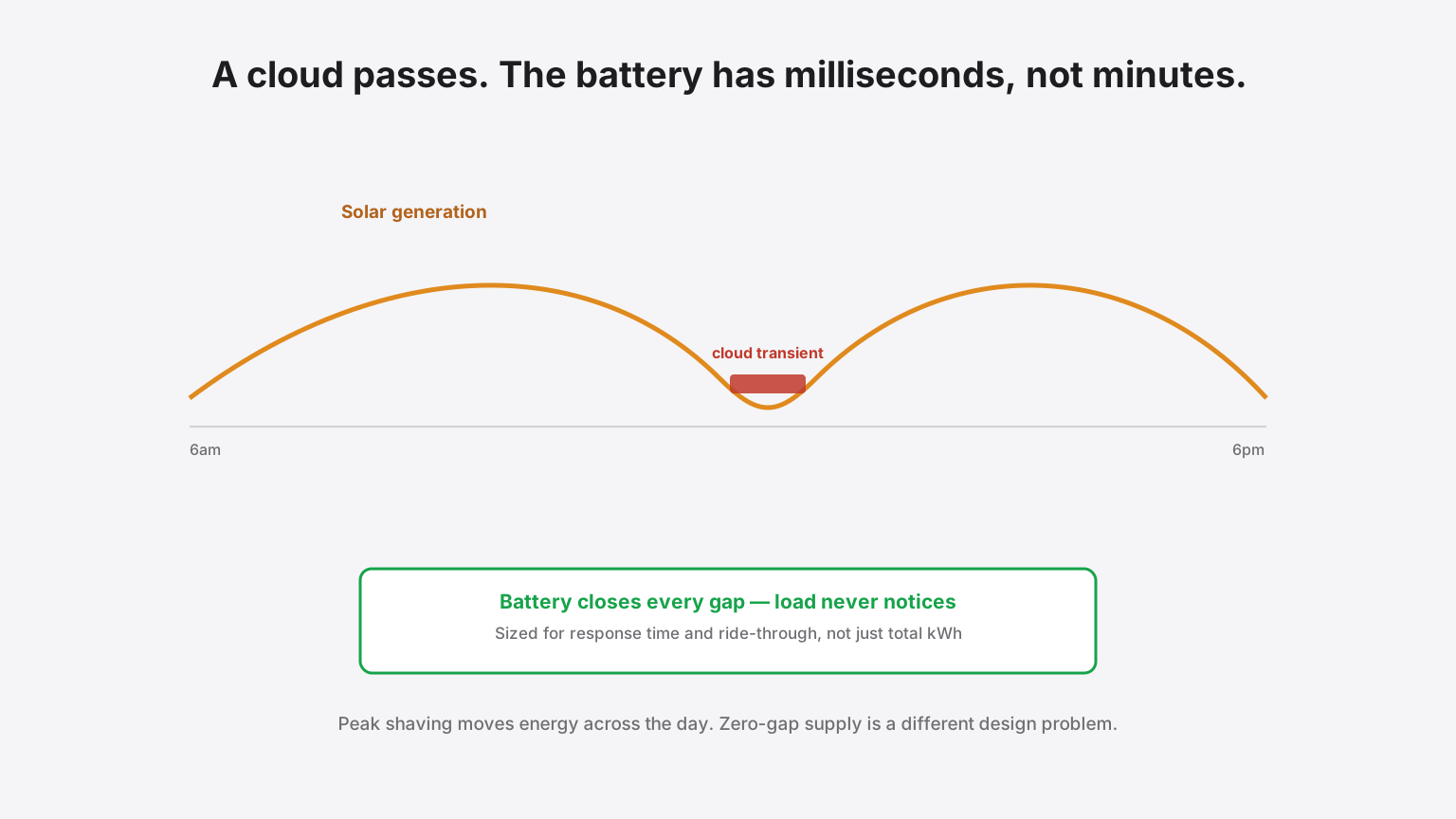
Our BESS and peak-shaving guide covers the most common battery use case: flattening a factory's evening demand peak and cutting DG hours. That is a load-shifting problem — move stored energy from an off-peak window into an on-peak one. A different class of buyer has a harder requirement: a plant that cannot tolerate any gap in supply at all, not even the two-to-ten seconds a diesel genset takes to detect a failure, start and pick up load.
Pharmaceutical cleanrooms, server rooms, certain continuous chemical processes and cold-chain facilities fall into this category. For them, the question isn't "how much can we shave off the peak" — it's "can the battery genuinely close the gap every single time, including the fifty times a year a cloud passes over the array without warning."
Why this is a different sizing exercise
| Peak shaving (the common case) | Zero-gap continuous supply |
|---|---|
| Sized against a known daily demand curve | Sized against the worst plausible transient, not the average day |
| A missed cycle costs a slightly higher bill | A missed cycle costs a batch, a cleanroom excursion, or a server outage |
| DG as backstop is acceptable | DG start time itself is the gap that has to be covered |
| Discharge duration matters most | Response time (milliseconds) and ride-through duration both matter |
The battery, inverter and controls for this application are specified against response time in milliseconds and a ride-through duration long enough to cover a DG start reliably — usually a materially smaller, faster-responding system than a peak-shaving battery, paired with controls that can detect a solar dip or grid disturbance and switch over before the connected load even notices.
Where solar actually fits into "24/7"
Solar alone is never the answer to continuous supply — it produces roughly 5-6 peak-equivalent hours a day and nothing at night. What solar-plus-storage genuinely contributes to a zero-gap design is reducing how often and how hard the DG or grid backup has to work, and — sized correctly — riding through short transients without any switchover event at all. The DG or grid connection still has to be sized as if the solar and battery weren't there; storage removes routine wear and fuel cost, not the underlying redundancy requirement.
What belongs in the design brief
- The actual tolerance window — is a 2-second gap acceptable, or does the process need true no-break transfer? This single answer changes the topology.
- A realistic count of cloud-transient events per year from local irradiance data, not an assumed "sunny site" figure.
- Whether the battery needs to also serve peak shaving on non-critical days, which changes duty cycle and warranty terms — see the sizing mistakes in our peak-shaving guide.
- Fire safety and separation for the battery enclosure, identical to any lithium BESS installation — covered in our battery fire-safety guide.
What we do differently
Our Solar EPC and electrical engineering teams design the controls and switchover logic around your actual tolerance window, not a generic battery sizing spreadsheet — because for a cleanroom or a server room, the transfer behaviour in the first two seconds matters more than the total kWh on the nameplate.
More insights
When One Inverter Fails, How Much of Your Plant Fails With It?
The inverter decision quietly sets your solar plant’s availability, monitoring granularity and 12-year replacement bill. String, central, or micro — the honest selection logic for Indian C&I rooftops, beyond brand loyalty.
Solar EnergyWhy Most Industrial Solar Underperforms (It Starts on Day 1)
Solar is not a product you buy — it is an engineering outcome. The decisions made before a single panel goes up quietly decide whether your plant saves money or loses it for 25 years.