
The New Chiller Runs on a Mildly Flammable Refrigerant. Your Plant Room Was Never Designed for That.
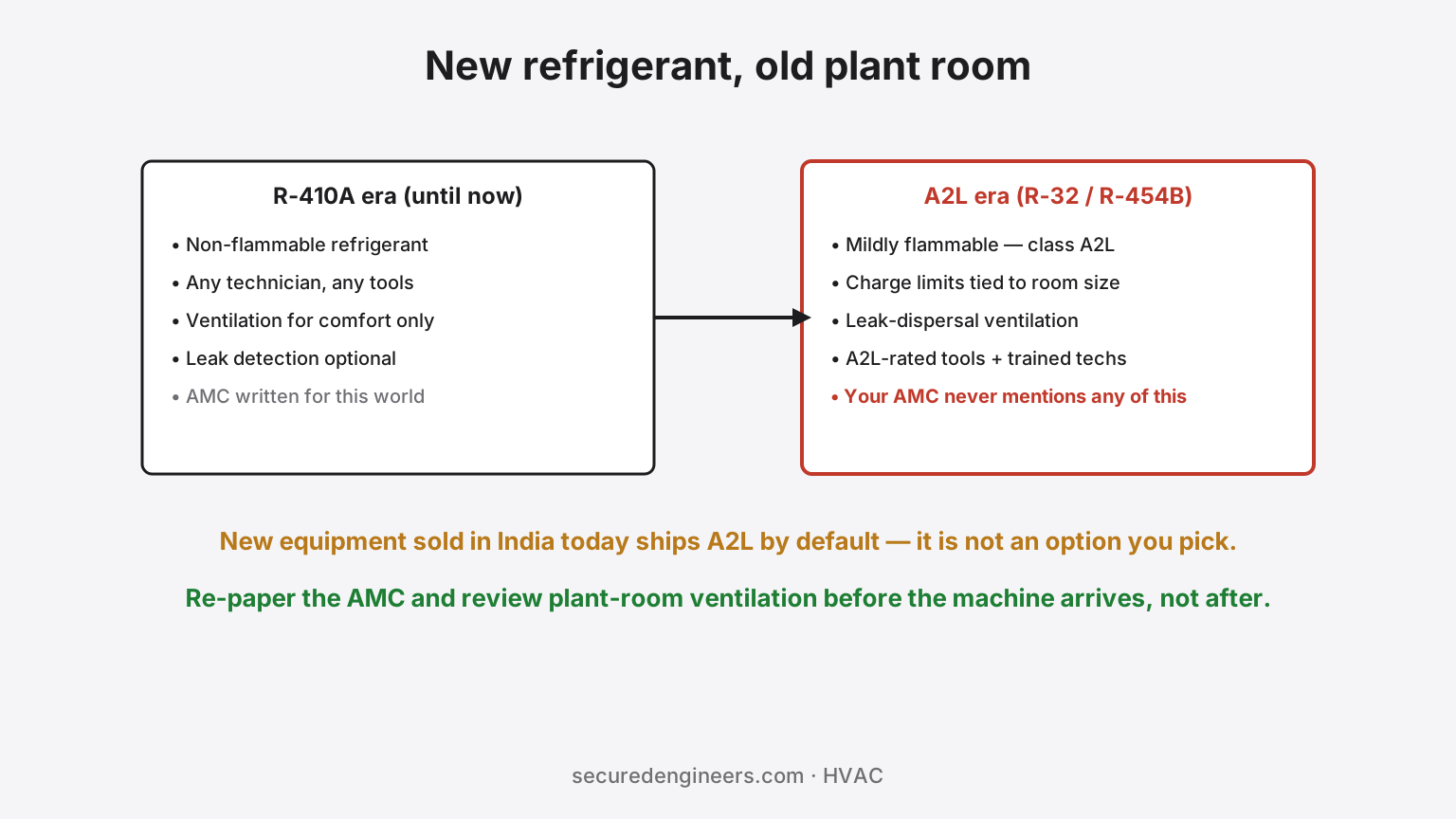
For fifteen years, R-410A was the safe, boring answer in Indian air conditioning — non-flammable, universally serviced, stocked by every refrigeration supplier. That era is closing. Under the global HFC phase-down that India has committed to, manufacturers have moved new chillers, VRF systems and splits to lower-GWP refrigerants — and the ones that won are R-32 and blends like R-454B, both classified A2L: mildly flammable. Walk into a showroom for new equipment today and A2L is not an option you select; it's simply what the machine ships with.
The refrigerant itself is well-proven — millions of R-32 units run worldwide. The problem is everything around it: plant rooms, service practices and AMC contracts in India were all built for an era when the refrigerant in the pipe could not ignite. "Mildly flammable" is a much lower hazard than LPG, but it is not zero, and the codes and manufacturer requirements that come with A2L equipment treat it accordingly.
What actually changes for a building owner
| Area | R-410A era | A2L era |
|---|---|---|
| Plant-room / indoor unit siting | Charge size limited mainly by cost | Charge limits tied to room volume — a big system in a small enclosed space may need mitigation or relocation |
| Ventilation | Comfort and heat rejection only | Leak-dispersal ventilation matters; dead pockets where refrigerant (heavier than air) can pool become a design issue |
| Leak detection | Optional, mostly for gas-loss economics | Increasingly required by manufacturer installation manuals for larger charges, interlocked with ventilation |
| Servicing | Any refrigeration technician | Technicians trained for flammable-refrigerant handling, with A2L-rated recovery machines, gauges and leak detectors |
| Hot work near circuits | Routine | Brazing on a charged or poorly evacuated A2L circuit is exactly the ignition scenario the class exists to prevent |
The AMC contract nobody re-read
Here is the quiet failure mode: a building replaces a failed VRF outdoor unit or adds a new chiller, receives an A2L machine because that's what's sold now, and keeps running the same AMC that was drafted five years ago. That contract's scope, method statements and technician requirements were written for R-410A and never mention flammable-refrigerant handling at all — no A2L-rated tools, no hot-work controls, no leak-check protocol matched to the new equipment's manual. The AMC vendor services the new unit the old way, and the owner carries the gap: if an incident ever occurs, the first question an insurer or investigator asks is whether the equipment was maintained per the manufacturer's requirements. The economics of getting AMC scope right are covered in our AMC economics guide — A2L adds a safety dimension on top of the cost one.
Retrofit or replace as R-410A supplies tighten
The phase-down squeezes R-410A from the supply side: virgin gas gets progressively scarcer and pricier, and service-market availability follows. For owners of large R-410A plants, that sets up a decision with a clock on it:
- Keep running R-410A equipment — fine for now, but budget for rising gas prices on every major leak repair, and expect availability to get patchier over the equipment's remaining life.
- Do not "drop-in" retrofit A2L into R-410A equipment — R-32 and R-454B are not sanctioned drop-ins for machines designed for R-410A; components, safety devices and certifications don't transfer. Anyone offering this cheaply is offering a liability.
- Plan replacement around remaining life — a ten-year-old chiller nearing overhaul is a candidate for early replacement with an A2L machine (usually more efficient too); a three-year-old plant is not. The calculation is remaining-life value versus rising service cost, made per machine, not sitewide.
New projects have it easier: choose the system architecture with A2L in mind from day one — charge volumes, plant-room sizing and ventilation designed for the refrigerant actually being installed. That interacts with the system-selection question itself, covered in our VRF vs chiller comparison — large VRF refrigerant charges running through occupied spaces are precisely where A2L charge-limit rules bite hardest.
What to do this quarter
Three low-cost moves: first, inventory which of your installed machines are already A2L — many owners genuinely don't know. Second, re-paper the AMC: scope, tools and technician certification aligned to the equipment actually on site, something our AMC & maintenance team now writes into every new contract as standard. Third, before any replacement purchase, size the load properly — our AC tonnage calculator is the starting point — and have the plant-room and ventilation design reviewed against the new machine's A2L installation requirements before it's ordered, not after it arrives on site.
More insights
Chiller Maintenance Services: AMC Scope and Buyer Checklist
Compare chiller AMC scopes, exclusions, emergency response commitments and service reports before requesting a maintenance proposal for your facility.
HVACYour Architect Chose the Glass. Your Electricity Bill Is Paying for It.
The showroom looks stunning and never gets cold enough. The west-facing offices cook every afternoon. The AC plant was sized by thumb rule for a building whose façade admits a small furnace of solar heat every clear day. How glazing decisions drive HVAC destiny — and what to do at design, and after.