
What we check before a rooftop solar EPC proposal
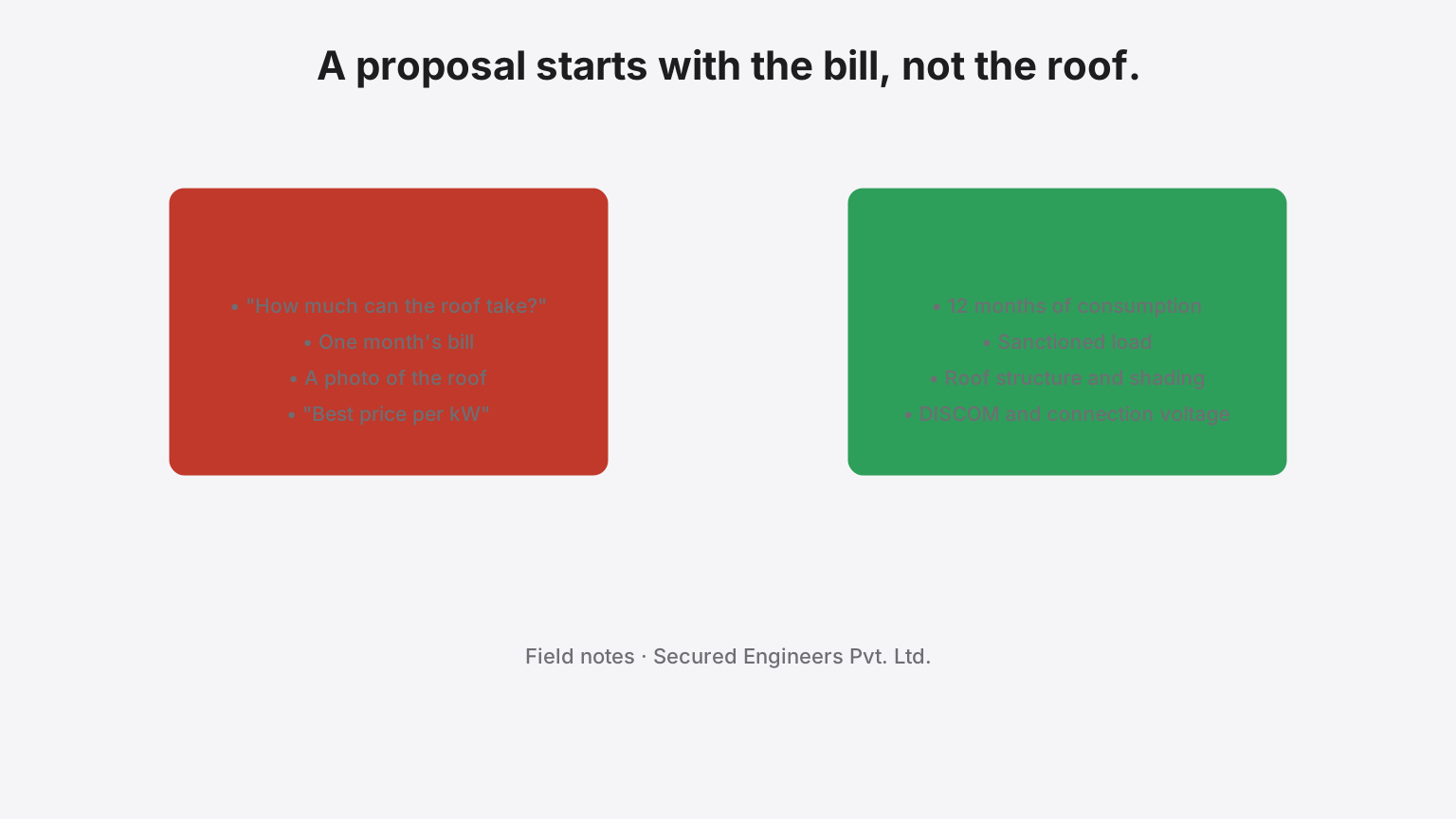
The most common solar enquiry is "how much can our roof take?" — and the honest answer is that the roof is the third question. This is what our solar engineers check before a capacity is proposed, in the order the answers constrain it.
1. Twelve months of electricity bills
Consumption by month, the sanctioned load, the tariff and the demand charges. The plant is sized to consumption — to the daytime share of it, under net-metering — and the bills are the only record of what that is. A single bill sizes the plant to a season.
2. Sanctioned load and the metering model
Net-metering capacity is capped at or near the sanctioned load in most states; gross-metering, captive HT and open-access models have different rules. Which model applies, and what the cap is, decides the maximum before the roof is measured. The sanctioned-load check runs this first.
3. Load profile — day against night, weekday against weekend
A plant that runs three shifts uses daytime solar directly; a single-shift plant that shuts on Sundays exports on Sundays, at whatever the export tariff is. The profile decides how much of the generation displaces retail units and therefore what the savings are.
4. The roof — type, age, structure, usable area
RCC or metal sheet; its age and condition; what it can carry, from the structural drawings or a structural engineer's assessment; and the area that is actually usable once plant, parapets, skylights, vents and maintenance access are excluded. An old sheet roof is assessed before it is promised an array.
5. Shadow analysis
Adjacent buildings, the plant's own chimneys, water tanks and AC units, trees, and the sun's path through the year. The shadow-free area is what the array is laid out on; the rest of the roof is not solar roof.
6. DISCOM, connection voltage and the point of connection
Which DISCOM, LT or HT connection, where the LT panel is, whether it has a spare way, and the cable route from the roof. HT connection brings the CEIG into scope; the DISCOM's connection standard sets the protection the inverter must be configured to.
7. Approvals in the way
Net-metering feasibility, CEIG where applicable, a structural stability certificate, and any scheme requirements — ALMM modules, DCR — for a subsidised or government-linked project. Filed before installation, or the plant waits.
8. Storage, expansion and what the client actually wants
Backup for critical loads, load-shifting for peak tariffs, a future expansion the roof should leave room for. A plant is easier to design for these now than to retrofit.
What commonly changes the proposed capacity
- The sanctioned load is lower than the roof-limited capacity — the cap decides.
- Daytime consumption is a fraction of the total; sizing to the total over-exports.
- The roof cannot carry a standard structure without strengthening.
- Shading removes a large part of the apparent area.
- The LT panel has no spare way, or the point of connection is far from the roof.
What the checks produce
A proposal sized to consumption and sanctioned load, on a structure the roof can carry, with the approvals named and the yield stated with its assumptions — which is what the evaluation checklist tests for. The solar calculator frames the commercial case before the survey; the solar EPC page describes the delivery.
Frequently asked
Why does a solar proposal need twelve months of bills?
Because consumption is seasonal and net-metering settles against it. One month's bill sizes a plant to a season; twelve size it to the year, and show the sanctioned load, tariff and demand charges the savings depend on.
Can a solar plant be bigger than the sanctioned load?
Under net-metering in most states the plant capacity is capped at or near the sanctioned load. A plant sized past it either needs a sanctioned-load increase — a DISCOM process with its own cost — or a different metering model.
Related services
Related guides
- A Plant Down 8% Looks Exactly Like a Plant Working Fine.
- Three Vendors, One Roof, Three Different Generation Figures.
- Perovskite Cells Promise 30%+ Efficiency. Your Roof Doesn't Have Ten Years to Wait and See.
- How to Compare Solar EPC Quotes for a 500 kW Plant: A Line-Item Checklist
- Solar EPC for Factories in Gujarat: DISCOM Rules, Approvals and Cost
- Solar EPC RFQ Template for an Industrial Plant (Copy and Issue)
Related on this site
- termShadow-Free Area
- termGross Metering
- termOpen Access (Solar)
- serviceO&M & Performance (Solar EPC)
- serviceBattery / Hybrid Storage (Solar EPC)
- calculatorMEP Maintenance Budget Calculator
- calculatorSolar Subsidy Calculator
- buyer's guideHow to Select a Solar EPC Contractor
- guidePESO licence for diesel storage
- guideFactory licence and DISH approval
More on Solar & Renewables · all insights