
A Lightning Rod Isn't a Lightning Protection System. It's One Component of One.
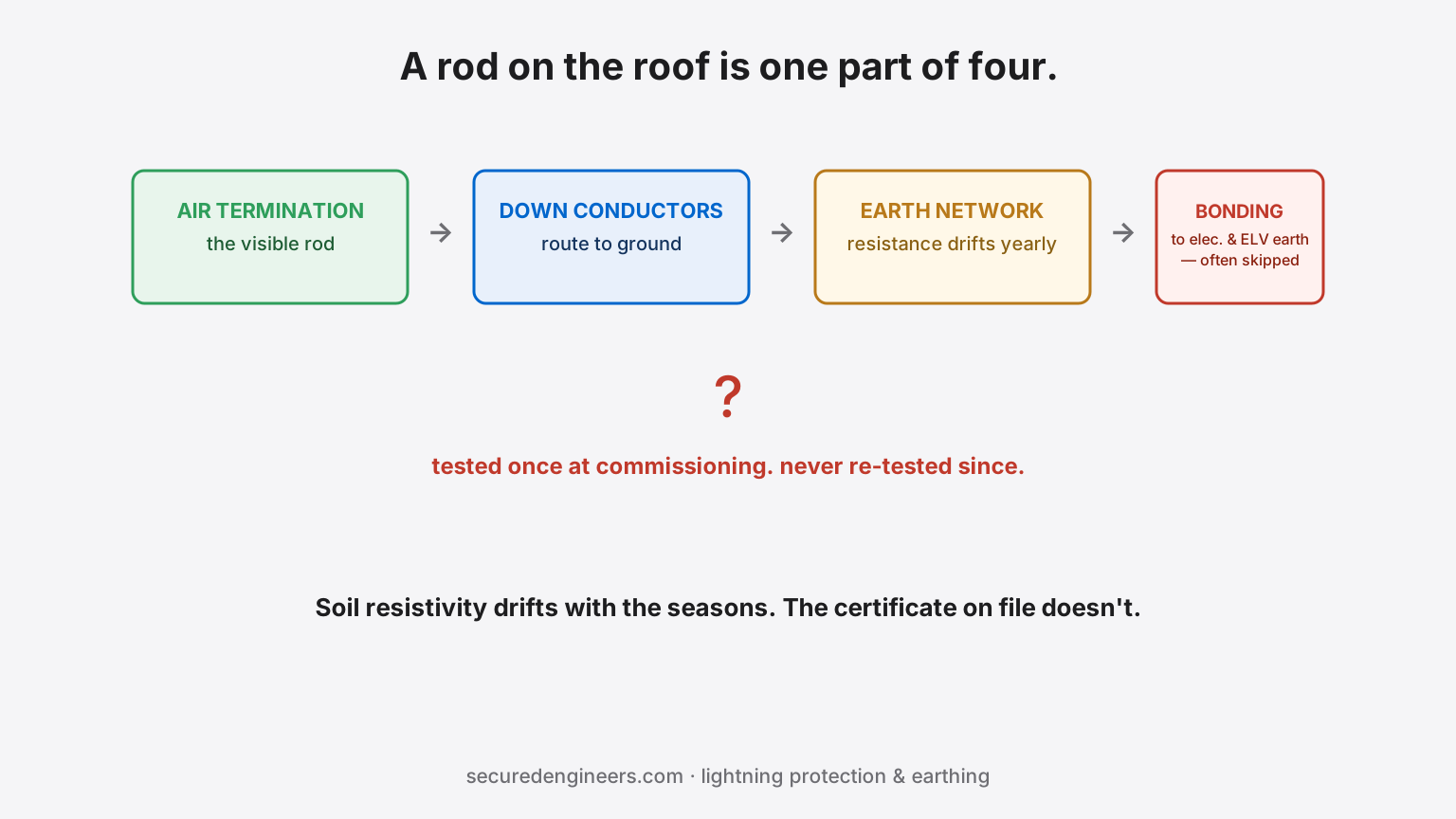
Ask a facility manager whether the building has lightning protection, and the answer is almost always yes — pointing to a metal rod visible on the roofline. That rod is the air termination component. On its own, it is not a lightning protection system. A complete LPS is a continuous, low-resistance path from that rod, through down conductors, into a tested earth termination network, bonded correctly to the building's other earthing systems — and every link in that chain needs to be verified, not assumed, because a system that looks complete from the roof can be broken or degraded anywhere along the path to ground.
The four components of a real LPS — and where each one quietly fails
| Component | Function | Common failure mode |
|---|---|---|
| Air termination | Intercepts the strike at the highest points | Positioned without a proper zone-of-protection calculation, leaving parts of the roof unprotected |
| Down conductors | Carry the strike current to ground | Route bends too sharply, or run too close to other services, both of which increase induced-voltage risk to nearby systems |
| Earth termination network | Dissipates the current into the ground | Earth pit resistance was measured once at commissioning and never re-tested — it drifts over years |
| Bonding | Ties the LPS earth to the building's electrical, ELV and structural earthing | Treated as a separate, unconnected earth — creating dangerous potential differences during a strike instead of one unified system |
Why earthing resistance isn't a "once and done" number
- Soil resistivity changes seasonally — moisture content varies significantly between monsoon and dry season, and a pit that measured well in one season can read very differently in another
- Soil composition around the pit degrades or shifts over years of construction activity, landscaping changes, or simple corrosion of the electrode itself
- Commissioning-time testing is usually the only test ever done — the certificate from years ago gets filed and never revisited, the same documentation-without-verification pattern seen across fire system AMC neglect
- A degraded earth pit gives no visible warning — unlike a tripped breaker or an alarm, high earth resistance doesn't announce itself until it matters during an actual strike or fault event
Why bonding gets skipped even when each earth pit individually tests fine
Buildings often have separate earthing for the LPS, the electrical system, and ELV/IT systems — installed by different contractors at different times, each tested independently and each passing. What frequently doesn't happen is verifying these are properly bonded into a single equipotential system. Without that bonding, a lightning strike can create a large voltage difference between the LPS earth and the electrical system earth, which is exactly the condition that damages equipment and creates shock hazards — the opposite of what the individually-tested components were meant to prevent. This is the same coordination gap that shows up in ELV system integration generally: systems that are individually correct but never verified together.
What periodic verification should actually include
- Earth pit resistance re-testing at a defined interval, not just at commissioning — and ideally in the season with the least favourable soil moisture, so the number reflects a worst-case condition
- Physical inspection of down conductors and connections for corrosion, damage or unauthorised modification (a cable tray or new rooftop equipment installed across a down conductor's path, for example)
- Bonding verification across LPS, electrical and ELV earthing — confirmed as one system, not assumed compatible because each was separately compliant
- Zone-of-protection recalculation whenever rooftop equipment changes — new HVAC units, solar panels, or antennas can shift what's actually covered by the existing air termination layout
Our electrical infrastructure and testing & commissioning teams run earthing and LPS verification as a standing item in AMC scopes, rather than a one-time commissioning exercise that's never revisited.
FAQs
How often should earth pit resistance be re-tested?
There's no single universal interval, but annual testing — and after any major construction or landscaping near the earth pits — is the practical minimum for a system you actually want to rely on.
Does every building's earthing system need to be bonded together?
Yes, in principle — separate, unbonded earths for LPS, electrical and ELV systems can create dangerous potential differences during a lightning strike or fault, defeating the purpose of each individually-tested system.
Does adding rooftop solar or HVAC equipment affect existing lightning protection?
It can — new rooftop equipment changes the zone of protection the existing air termination layout was designed to cover, and needs to be checked against the original LPS design.
Can you test and verify our building's lightning protection and earthing system?
Yes — full-path testing from air termination through to bonded earth verification. Request an inspection.
More insights
Your DG Is a ₹30/kWh Habit. Here Is What Every Unit Actually Costs.
Factories treat the DG as free backup and the bill as fate. Line up diesel, grid and rooftop solar on one table and the picture is brutal: every DG hour is the most expensive electricity you will ever buy. The honest per-unit economics, and the load strategy that follows.
ElectricalYou Bought a Second DG for Redundancy. It Can't Actually Run in Parallel With the First.
Adding a second DG set for N+1 redundancy only works if the two sets can synchronize and share load — a control and switchgear problem, not just a second engine. Buy the second DG without planning synchronization, and you have two single points of failure, not real redundancy.