
An office that is cool but humid needs a different question
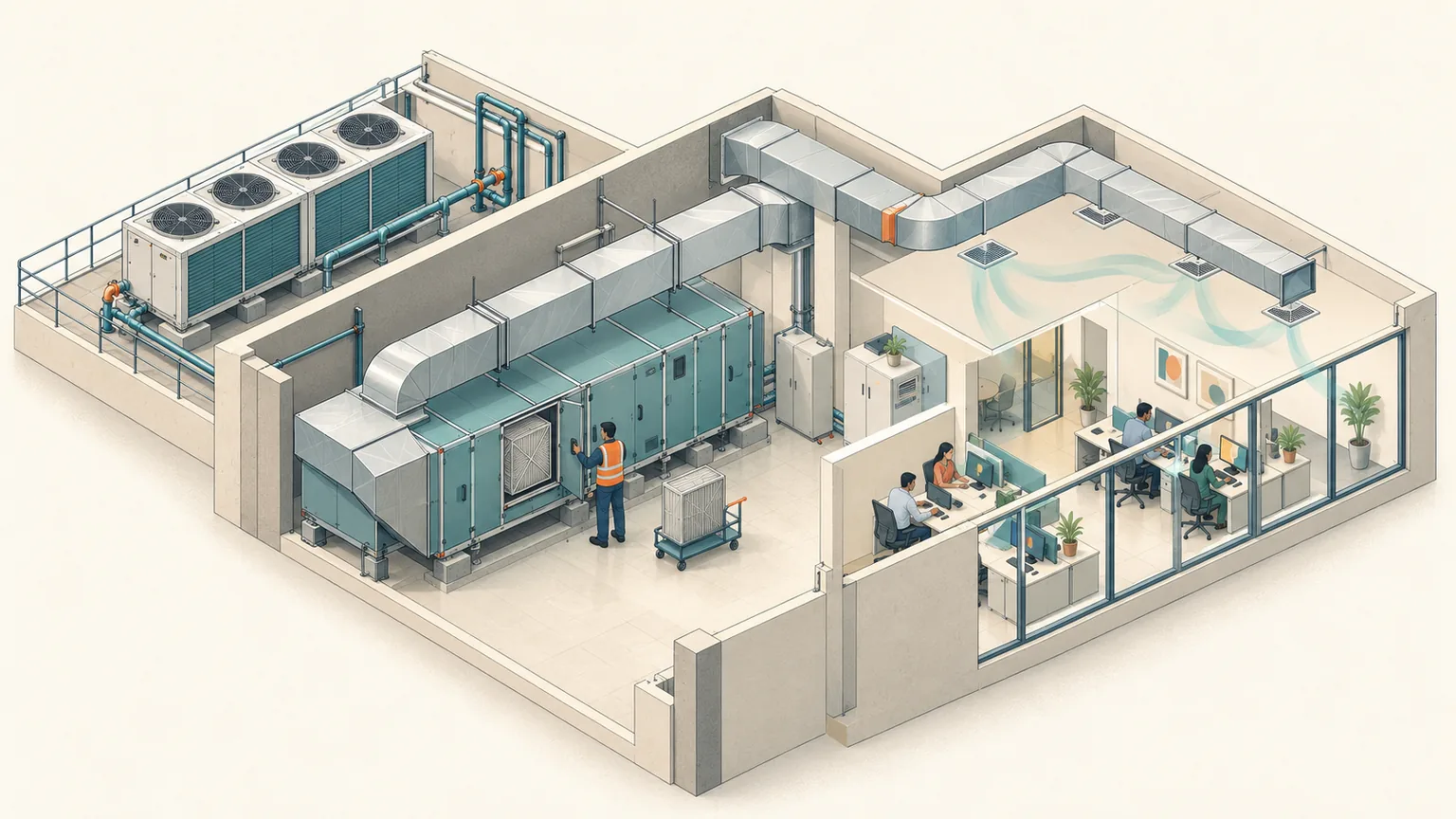
Lowering a thermostat may not solve a room that feels damp. Temperature and moisture are separate aspects of comfort, and the system's ability to manage both depends on outdoor air, infiltration, equipment selection and operating patterns.
Investigate when the problem occurs. Record occupancy, door use, outdoor conditions, operating hours and relevant temperature and humidity trends. Check whether the cooling equipment is cycling without sufficient moisture removal, whether untreated air enters the space or whether controls are operating differently from the intended sequence.
The consultancy brief should ask for a moisture-path and operating review before equipment replacement. It should distinguish a persistent design issue from a seasonal or maintenance problem. Solutions need to be checked across likely operating conditions; a remedy that works during one crowded afternoon may be unsuitable for lightly occupied periods. The owner should receive an explanation tied to measured conditions, not a promise that a larger unit will automatically improve comfort.
What to confirm before the next decision
- Measure humidity and temperature together at representative locations.
- Review outdoor-air and infiltration paths.
- Compare actual equipment operation with the design sequence.
Ask for this review output: A diagnostic report linking representative temperature and humidity trends to occupancy, outdoor-air paths, equipment operation and the next investigation.
Discuss the consultancy scope
Provide complaint times, occupancy patterns and available trends. Request a humidity-focused HVAC assessment. Request a scoped MEP review. Disciplines, inputs and deliverables are agreed before an appointment; installation and authority decisions are separate.
Continue with our guide to industrial HVAC design inputs or review the MEP design and consultancy scope.
Background guidance: US EPA: moisture and HVAC operation during alterations, WBDG — Commissioning Documents. These inform the review principles; local requirements, project applicability and any necessary approvals must be confirmed by the responsible specialists.
Related services
Related guides
- HVAC Insulation and Condensation: What to Check During a Renovation
- The Plant Met Spec in 2020. The Spec Assumed Summers North India No Longer Has.
- Outdoor-air intakes must be coordinated with everything that exhausts
- Low chilled-water temperature difference: diagnose before adding a chiller
- Compressed Air for a Factory: Sizing, Piping, Leak Losses and Cost Drivers
- HVAC RFQ Template: Loads, Equipment Schedule and Acceptance Tests
Related on this site
- termAHU (Air Handling Unit)
- termPrecision Cooling
- termFCU (Fan Coil Unit)
- serviceAHUs, FCUs & Air Distribution (Mechanical / HVAC)
- serviceVentilation, Pressurisation & Exhaust (Mechanical / HVAC)
- calculatorVRF Chiller Lifecycle Cost Calculator
- calculatorAC Tonnage Calculator
- buyer's guideHow to Compare MEPF Quotations
More on HVAC & Mechanical · all insights