
How should a factory plan fire pump capacity?
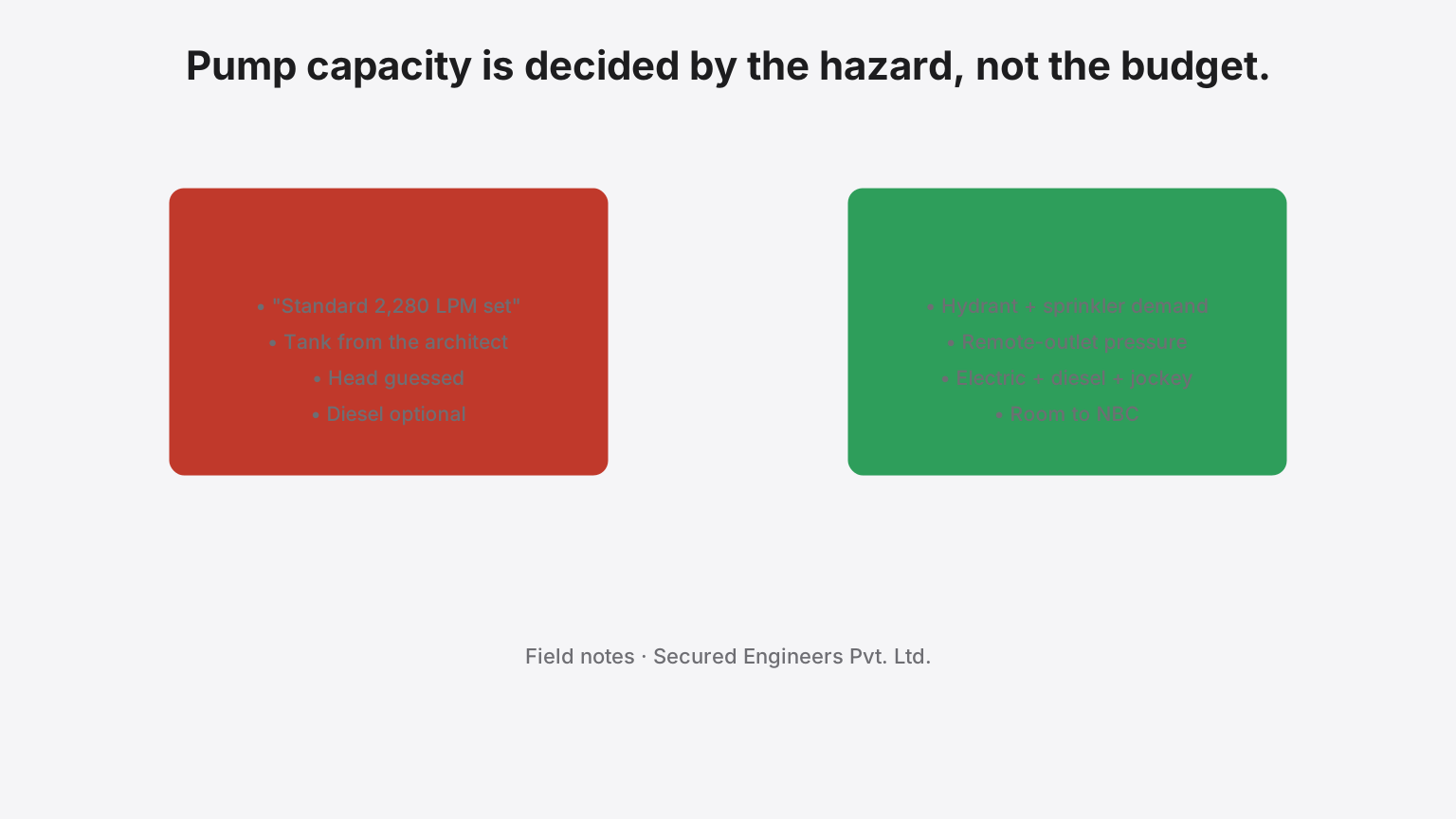
The question usually arrives as "which pump set should we buy?" and the answer is a sequence of decisions, most of which come before the pump. This is the framework our fire engineers use for an industrial building.
Decision 1 — What does the code require this building to carry?
NBC 2016 Part 4 classifies the building by occupancy, height and area and lists the systems it must have: hydrants, wet risers, sprinklers, and the pump capacities and static storage that go with them. The state's fire rules may add to this. Establish the class first; the pump follows from it. The Fire NOC document readiness checklist tracks the paperwork; the system list comes from the approved scheme.
Decision 2 — What is the design demand?
Hydrant demand at the code's flow and pressure at the most remote outlet, plus sprinkler demand where sprinklers are required — the design density over the area of operation for the hazard class, from the hydraulic calculation. Where both systems draw on the same pumps, the demand is the combination the code specifies. This is the flow the main pump must deliver at the pressure the remote outlet needs.
Decision 3 — What pressure, and therefore what head?
The residual pressure required at the highest and most remote hydrant or sprinkler, plus the static lift and the friction through the network back to the pump. The head is a hydraulic calculation on the actual pipe network; a head guessed from building height is the most common way a pump is undersized.
Decision 4 — Redundancy: electric, diesel, jockey
An electric main pump for the duty, a diesel standby of equal duty for when the supply fails, and a jockey pump to hold the system pressurised so the main does not cycle. Where the electric supply itself is unreliable, or the building class requires it, the diesel is not optional. Controllers auto-start on pressure drop; the sequence is jockey, then main, then diesel.
Decision 5 — The tank the pumps draw from
Static storage is set by the code for the building class and the duration of supply, with the sprinkler reserve where applicable. It is decided with the pumps, not before them by the architect, and it is positioned so the pumps have flooded suction. The tank calculator gives the first figure.
Decision 6 — The room
Sized for the sets with working clearance, with access, ventilation and exhaust for the diesel, drainage, and a location a person can reach. The pump-room calculator gives a first footprint; the pump-room page describes the arrangement.
Decision 7 — Insurer requirements
Where the policy specifies a standard above the code minimum — often for sprinklered warehouses — the pump follows the higher requirement.
The mistakes
- Buying a "standard" set before the demand is calculated.
- Head from building height rather than the hydraulic calculation.
- Tank fixed by the architect; pumps sized to fit it.
- Diesel standby omitted to save cost, then required at inspection.
- Room too small to maintain the sets, or without positive suction.
Pump capacity is a code-driven design decision, and the design is what the State Fire Service approves. The Fire NOC page sets out where it fits in the process; a fire review will check an existing proposal against it.
Frequently asked
Is there a standard fire pump size for a factory?
NBC 2016 Part 4 lists pump capacities by building class — 1,620, 2,280 and 2,850 LPM are the common duties — but which applies, and whether the sprinkler demand adds to it, depends on the occupancy, height, area and hazard. The set is selected from the demand, not the other way round.
Does a factory need a diesel standby fire pump?
Where NBC requires a standby for the building class — which covers most industrial buildings with fixed systems — yes, of equal duty, so the system works when the electric supply fails, which in a fire it may.
Related services
Guides that reference this page
- Types of Fire Fighting Systems in a Building and Which Your Occupancy Needs
- Fire Pump Set for a Factory: Duty, Standby, Jockey and Cost Drivers
- Fire Pump Room Planning and Retrofit Checklist
- Warehouse Racking Changes and Fire-Protection Design
- Documents Required for a Fire NOC Application: The Complete List by Stage
- Fire Alarm System for a Factory: Addressable vs Conventional, Device Count and Cost Drivers
Related on this site
- termFire Damper
- termFire Hydrant System
- termFire Extinguisher Rating
- serviceAutomatic Sprinkler Systems (Fire Protection)
- serviceFire Detection & Alarm (Fire Protection)
- calculatorMEP Maintenance Budget Calculator
- calculatorFire Water Tank Calculator
- buyer's guideHow to Select a Fire Protection Contractor
- guideNBC 2016 fire and life safety for factories
- guideFire NOC for factories
More on Fire Safety · all insights