
Building a Factory in Punjab: What Actually Changes on the MEP Side
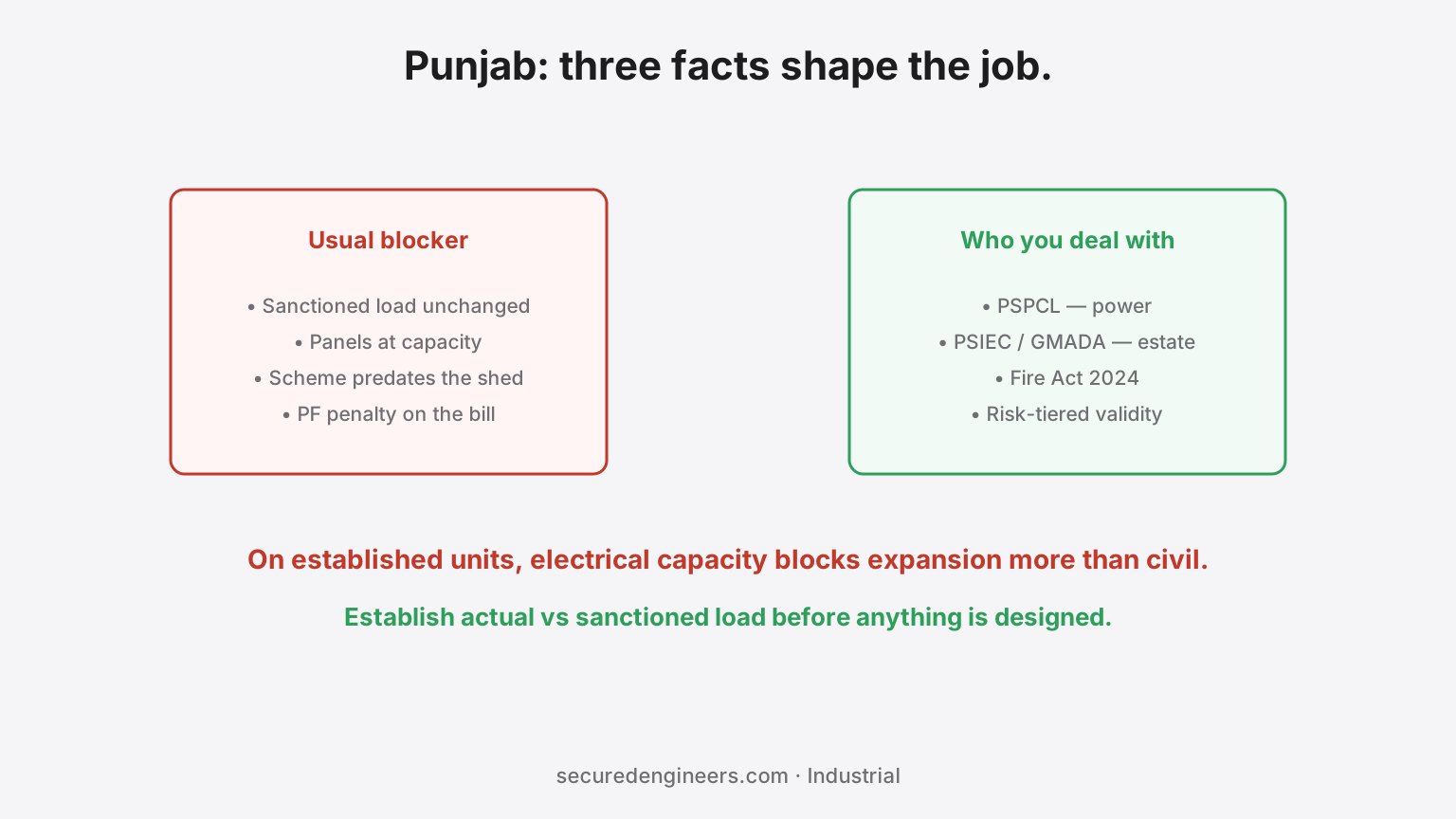
Punjab's industrial base is concentrated and specific — Ludhiana's Focal Points and Industrial Areas, the steel and rolling cluster at Mandi Gobindgarh, Mohali's mixed industrial and IT estates, Jalandhar, Amritsar, Rajpura and Derabassi. The engineering in a factory here is the same engineering as anywhere. What differs is who you deal with.
Three things that shape a Punjab project
- PSPCL is your electricity utility. Sanctioned load, HT connection, metering and net metering all run through Punjab State Power Corporation Limited. Load enhancement and connection timelines are a programme item, not a formality — and on an existing plant, the sanctioned load you hold is frequently not the load you actually draw.
- PSIEC administers the Focal Point estates. On a PSIEC plot, the estate authority's building sanction sits alongside your statutory approvals. In Mohali, GMADA is often in the picture too. Their sanction is what your fire and factory submissions have to match.
- Fire law was rewritten in 2024. The Punjab Fire and Emergency Services Act, 2024 replaced the 2004 Act — introducing risk-tiered NOC validity, removing the old 53-point checklist and enabling annual self-certification for lower-risk occupancies. Guidance and consultants still citing the 2004 Act are out of date.
The recurring pattern on Punjab plants
| Situation | What it means for MEP |
|---|---|
| Older Focal Point unit being expanded | Existing sanctioned load and panel capacity rarely support the new machines — establish actual spare capacity before designing |
| Rolling mill / furnace operations (Mandi Gobindgarh) | Heavy connected load, serious process heat, and power quality issues that show up as penalties |
| Sheds built incrementally over years | Fire scheme approved for the original building, not what stands today |
| Rooftop solar on an older shed | Structure and net metering are separate gates — neither is assumed |
| Power factor penalties on the PSPCL bill | An APFC and audit question, usually with a short payback |
The one worth checking first
On established Punjab units, the most common blocker to an expansion is not fire or civil — it is electrical capacity. The plant has grown machine by machine, the sanctioned load has not moved with it, and the existing panels and cabling have no headroom. That is discovered either by an audit beforehand or by a trip after commissioning.
It is worth establishing before anything is designed, because the answer changes the project: sometimes the finding is that a load enhancement and a panel upgrade unlock the expansion, and sometimes it is that the existing installation was already carrying more than it should.
Where to start
Establish actual versus sanctioned load, then the fire position against the building as it stands today rather than as approved. The Punjab-specific fire process, portal and rejection causes are in Fire NOC for factories in Punjab; power-factor penalties in power factor penalties in Punjab, Haryana & UP; and net metering in net-metering delays. Zone-level detail is on our Ludhiana page.
What we do differently
Our registered head office is in Ludhiana, so PSPCL, PSIEC and the Punjab Fire and Emergency Services are our home ground rather than a region we travel to. We take the approvals under Design & Approvals and deliver the plant as turnkey MEPF EPC — starting, on an existing unit, with a review of the existing electrical system, because that is usually what decides whether the expansion is straightforward.
More insights
You Are Treating Water to Drinking Standard and Flushing With It.
Industrial facilities buy or extract water once and use it once. Greywater recycling separates the streams that do not need potable quality — flushing, landscape, cooling make-up — and is increasingly a consent condition rather than a choice.
IndustrialThe Rain Was Predictable. The Waterlogging Was a Design Choice.
July 2026's monsoon has brought building collapses in Delhi and Pune, a Pimpri-Chinchwad structure crushed by a garbage mound loosened by rain, and the same waterlogged roads reappearing in the same low-lying pockets they flood every single year. "This happens every year" is usually the sign of a stormwater and site-grading decision made once at design stage, never revisited, and now compounding with every monsoon since.