
A protection study must cover generator operation too
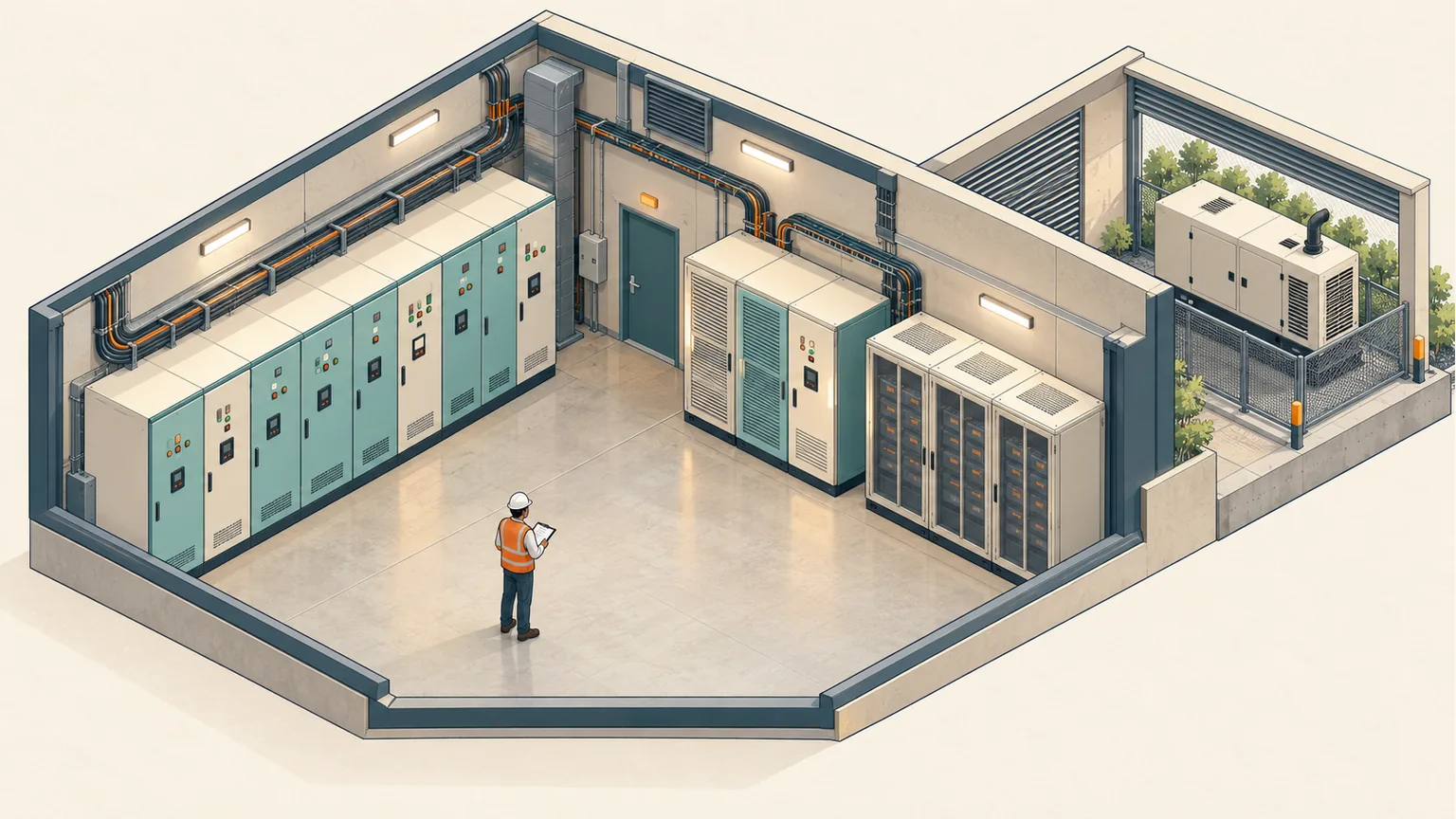
An electrical distribution system can behave differently when supplied by a generator instead of the utility. Reviewing protection only against the normal supply leaves an important operating condition unexamined, especially where critical loads transfer during an outage.
Ask the electrical designer to document the credible source configurations and assess protection performance in each. This requires source data, cable information, protective-device characteristics and actual settings. The study should explain how faults are detected and isolated without assuming that a result obtained for one configuration applies to every other configuration.
The owner does not need to select relay settings personally. The owner does need a clear statement of the study's coverage and unresolved inputs. If vendor data is provisional, identify the settings or selections that cannot yet be finalised. Changes to generators, transformers or switchboards should trigger a review of the affected study rather than being treated as equivalent substitutions.
What to confirm before the next decision
- List normal, backup and permitted parallel configurations.
- Confirm actual device models and available setting ranges.
- Reconcile the final study with installed settings and test records.
Ask for this review output: A study-coverage matrix listing source configurations, confirmed inputs, unresolved vendor data and the link to installed settings and test evidence.
Discuss the consultancy scope
Share the single-line diagram and source schedules. Request an operating-mode protection review by a qualified electrical designer. Request a scoped MEP review. Disciplines, inputs and deliverables are agreed before an appointment; installation and authority decisions are separate.
Continue with the related planning guide or see our MEP design and consultancy scope.
Background guidance: Schneider Electric — Characteristics of Particular Sources and Loads, Schneider Electric — Downstream LV Network Protection. These support the planning principles; project requirements and local applicability must be confirmed by the responsible designers.
Related services
Related guides
- Your Shopfloor Is Probably Lit Wrong in Both Directions at Once
- Addressable Lighting Control Pays in Some Buildings and Not in Others.
- A Lightning Rod Isn't a Lightning Protection System. It's One Component of One.
- You Bought a Tier III Server Room. The Cooling Is Tier I.
- Transformer Capacity for Factory Growth: Start From Measured Demand
- Grid Down. DG Running at 70% Capacity. 40 Tenants. Who Gets Power First?
Related on this site
- termArc Flash Study
- termELV (Extra-Low Voltage)
- termContract Demand
- serviceCabling, Cable Trays & Bus Ducts (Electrical)
- serviceEarthing & Lightning Protection (Electrical)
- calculatorCctv Storage Calculator
- calculatorTransformer Sizing Calculator
- buyer's guideHow to Compare MEPF Quotations
- guideFactory approvals roadmap, India
- guideCLU for industrial land
More on Electrical & Power · all insights