
Waste heat is useful only when a suitable demand is available
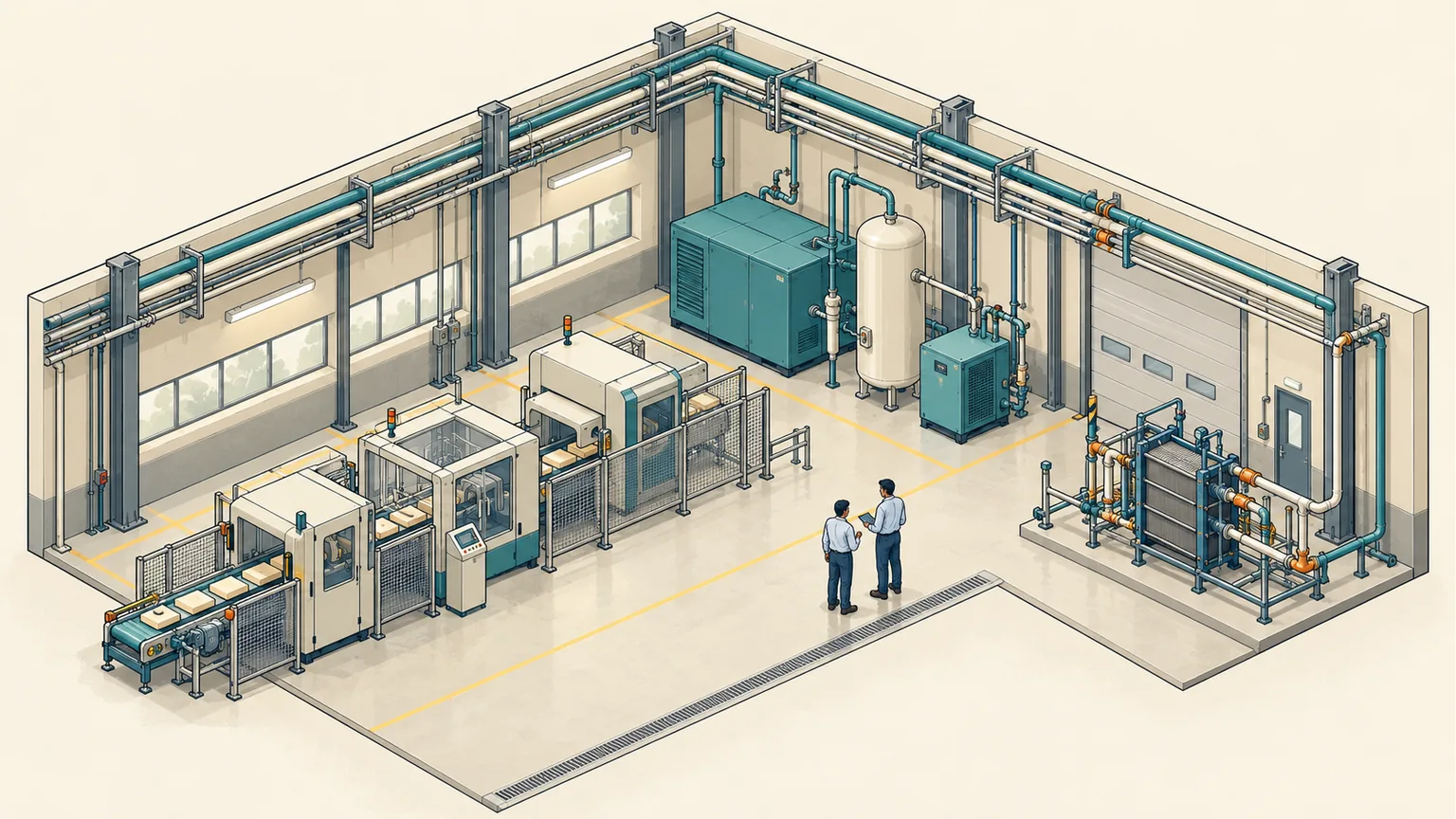
A factory can reject substantial heat and still have a weak heat-recovery opportunity. The available temperature, timing and location must match a useful demand, and the receiving process must be able to rely on the proposed arrangement.
Map heat sources and heat users on a common operating schedule. Record temperature ranges, quantities, distance, cleanliness constraints and interruptions. A source available during production may not coincide with a hot-water demand concentrated during cleaning. Storage or backup may be necessary, and those requirements belong in the feasibility assessment.
Ask the consultant to compare the complete system with a realistic baseline. Include heat exchangers, pumping, controls, maintenance and the consequences of source unavailability. The study should identify usable recovery rather than equating all rejected heat with savings. This makes the investment case harder to inflate and easier to verify after installation.
What to confirm before the next decision
- Match source and receiving-demand profiles over time.
- Check temperature suitability and contamination boundaries.
- Define backup operation and a measurement method for recovered energy.
Ask for this review output: A source-to-demand feasibility assessment showing usable heat over time, temperature and contamination constraints, backup, whole-system costs and measurement.
Discuss the consultancy scope
Share operating schedules and available temperature data. Request a source-to-demand heat-recovery assessment. Request a scoped MEP review. Disciplines, inputs and deliverables are agreed before an appointment; installation and authority decisions are separate.
Continue with our guide to heat-pump and boiler option comparisons or review the MEP design and consultancy scope.
Background guidance: Australian Government: waste-heat recovery assessment, WBDG — Determine Project Performance Requirements. These inform the review principles; local requirements, project applicability and any necessary approvals must be confirmed by the responsible specialists.
Related services
Related guides
- A Digital Twin Is Not a 3D Model. It Is a Live Data Obligation.
- The Most Dangerous Electrical Installation You Will Ever Own Is the Temporary One
- Three Vendors, One Roof, Three Different Generation Figures.
- Your BOQ Said 1,000 M. Site Said 1,470 M. Who Pays for the Missing 470 M?
- Perovskite Cells Promise 30%+ Efficiency. Your Roof Doesn't Have Ten Years to Wait and See.
- Common reasons industrial Fire NOC applications get delayed
Related on this site
- termNet Metering
- termBOQ (Bill of Quantities)
- termEPC
- serviceBattery / Hybrid Storage (Solar EPC)
- serviceSTP / WTP / ETP (Plumbing)
- calculatorMEP Maintenance Budget Calculator
- calculatorSolar Shadow Free Area Calculator
- buyer's guideHow to Compare MEPF Quotations
- guideCEIG approval for factories
- guideFactory approvals roadmap, India
More on Project Delivery & Commercial · all insights