
Common reasons industrial Fire NOC applications get delayed
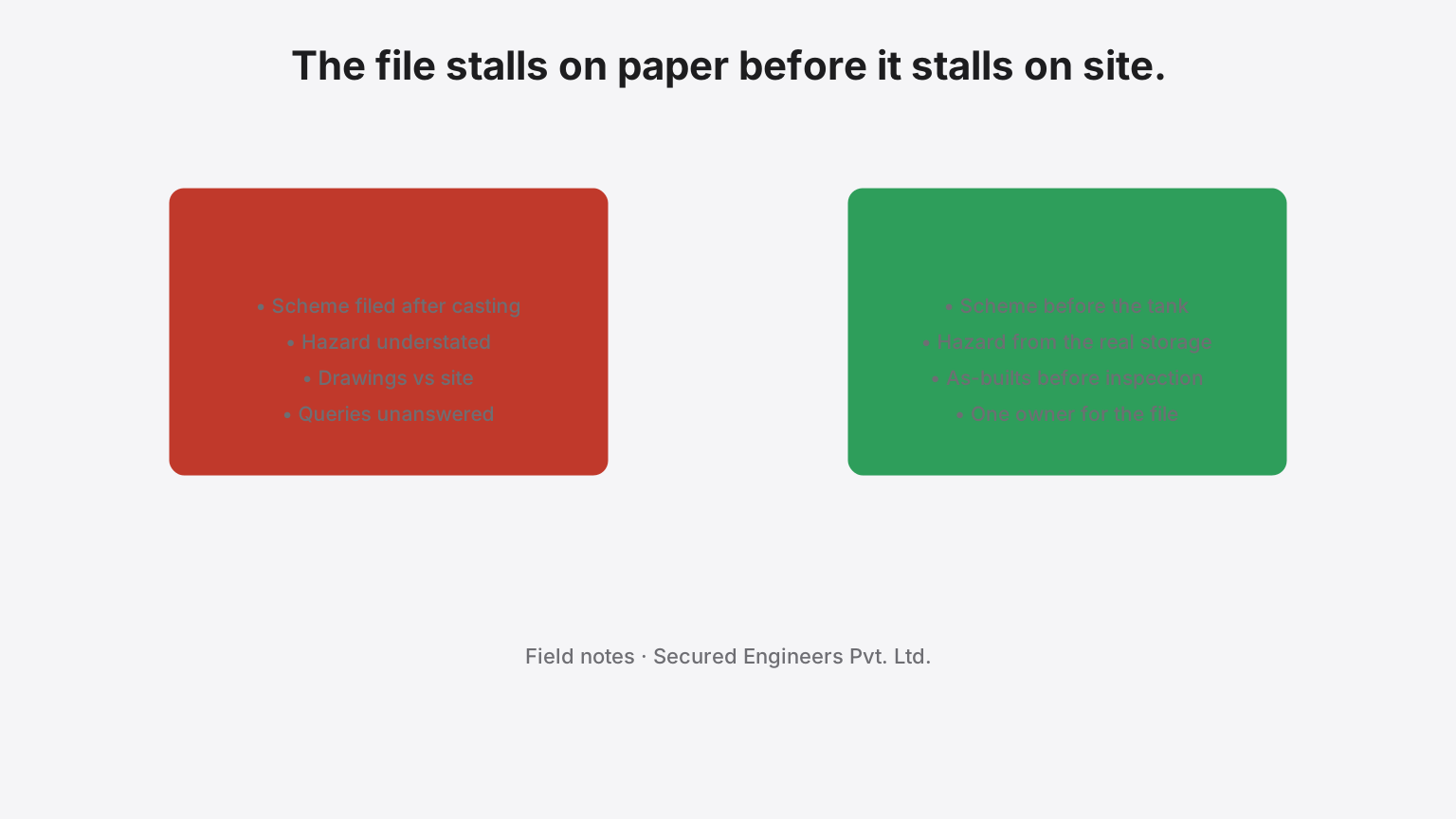
A Fire NOC is delayed by cycles: a submission, a query or a shortfall list, a response, another inspection. Each cycle is weeks. These are the reasons our liaison engineers see files go around again on industrial applications — most of them decided before the file was opened.
1. The scheme filed after the tank was cast
The provisional NOC is meant to approve the scheme before construction. When the tank, the pump room and the risers are already built, the scheme is an as-built dressed as a proposal, and every point on which the authority wants a change is a demolition. Filing first is the single largest saving of cycles.
2. Hazard understated
A warehouse classified as ordinary hazard, inspected with high-piled storage of a high-hazard commodity. The sprinkler density, the pipe sizes, the pump duty and the tank are all wrong for what the inspector sees. The fix is a redesign, not a resubmission.
3. Drawings that do not match the site
Racking added after the sprinkler layout; a pump room moved; a tank reduced to make room for parking; a mezzanine added. The inspector checks the installation against the approved drawings, and every difference is a shortfall item. As-built drawings submitted before the inspection — with the changes justified — turn a failed inspection into a query.
4. The pump room
Sets that do not auto-start; a diesel that has never run; no priming arrangement; a room without access, ventilation or drainage. The pump room is inspected as a system, and it is the most frequent single item on shortfall lists.
5. Missing test records
Hydrostatic tests, the flow test at the remote hydrant, detector tests, extinguisher tags. A test that is not recorded is treated as a test that was not done, and the inspection is rescheduled for it.
6. Documentation gaps
Ownership or lease proof, the building-plan sanction reference, the occupancy statement, equipment certificates, the completion certificate from the fire contractor. Each missing document is a query letter; each query letter is a cycle.
7. Passive protection nobody owned
Fire dampers absent where ducts cross compartment walls; penetrations not fire-stopped; fire doors without closers. Neither the HVAC nor the civil contractor priced them, and the inspector finds them.
8. Change of use, expansion or a lapsed NOC
An existing NOC assumed to cover a new block or a new process. It does not; the application is fresh, and it starts from a scheme.
9. Nobody owning the file
Queries addressed to the owner, forwarded to no one, answered after the deadline. A file needs one person who reads every letter the day it arrives.
What clears each one
- Scheme before construction; tank and pump room built to the approved scheme.
- Hazard class from the real storage and process, agreed at the survey.
- As-builts submitted with the inspection request where the site has changed.
- Pump-room tests run and recorded before the inspection is requested.
- A document checklist from the state's own requirements, completed before filing.
- Passive protection in someone's scope, and inspected.
- One owner for the file.
The Fire NOC page sets out the whole process and the line between consultancy and the authority; the state guides linked from it record each state's process. The Fire NOC consultancy page describes what we carry.
Frequently asked
How long does a Fire NOC take for a factory?
It varies by state, by portal and by how complete the submission is, and the authority's time is the authority's. What a consultant controls is the number of cycles: a complete scheme filed before construction, an installation that matches it, and the test records in hand at inspection usually mean one cycle instead of three.
Can an expansion be covered by the existing Fire NOC?
No. An expansion, a change of use or an increase in height is a fresh application, because the scheme the existing NOC was granted against no longer describes the building.
Related services
Guides that reference this page
- Fire NOC for a Factory in Odisha: Odisha Fire Service Process and Documents
- Fire NOC for a Factory in Bihar: Process, Portal and Documents
- Checking Fire NOC Application Status Online: State Portals and What Each Status Means
- Does an Expansion or Change of Use Affect Your Fire NOC?
- The MSME Act Just Changed. Here Is What It Means for a Factory Owner.
- Fire NOC for a Factory in Madhya Pradesh: Process, Portal and Documents
Related on this site
- termFire Hydrant System
- termSprinkler System
- termFire NOC
- serviceFire Pumps & Pump Room (Fire Protection)
- serviceFire Extinguishers & Portables (Fire Protection)
- calculatorMEP Maintenance Budget Calculator
- calculatorSprinkler Calculator
- buyer's guideHow to Select a Fire Protection Contractor
- guideEnvironmental clearance (EIA 2006)
- guideNBC 2016 fire and life safety for factories
More on Statutory & Approvals · all insights