
The DG Set Is Installed and Tested. The Inspectorate Still Has Not Cleared It.
A diesel generator arrives as a packaged product. It is craned into place, connected, load-tested, and everyone treats it as commissioned. Then someone asks whether the electrical inspectorate has cleared it, and the answer is usually that nobody filed anything.
Where a DG installation falls within the inspectorate's scope — which it commonly does, particularly when synchronised or connected through a changeover to the main supply — it is an electrical installation requiring approval before energisation, not equipment you simply buy.
What the inspectorate is actually looking at
Very little of it is the generator itself, which arrives with its own type certification. The scrutiny is on how it has been integrated:
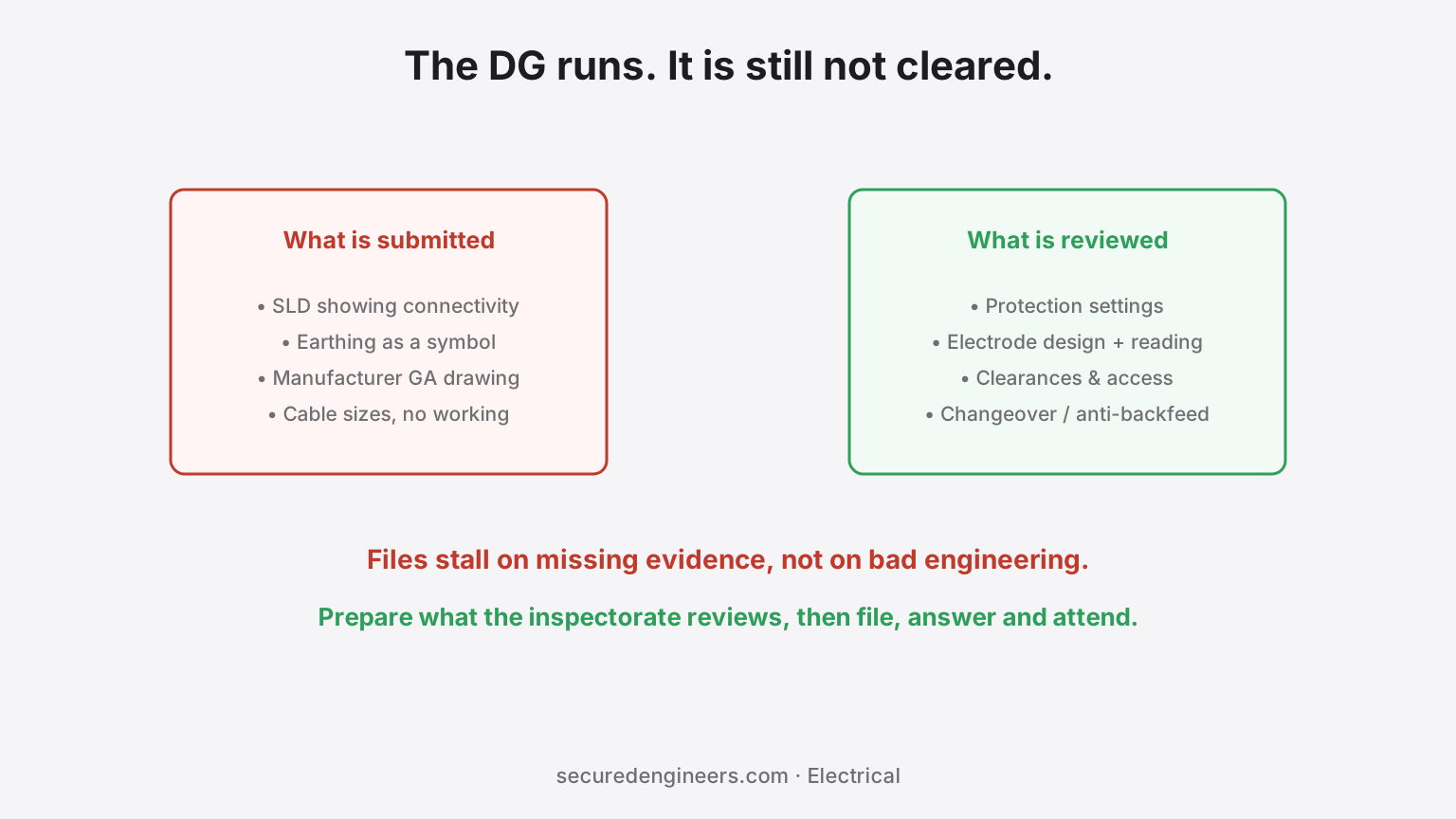
- The single-line diagram — how the DG connects to the distribution, where the changeover sits, and how backfeed to the grid is prevented. This is the document that decides most outcomes.
- Protection and its settings — the protective devices on the DG side, and whether they discriminate correctly against upstream and downstream devices. A schedule of actual settings, not a catalogue extract.
- Earthing — the neutral earthing arrangement for the generator, earth electrode design and measured earth resistance, evidenced rather than asserted.
- Clearances and access — physical space around the set and its panel for safe operation and maintenance.
- Cabling — sizing and routing between the DG and the panel, sized for both current and voltage drop.
Why files stall
| What is submitted | Why it comes back |
|---|---|
| An SLD showing connectivity only | No protection ratings or settings — the inspectorate cannot assess discrimination |
| Earthing shown as a symbol | No electrode design, no measured resistance |
| Manufacturer's GA drawing as the layout | Shows the machine, not the installation or its clearances |
| No changeover/interlock detail | Backfeed prevention is a safety question and gets asked every time |
| Cable sizes with no calculation | Sizing has to be demonstrated, not stated |
The pattern is consistent: files stall on missing evidence rather than on bad engineering. The installation is frequently fine; the submission does not prove it.
The sequencing trap
DG approval is often left until the plant is otherwise ready, on the assumption it is a formality attached to a purchased product. It then sits on the critical path at the worst moment — a finished facility that cannot legally energise, carrying full capital cost and no output.
The related trap is a DG bought and positioned before the electrical design is settled, leaving the changeover, protection and cable route to be worked out around a machine that is already bolted down. Where a synchronising arrangement is involved, that constrains the design considerably. We covered why a second engine is not automatically redundancy in DG synchronisation and parallel redundancy.
Where to start
Establish whether your installation is in scope before assuming either way — triggers vary by state and by rating. Our CEIG readiness checker gives an indicative read on applicability and how close your file is to inspection-ready, and the full process is in the CEIG approval guide. Sizing is a separate question — the DG sizing calculator covers that. Confirm current requirements with your state inspectorate.
What we do differently
Under CEIG approval consultancy we prepare the drawings and calculations the inspectorate actually reviews — SLD with protection settings, earthing design with measured values, discrimination study — then file, answer the queries and attend the inspection, so energisation is not the thing holding up a finished plant.
Frequently asked
What does the CEIG actually check on a DG set installation?
Very little of the generator itself — it arrives with its own type certification. The scrutiny is on how it has been integrated: the single-line diagram showing how the DG connects to the installation, the protection ratings and settings, and the earthing design. The inspectorate is assessing the interface, not the machine.
Why do CEIG files come back for resubmission?
The most common reason is a single-line diagram that shows connectivity only. Without protection ratings and settings on it, the inspectorate cannot assess discrimination, so the file cannot be cleared. Earthing shown as a note rather than a design is the other frequent cause. Both are document defects, not engineering ones — which is why first-time-right submission is a discipline rather than luck.
Does every DG set need CEIG approval?
It depends on voltage and the thresholds set by your state Electrical Inspectorate. Installations that fall within its ambit require drawing approval and inspection before energisation, and the CEA (Safety) Regulations 2023 carry continuing duties afterwards. Whether it applies to a specific installation is a question to settle at design stage, not after the set is delivered.
What should be ready before the inspection?
The protection scheme with actual settings, the earthing design rather than an earthing note, and an SLD that matches what is physically installed. Where the file and the site disagree, the site is what gets inspected — and the deviation is what stalls energisation.
More insights
Every Meter Reads Normal. Your Neutral Is Still Overheating. That's What Harmonics Do.
VFDs, LED drivers, UPS units and solar inverters have quietly filled modern plants with non-linear loads — and the harmonic distortion they inject overheats neutrals and transformers, trips sensitive equipment and kills capacitor banks. A standard electrical audit won't see any of it; a power-quality audit is built to.
ElectricalYour DG Is a ₹30/kWh Habit. Here Is What Every Unit Actually Costs.
Factories treat the DG as free backup and the bill as fate. Line up diesel, grid and rooftop solar on one table and the picture is brutal: every DG hour is the most expensive electricity you will ever buy. The honest per-unit economics, and the load strategy that follows.