
The Plant Room Meets Code. The Resident Next Door Still Can't Sleep.
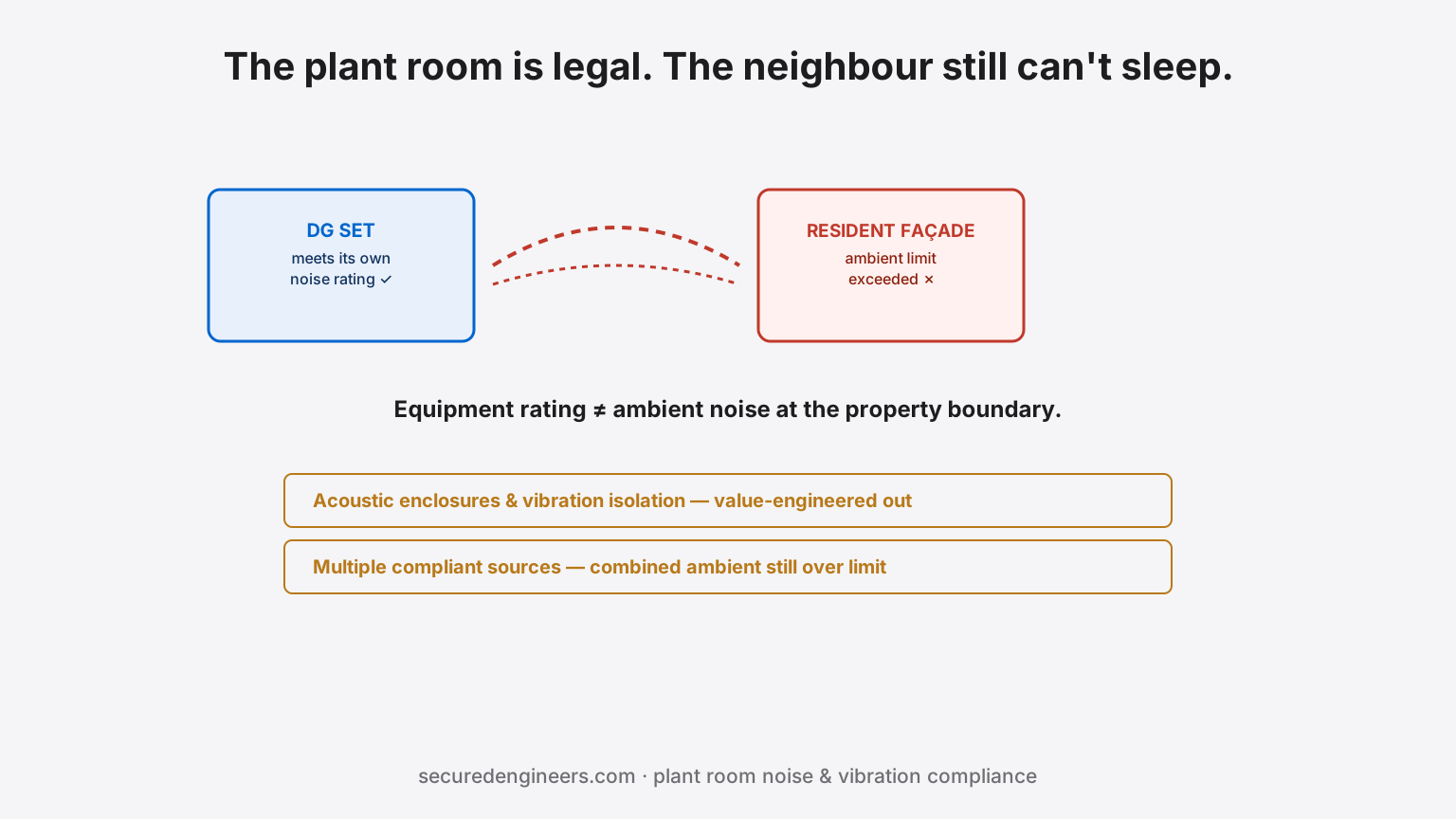
Equipment noise ratings tell you how loud a DG set, chiller or cooling tower is at the source. They don't tell you what the ambient noise level is at the property boundary, or at the nearest residential window, once that equipment is running inside a specific plant room, at a specific location, next to specific neighbours. A DG set that fully meets its manufacturer's noise specification can still push a building past applicable ambient noise limits — and "the equipment is rated compliant" is not a defense against a Pollution Control Board notice or a genuinely disruptive neighbour complaint.
Why equipment compliance and site compliance are two different questions
- Ambient noise limits are measured at the receiving point — property boundary, nearest residential façade — not at the equipment itself, and are typically stricter at night than during the day
- Plant room construction affects transmitted noise as much as the equipment does — a plant room without proper acoustic treatment can transmit noise well beyond what the equipment's own rating would suggest
- Multiple compliant sources add up — a DG set, a chiller, and a cooling tower can each individually meet their own noise rating while their combined ambient contribution still exceeds the site limit
- Vibration is a separate problem from airborne noise — structure-borne vibration from rotating equipment can be felt and heard in adjacent spaces through the building structure itself, independent of how well the room is acoustically treated for airborne sound
What proper plant room acoustic design actually addresses
| Element | What it controls |
|---|---|
| Acoustic enclosures | Contain airborne noise from DG sets and other high-noise equipment at the source |
| Vibration isolation mounts | Prevent rotating-equipment vibration from transmitting into the building structure |
| Plant room wall/door acoustic rating | Controls how much noise escapes the room itself, independent of the equipment inside it |
| Exhaust silencers (for DG sets) | Address exhaust noise specifically, a major and separate noise source from the engine body itself |
| Plant room location & orientation | Distance and shielding from the nearest sensitive receptor (residential façade, hospital, school) reduces the acoustic design burden needed to meet limits |
Where this gets missed under budget or schedule pressure
- Acoustic enclosures and vibration isolation get value-engineered out during the same cost-cutting pressure covered in L1 procurement backfires — they're easy to cut because their absence isn't visible until the equipment is running and a complaint arrives
- DG plant rooms designed primarily around running-cost and capacity considerations without equal weight given to acoustic placement relative to neighbouring occupancy
- Cooling towers and chiller plants placed by available roof or ground space, not by proximity analysis to the nearest sensitive receptor — the same plant siting decisions that get made for thermal reasons need equal acoustic scrutiny
- Basement plant rooms adjacent to occupied parking or amenity areas, the same zone covered in basement ventilation and fire planning, transmitting vibration and noise into spaces people actually use
Why this matters beyond the immediate complaint
A confirmed Pollution Control Board violation carries direct regulatory consequences. But the more common cost is reputational and relational — a neighbour dispute that colours a building's or a hospitality property's local standing, or a residential society's ongoing friction with an adjacent commercial plant room, neither of which shows up as cleanly as a fine but both of which persist far longer. The same lifecycle-economics logic in plant maintenance applies to acoustic treatment: designing it in at plant-room stage costs a fraction of retrofitting enclosures and isolation around equipment that's already running and already generating complaints.
Our HVAC team assesses DG, chiller and cooling tower installations for ambient noise and vibration compliance — both at design stage and as a diagnostic for existing plant rooms generating complaints.
FAQs
If our DG set meets its manufacturer's noise rating, is that enough for compliance?
Not necessarily — compliance is typically measured against ambient noise limits at the property boundary or nearest sensitive receptor, which depends on plant room design and siting as much as the equipment's own rating.
Can multiple compliant equipment sources still cause a noise violation?
Yes — combined ambient contribution from several individually-compliant sources (DG, chiller, cooling tower) can exceed site limits even when no single source is individually non-compliant.
Is vibration a separate issue from noise?
Yes — structure-borne vibration transmits through the building itself and needs isolation mounts specifically, independent of airborne noise treatment like acoustic enclosures.
Can you assess our plant room for noise and vibration compliance?
Yes — ambient noise measurement, vibration assessment and acoustic treatment design for new or existing plant rooms. Request an assessment.
More insights
The Drugs Controller, the Pollution Board and the Fire Department All Have an Opinion on Your Cleanroom.
Our GMP HVAC and WHO-GMP guides cover how to design a cleanroom that passes its audit. A separate problem sits alongside the engineering: a pharma or food manufacturing facility answers to several regulatory bodies at once, and their requirements don't always agree with each other.
ComplianceThe Compliance Item on Your Roof That Actually Pays You Back
Most statutory obligations only cost money. Rainwater harvesting is the odd one out: mandated by most ULBs above modest plot sizes, scrutinised at plan sanction and CGWA stages — and, for a factory with real roof area, a genuine water-cost hedge if engineered rather than gestured at.