
VRF, Chiller or Ductable? The 45°C Question Every North Indian Building Must Answer Once
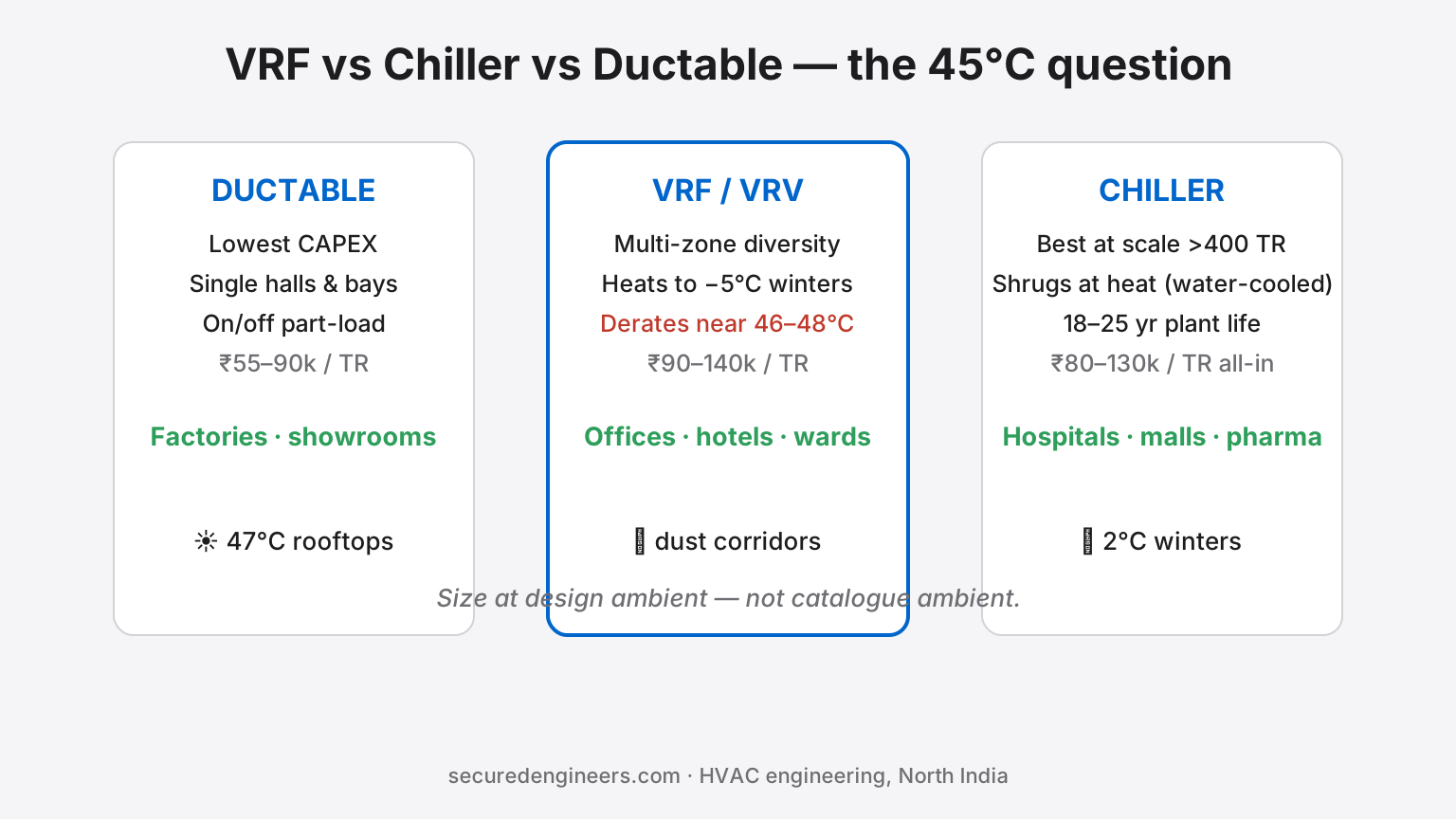
Every building gets one cheap chance to choose its air-conditioning architecture: on the drawing board. After that, the choice is embedded in shafts, plant rooms, electrical loads and structural provisions — and changing it costs multiples of getting it right.
In North India the choice is harsher than the brochures admit, because the design brief includes things Japanese and European catalogues don't headline: 47°C rooftop ambients, LWD dust storms, 2°C winter mornings that demand heating, wild utility-power quality, and diesel-backed operation.
The three architectures, honestly
| Ductable / package units | VRF / VRV | Chilled water plant | |
|---|---|---|---|
| Sweet spot | Single halls, showrooms, small offices, factories bay-by-bay | Multi-zone offices, hotels, hospitals wards, phased fit-outs | Large single owners: hospitals, malls, big hotels, pharma, campuses > ~400 TR |
| CAPEX (indicative) | Lowest — ₹55–90k / TR installed | Mid — ₹90–140k / TR | Highest system cost, lowest ₹/TR at scale — ₹80–130k / TR all-in |
| Part-load economics | Poor — on/off steps | Excellent at 30–70% load — this is where VRF earns its premium | Excellent with VFD chillers + staging, if the plant is designed for it |
| 45°C+ behaviour | Capacity droops; adequate if honestly derated | Significant derating near 46–48°C — a unit sized from catalogue nominal will gasp in a Ludhiana June | Water-cooled plants shrug at ambient — the North-Indian heat champion |
| Winter heating | Separate heaters | Heat-pump VRF heats efficiently to ~-5°C — a genuine North-India advantage | Needs hot water generators / heat-recovery design |
| Failure blast radius | One unit = one zone down | One outdoor unit = several zones down | One chiller down = capacity step lost; N+1 design decides everything |
| Lifespan reality | 8–12 years | 12–15 years | 18–25 years for the plant, with mid-life overhauls |
The North-India caveats that change decisions
- Derate for real ambient, not catalogue ambient. Nominal capacities are quoted at 35°C. At a 46°C Punjab rooftop, air-cooled equipment can lose 10–20% capacity exactly when the building needs 100%. We size at design ambient per ISHRAE weather data for the city — and say so in the basis of design.
- Dust is a maintenance tax on fine coils. VRF's dense outdoor coils foul faster along industrial belts and the LWD dust corridor. Budget coil cleaning into the AMC — or watch efficiency claims evaporate by year three.
- Water is a design input, not an assumption. Water-cooled chillers are the heat champions, but cooling towers drink lakhs of litres — in groundwater-stressed Punjab/NCR, check extraction permissions early and design condenser water treatment for local hardness.
- DG compatibility: VRF inverters and big chiller starters both have opinions about generator power. If your site runs meaningful hours on DG, that constraint belongs in the selection, not the punch list. Size the set with our DG sizing calculator.
- Heating is not optional north of Delhi. Hotels, hospitals and offices from Chandigarh upward need real winter heating; heat-pump VRF often wins whole projects on this single line.
Quick decision heuristics
- Factory production floor: ductables/package units or evaporative-assisted ventilation by bay; VRF rarely justifies itself on a shop floor
- Corporate office 20k–150k sq.ft: VRF heat pump, zoned by wing, with treated fresh-air units
- Hospital or hotel > 200 keys/beds: chilled water with N+1, heat recovery for hot water — lifecycle cost wins in year 6, comfort wins from day one
- Showroom / banquet single hall: ductable with honest fresh-air design beats a prestige VRF
- Mixed-use phased development: VRF per phase, unless a district plant is planned from day one
First-pass your load with the tonnage calculator or chiller capacity calculator, then pressure-test the architecture with our HVAC engineering team before any shaft is cast.
For a shorter, general-India comparison of just the two central options, see VRF vs Chiller: Which HVAC for Your Building?
FAQs
Is VRF cheaper to run than a chiller?
Below ~300–400 TR and at variable occupancy, usually yes. At scale, or with water-cooled plants at high ambient, chillers win. The crossover is project-specific — demand a lifecycle comparison, not a brochure.
How much AC tonnage per sq.ft?
Old thumb rules (1 TR / 100–150 sq.ft) mislead across building types. Glazing, occupancy, equipment and fresh air dominate. Use the calculator for a first pass and a heat-load calculation for the real number.
Can I mix architectures in one building?
Yes — and good designs often do: chilled water for banquet/podium, VRF for rooms/offices, ductables for back-of-house. The mistake is mixing by accident instead of by design.
What about inverter ductables?
A genuinely good middle option for single-zone applications — much better part-load behaviour than fixed-speed, without VRF's cost. They don't solve multi-zone diversity, which is VRF's real trick.
More insights
The Plant Met Spec in 2020. The Spec Assumed Summers North India No Longer Has.
45–50°C heat events now hit North India regularly, and air-cooled equipment catalogued at 35°C ambient derates hardest exactly when the load peaks. Climate-resilient HVAC design changes the ambient basis, condenser strategy, plant-room heat handling and the backup plan for heatwave grid stress.
HVACThe Cheapest Item in Your HVAC BOQ Decides Whether the Ceiling Drips
Insulation is where HVAC value engineering goes to hide — a few millimetres shaved, a vapour barrier skipped, closed-cell swapped for open. The bill arrives as dripping ceilings, mouldy shafts and a chiller that works nights. The physics is unforgiving and worth five minutes.