
The Array Is Built. The Protection Settings Decide Whether It Ever Exports.
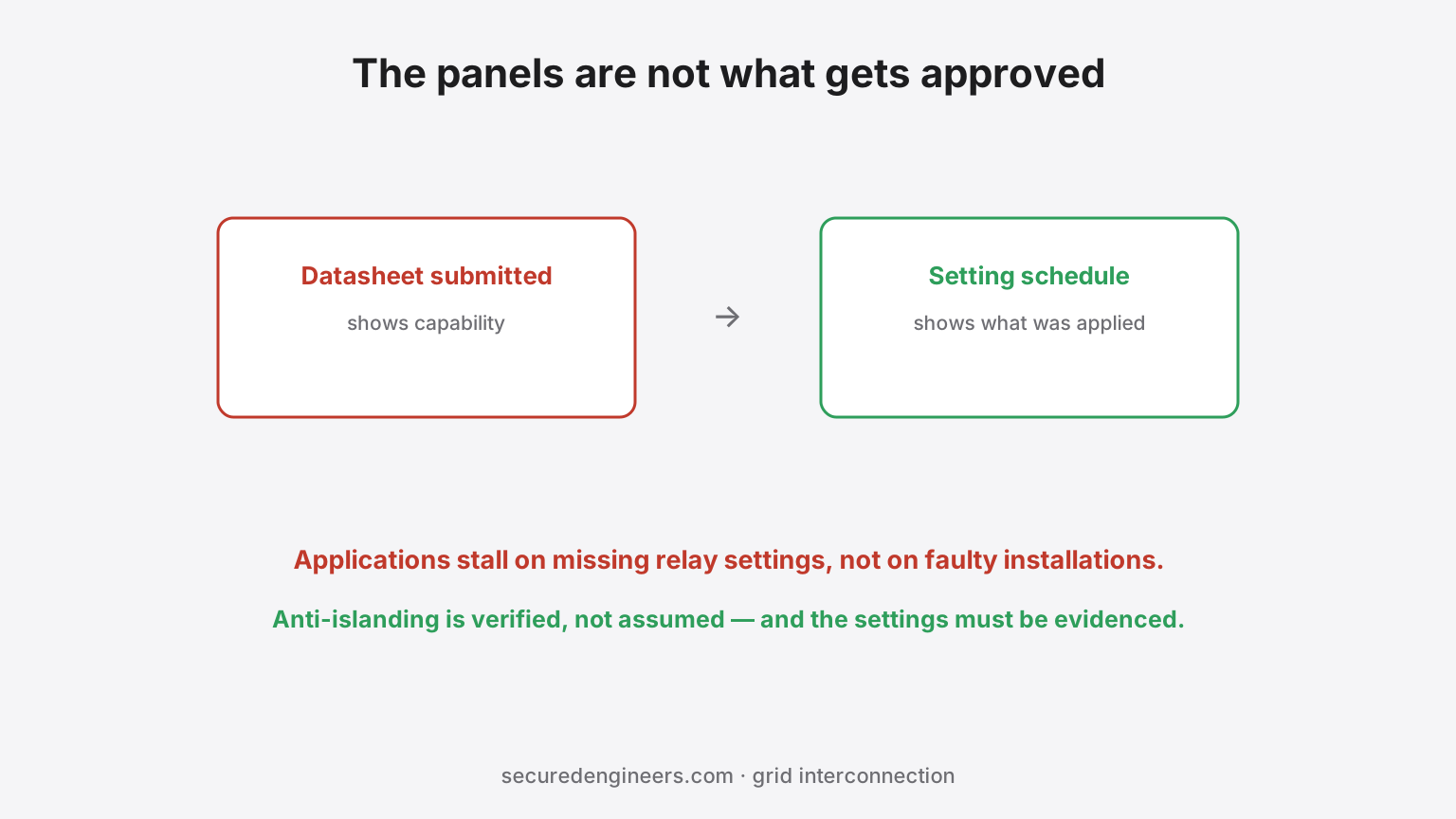
A completed rooftop plant is not a connected one. Between mechanical completion and the first exported unit sits interconnection approval, and it turns almost entirely on protection — whether the installation will behave safely toward a network the utility is responsible for.
What the utility is actually protecting against
- Islanding. The critical one. If the grid goes dead, your inverters must stop energising the network — otherwise a line a utility crew believes is de-energised is live. Anti-islanding protection is non-negotiable and is verified, not assumed.
- Voltage and frequency excursion. The plant must disconnect outside defined windows and reconnect only after conditions have been stable for a set period.
- Reverse power beyond permitted limits. Where export is capped or prohibited, the installation has to enforce that itself.
- Fault contribution. Inverters contribute to fault current. The network's protection has to still discriminate with your plant connected.
- Power quality. Harmonic injection and power factor at the point of common coupling — the same territory as harmonics and power-quality auditing.
Where applications stall
| What is submitted | Why it comes back |
|---|---|
| Inverter datasheet as evidence of protection | A datasheet shows capability; the utility wants the settings actually applied |
| SLD without the interface protection shown | The interface relay and its settings are the point of the drawing |
| No relay setting schedule | Voltage/frequency windows and trip times have to be stated |
| Metering arrangement not matching the sanction | Net metering requires a specific arrangement, and it is checked |
| Capacity exceeding sanctioned load | A separate approval question that stops the application dead |
| Earthing evidence absent | Measured values, not a symbol on a drawing |
The pattern is the same one that stalls CEIG approval for DG sets: the installation is usually fine, and the submission does not prove it.
The sanctioned-load trap
The single most common blocker on an existing factory is that the proposed solar capacity sits awkwardly against the sanctioned load. Rules vary by state and by DISCOM, and a plant sized purely on available roof area can turn out to be unapprovable at that capacity — which is discovered after the design is fixed unless someone checked first. Our solar vs sanctioned-load checker gives an indicative read before that happens, and net-metering delays covers the process side.
What we do differently
We establish the sanctioned-load and export position before the array is sized, and prepare the interface protection schedule as a submission document rather than assembling it when the DISCOM asks. Delivered under Solar EPC with the approvals owned in-house through Design & Approvals.
Interconnection requirements vary by state and DISCOM — confirm the current position for your location.
More insights
Your Factory Has a Reservoir, an ETP Pond, or a Cooling Tank. That's Roof Area You Haven't Counted.
Floating solar puts panels on water instead of roof or ground — a genuine option for factories, textile mills and campuses that already have a reservoir, effluent pond or cooling water body. It isn't free capacity, though: anchoring, water quality and access all add real engineering that a roof-mount quote doesn't have to price.
Solar EnergyRooftop solar without roof leaks — penetrations, ballast and the monsoon test
The plant works and the roof does not. Leak complaints arrive with the first monsoon, months after the installer demobilised. Here is how the detail is done properly.