
Engineering guides & industry insights — page 16
MEPF, solar and fire-safety guides — page 16
Archive page 16 of 22 — practical, no-jargon guides on MEPF, solar, fire safety and approvals.
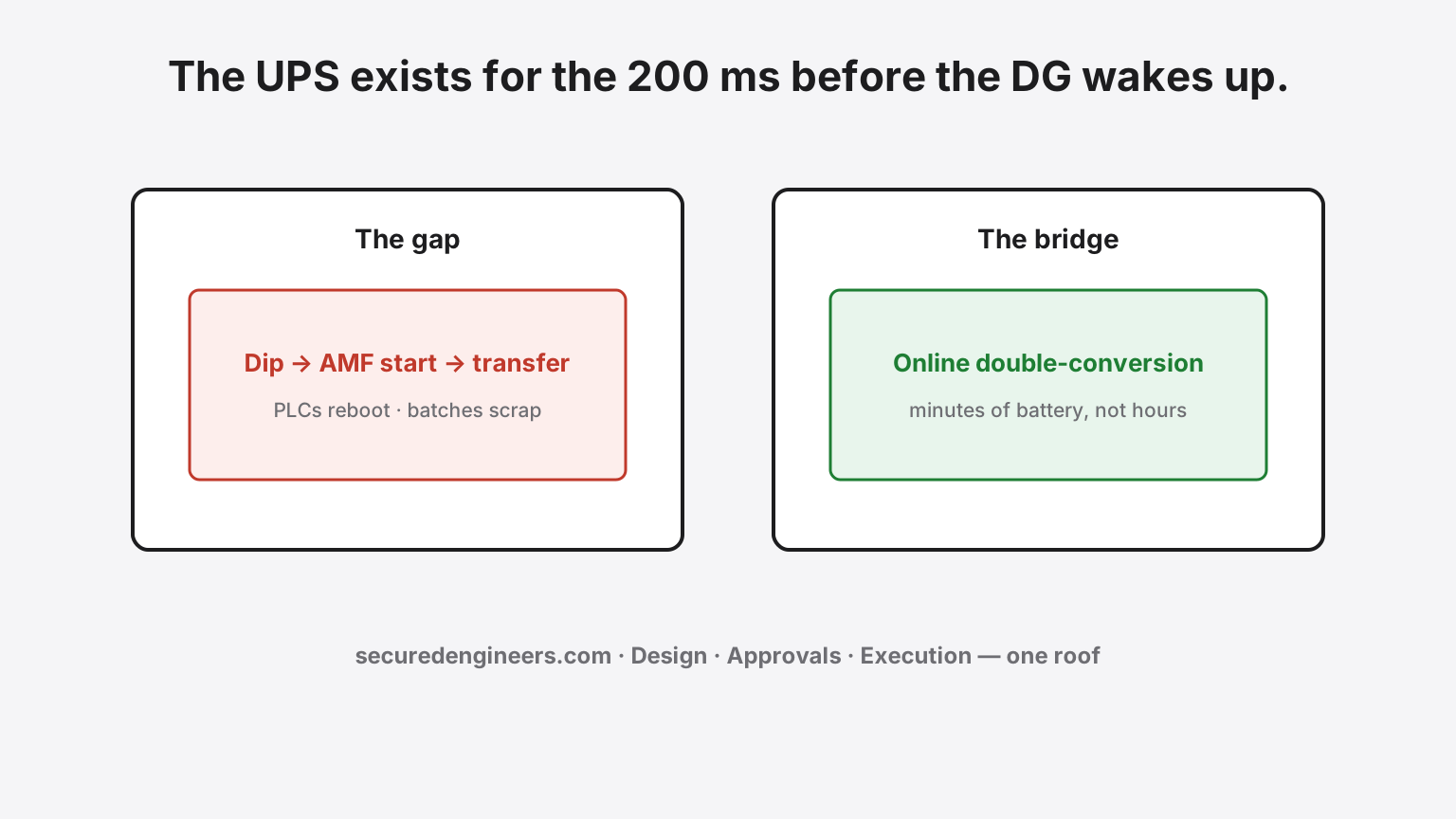
UPS Planning for Critical Factory and Office Loads: Size the Gap, Not the Outage
A UPS earns its cost in the seconds and minutes between a disturbance and the DG or grid taking over. Plan it from a load and autonomy schedule, keep the load within both its kW and kVA limits, choose topology and bypass for the duty, and size the battery for its end of life.
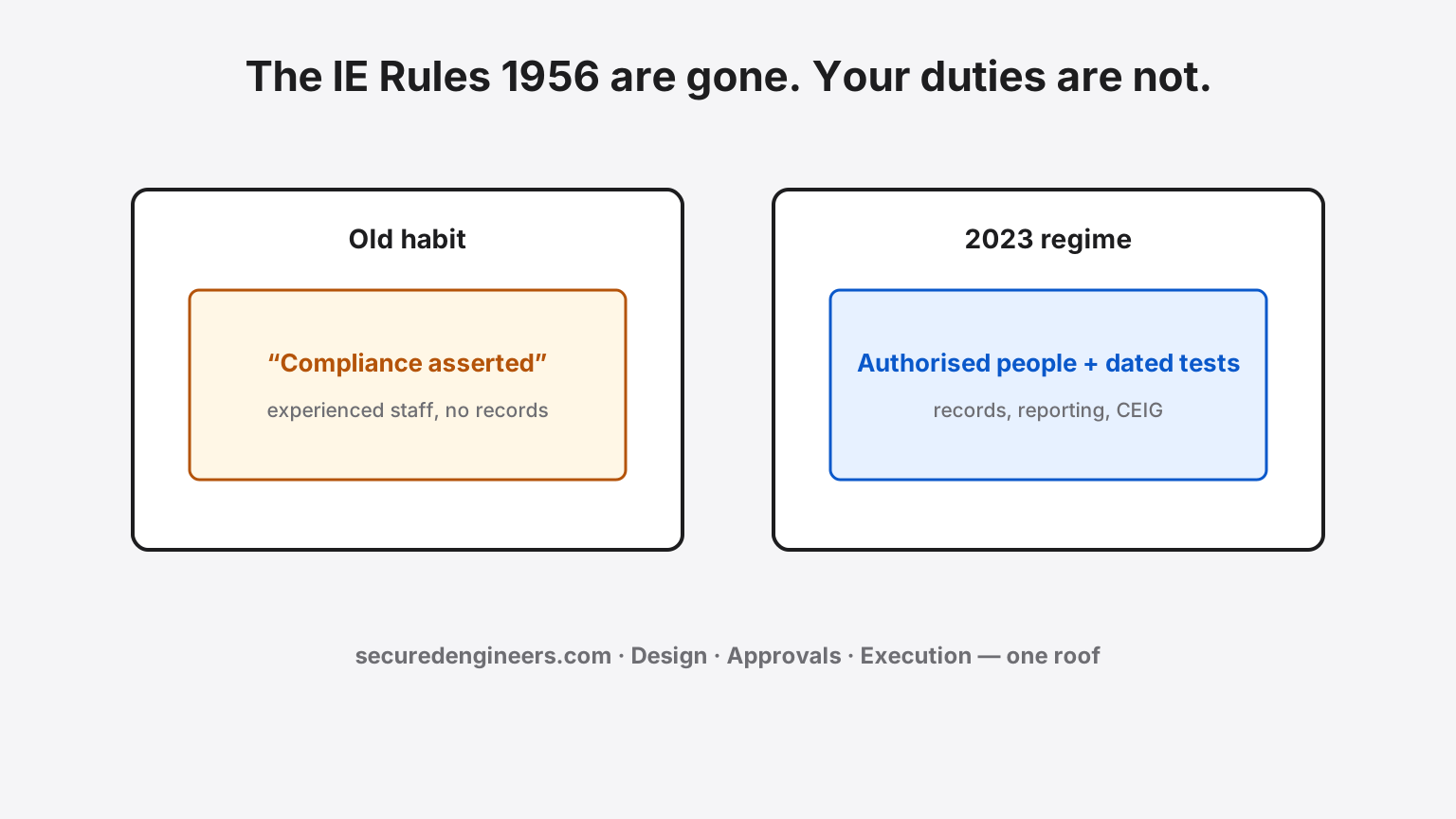
The IE Rules Are Gone. Here Is What You Are Personally on the Hook for Now.
Generations of Indian electrical practice ran on the Indian Electricity Rules, 1956. They have been replaced — the CEA's safety regulations now define an owner's duties: designated supervision, periodic testing, records, and accident reporting. Most facility owners have not read a line of them.
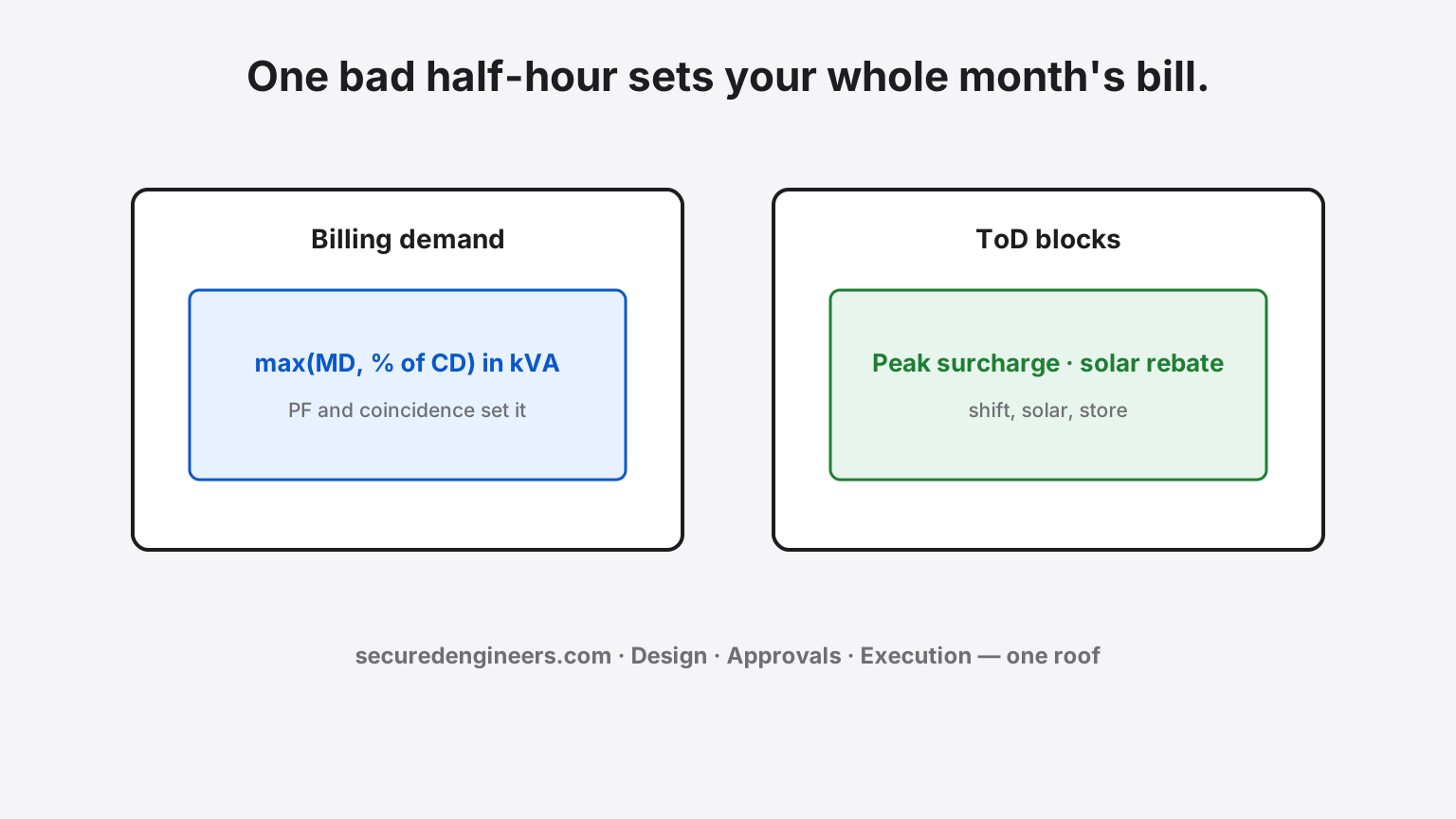
Maximum Demand and Time-of-Day Tariffs: Plan the Expansion on Interval Data
An expansion changes two numbers on an HT bill: the maximum demand the meter records and the share of energy used in each time-of-day block. Plan contract demand, shifts and load-shifting on the meter's interval data, and price every scenario against your state's current tariff order.
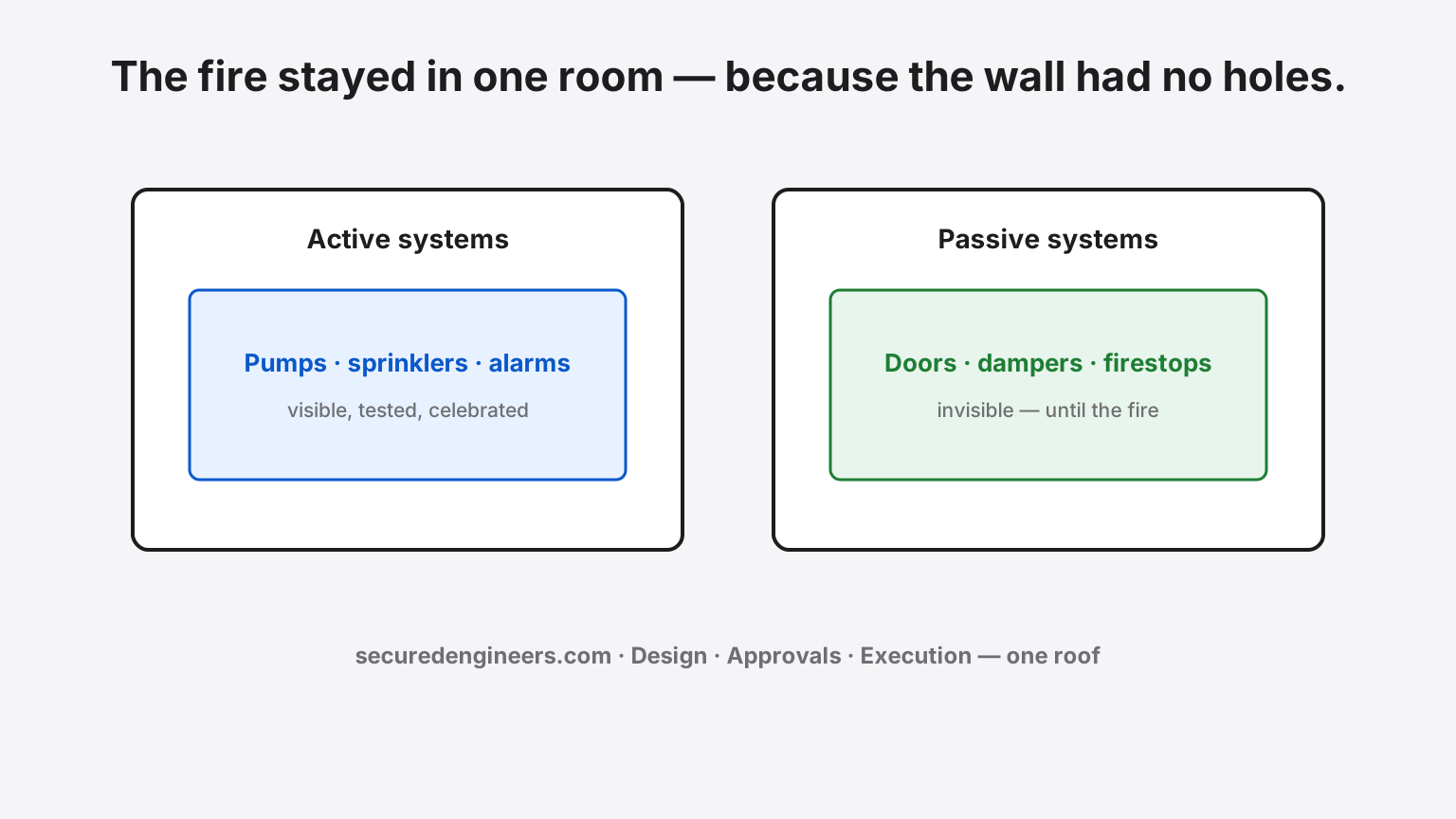
Firestopping and Fire Doors After a Renovation: Restoring Fire Separation
Every cable, pipe or duct pushed through a fire-rated wall during a fit-out opens a hole in the separation the approved fire scheme relied on, and every changed door can do the same. How to find the rated elements, restore each opening with a tested system, keep door assemblies intact, and prove it with records.
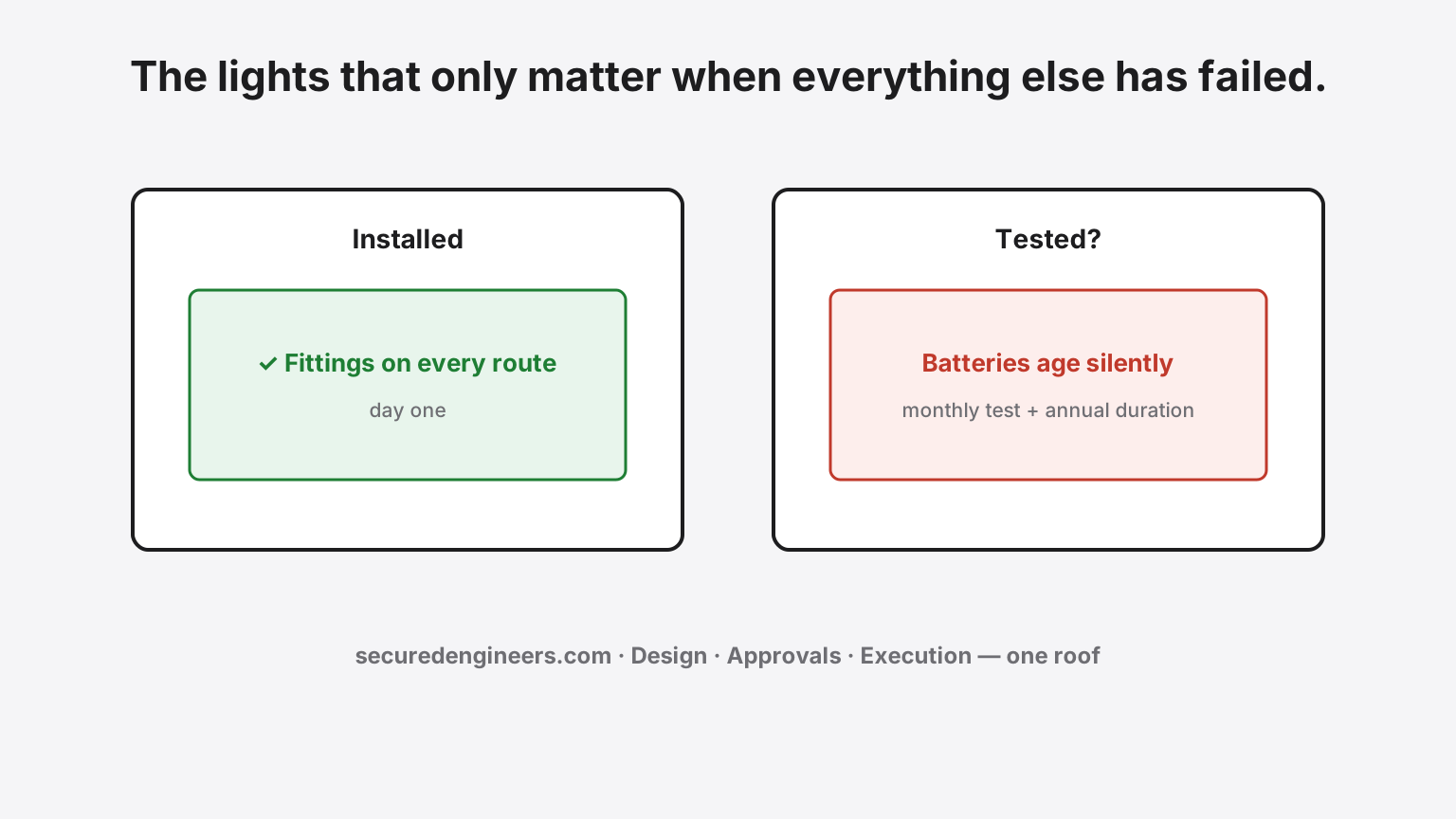
The Lights That Only Matter When Everything Else Has Failed
Emergency lighting is the one electrical system whose entire job happens after the electrical system is gone. Most buildings install it once, test it never, and discover its condition during a Fire NOC renewal — or an actual evacuation.
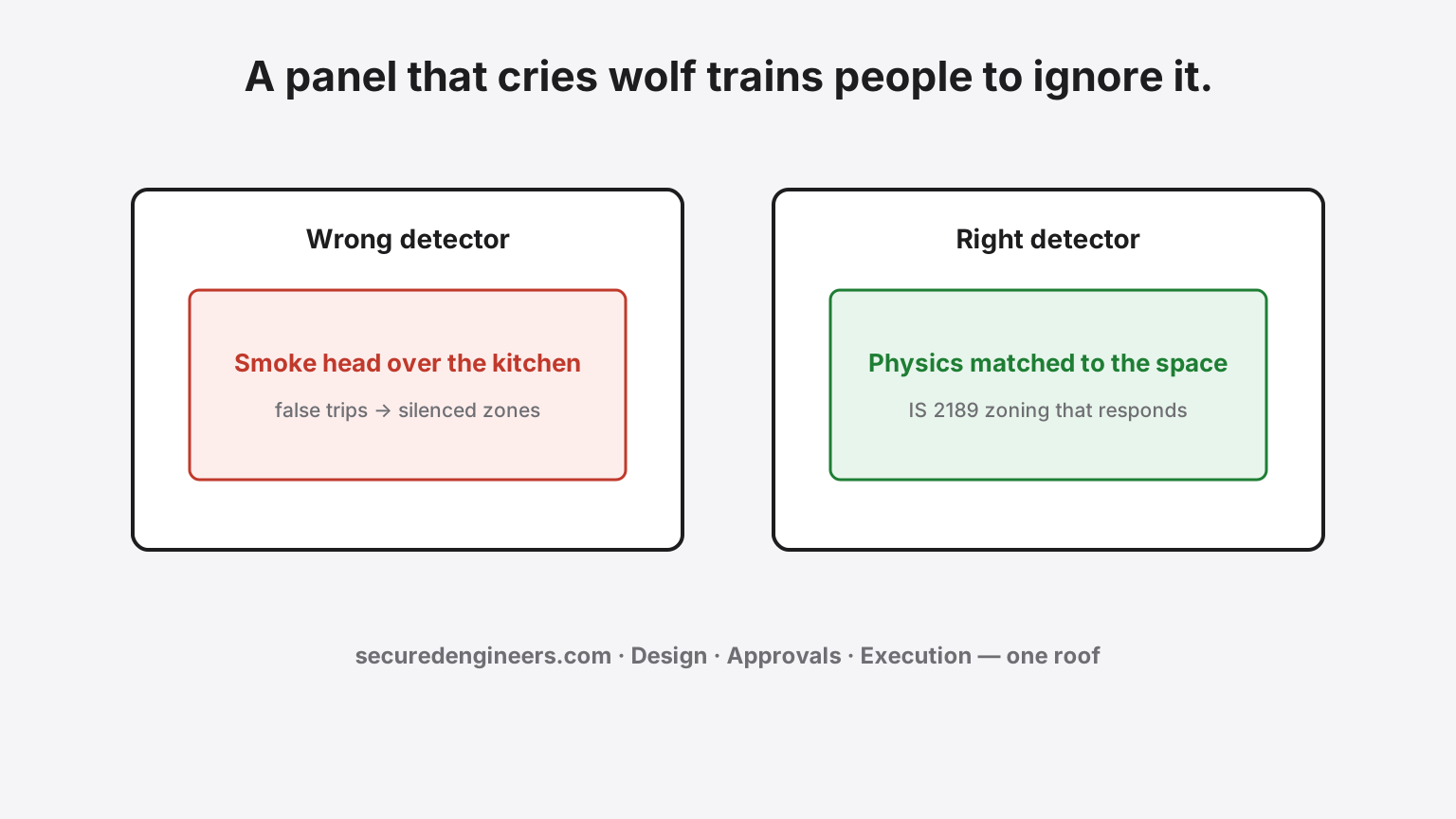
A Fire Alarm That Cries Wolf Is Worse Than No Alarm at All
After the third false evacuation, your team stops believing the panel — and someone puts the sounders on silent. False alarms are not bad luck; they are almost always a detector-selection or placement error that was baked in at design.
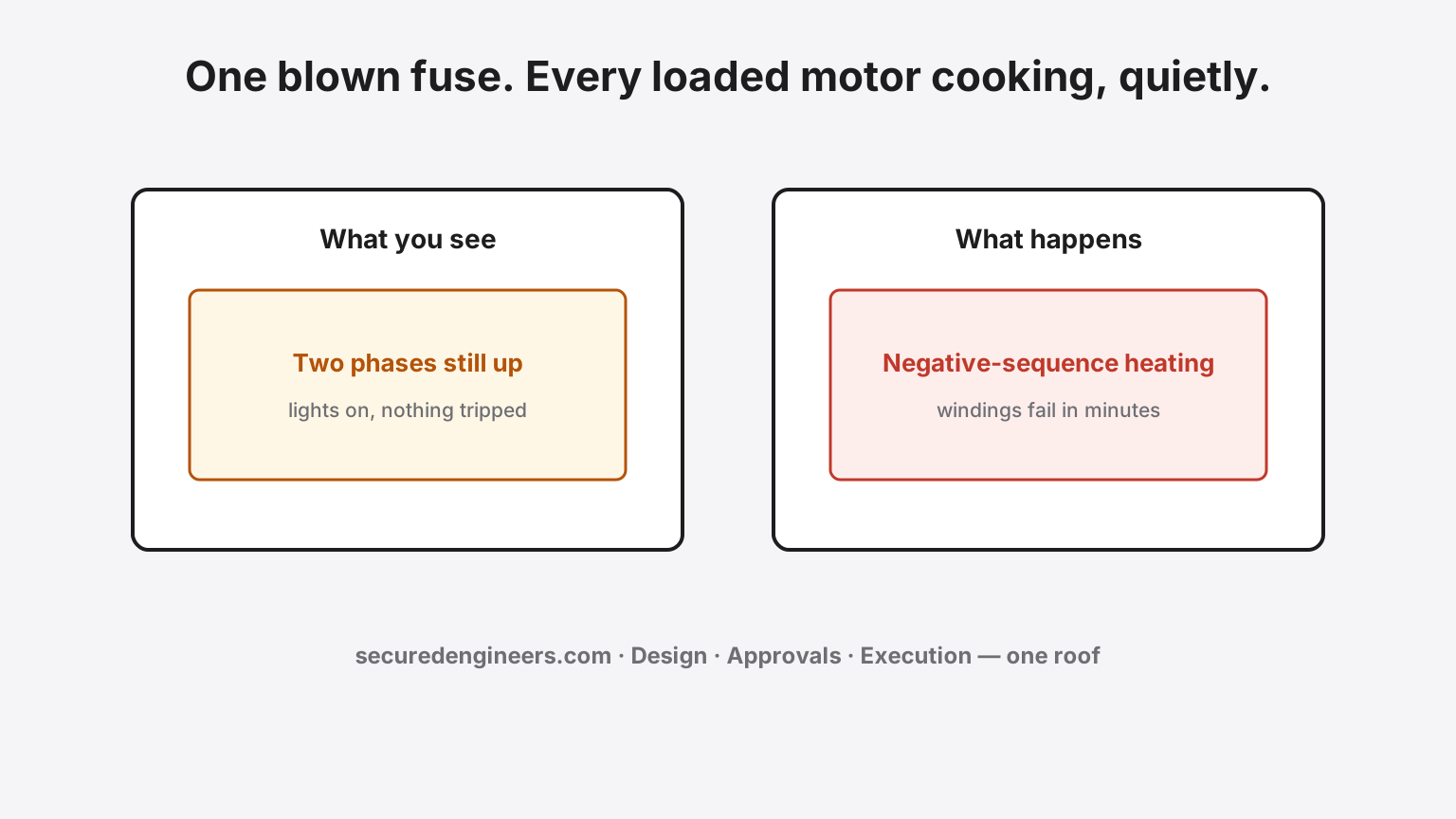
One Blown Fuse, Forty Burnt Motors: The Anatomy of Single Phasing
A three-phase motor does not stop when it loses a phase — it keeps running, overheating on negative-sequence currents until the windings cook. One upstream fuse can take out every unprotected motor on the line, in minutes.
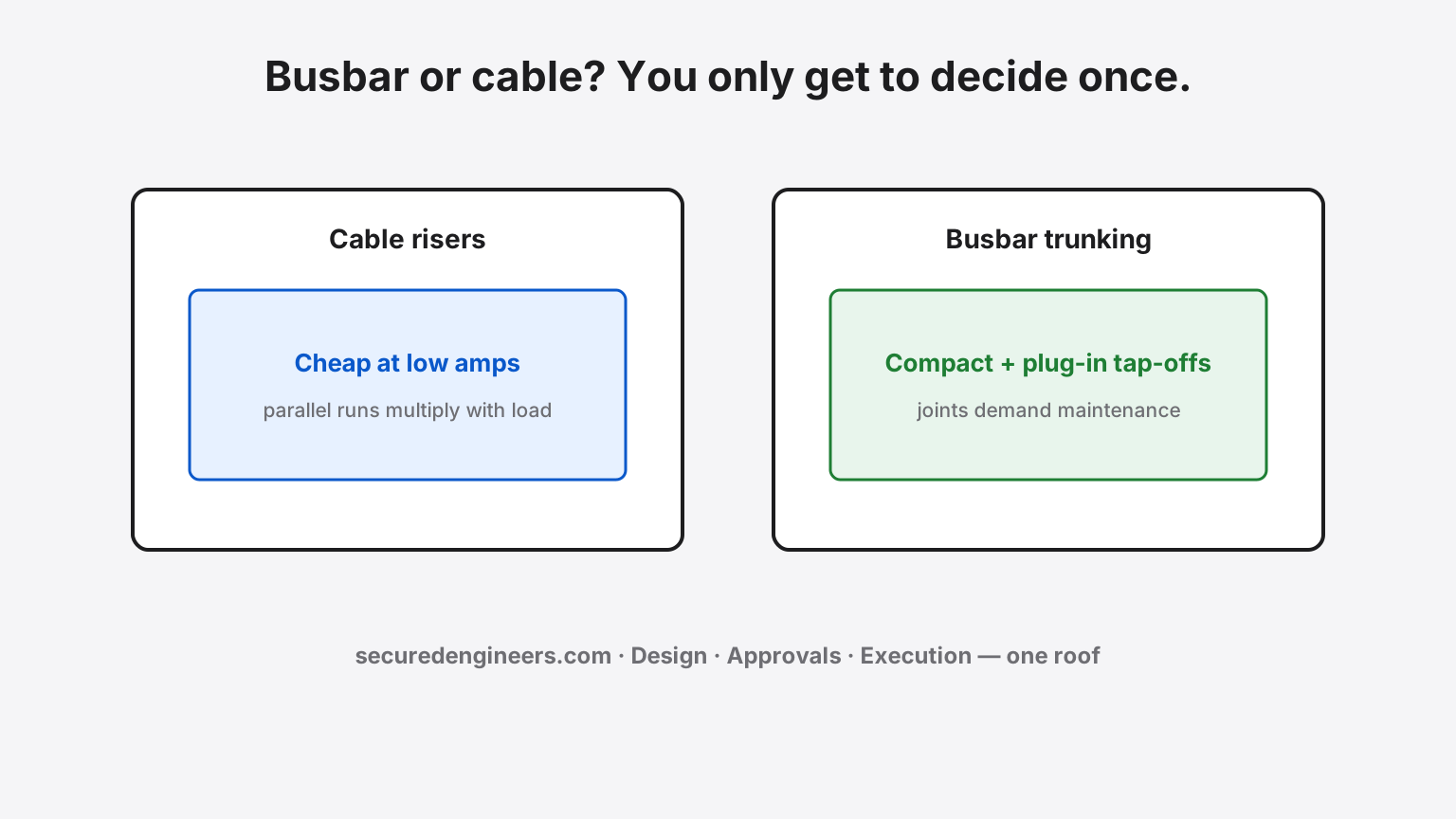
Busbar or Cable? The Rising-Mains Decision You Only Get to Make Once
Once the shafts are cast and the cables pulled, changing your mind costs a shutdown. Here is the honest engineering comparison between busbar trunking and cable risers for Indian industrial and commercial buildings — including where each one genuinely wins.
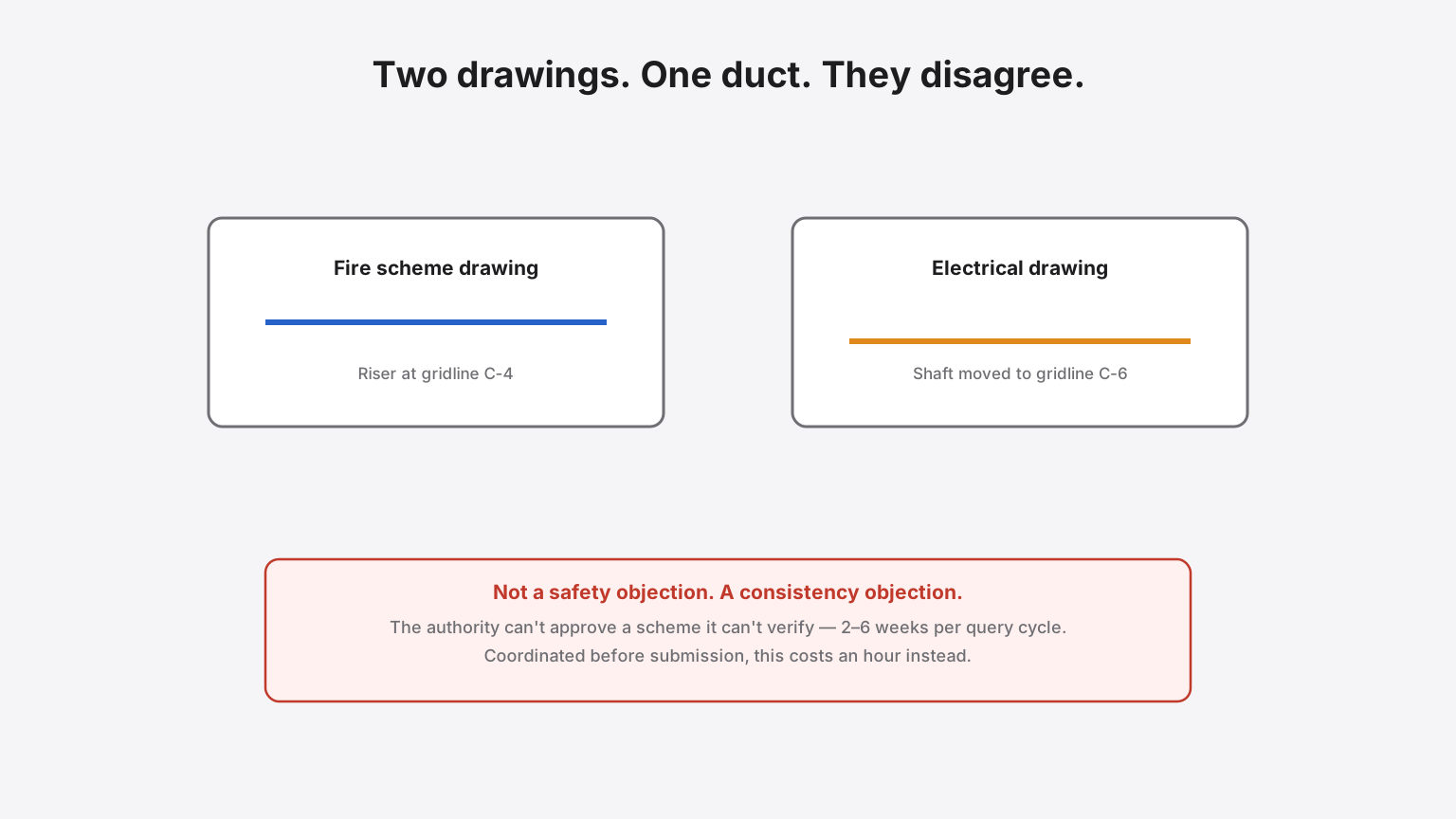
The Fire NOC Query Wasn't About Fire Safety. It Was About a Duct Nobody Coordinated.
Our BIM clash-detection guide covers what an uncoordinated design costs on site. A different cost shows up earlier: the query-and-resubmission cycle at Fire NOC and building-plan sanction, where an inconsistency between drawings — not a genuine safety gap — is what actually stalls the file.
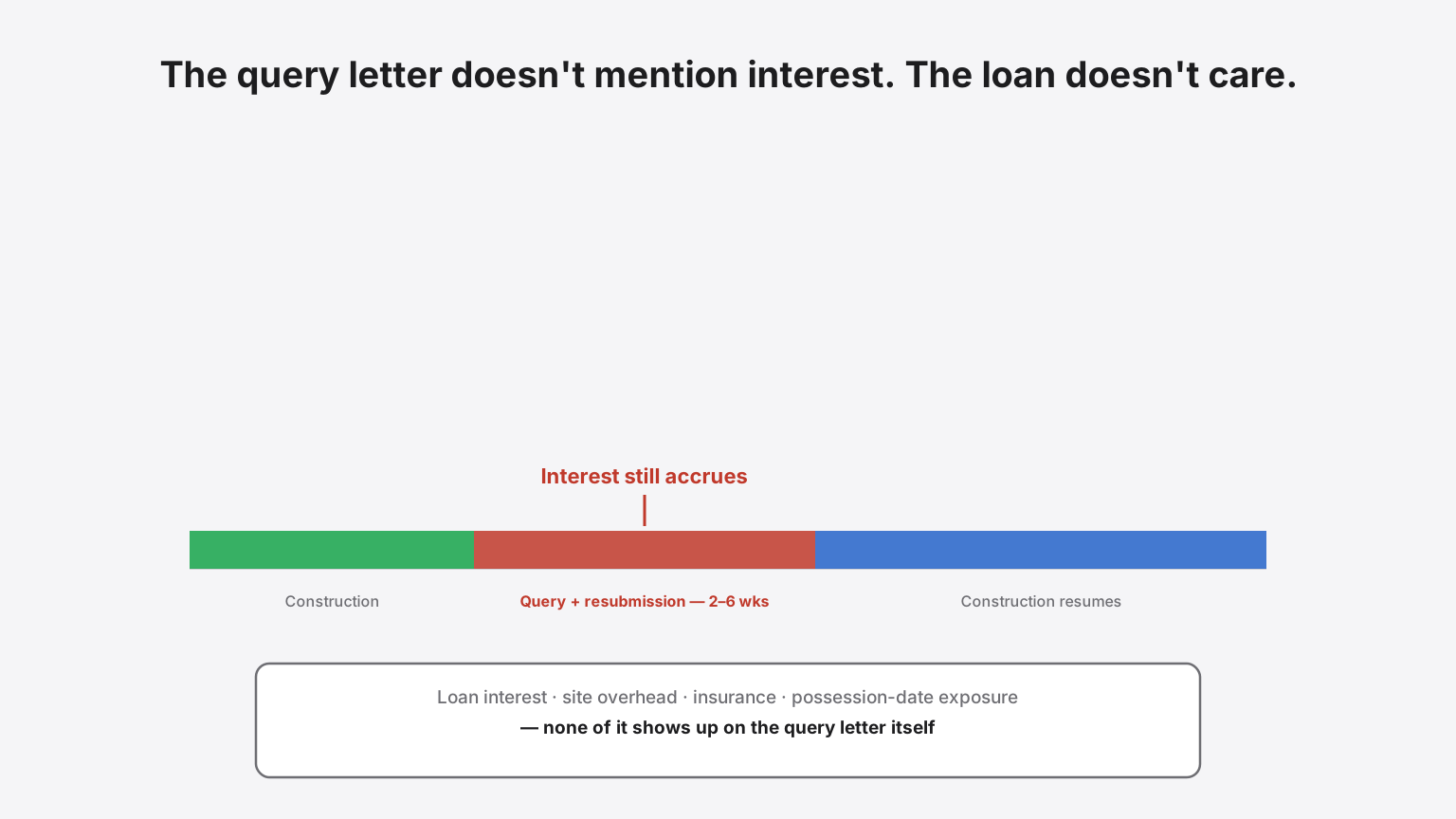
A Plan-Sanction Query Isn't a Delay. It's an Invoice — for Interest You're Already Paying.
A rejected MEP drawing reads as a paperwork problem. It's a financial one: every week a submission sits in a query-and-resubmission cycle is a week of construction-loan interest, idle site overhead and a possession date paid for by someone who assumed the file would move on schedule.
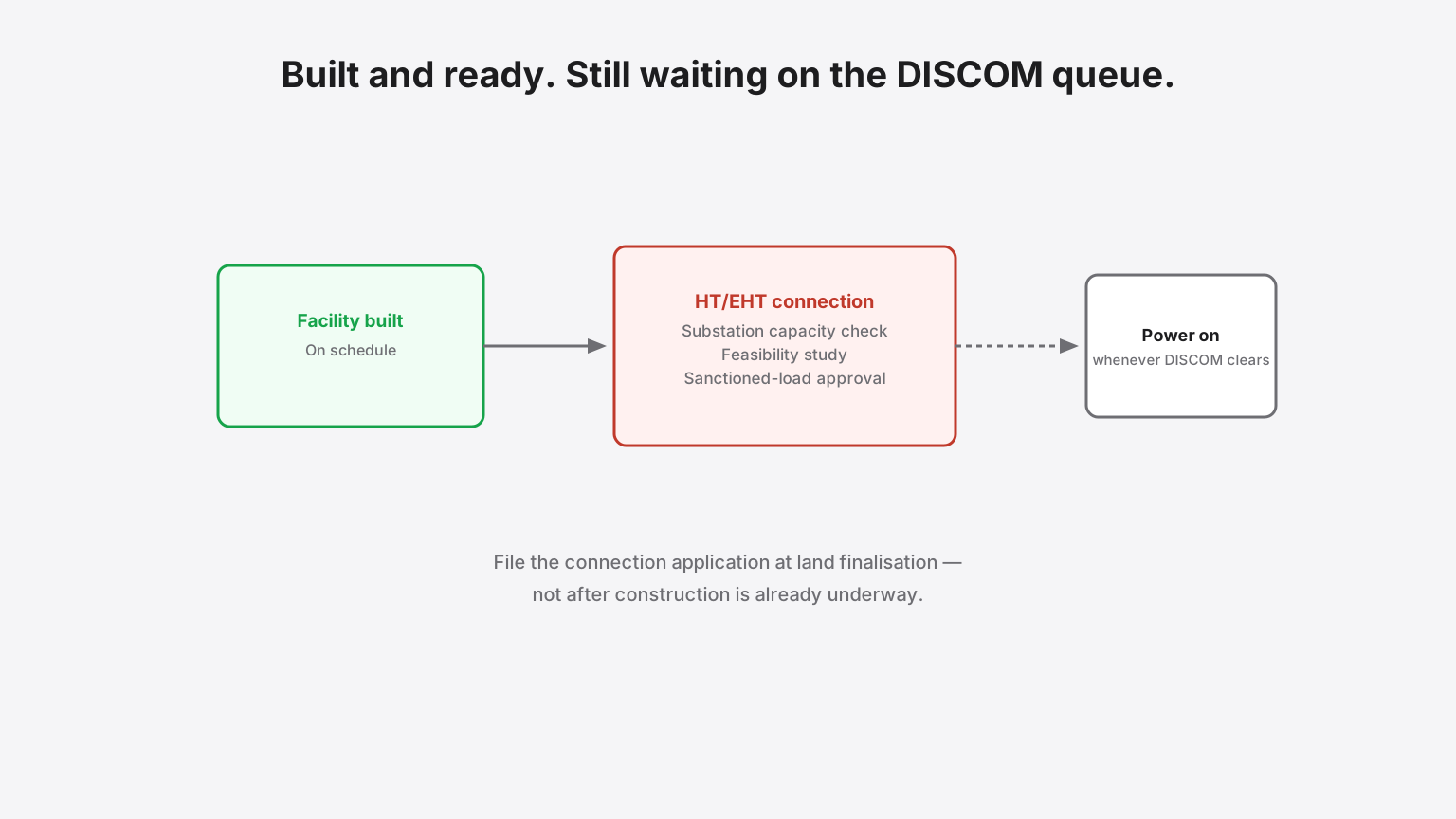
Factory Electrical Load Enhancement: From Measured Demand to an Approved Connection
A load enhancement is sized from measured maximum demand, not the sum of nameplates — and it can change your supply voltage, your transformer and your protection. What to measure, what to file, what to check.
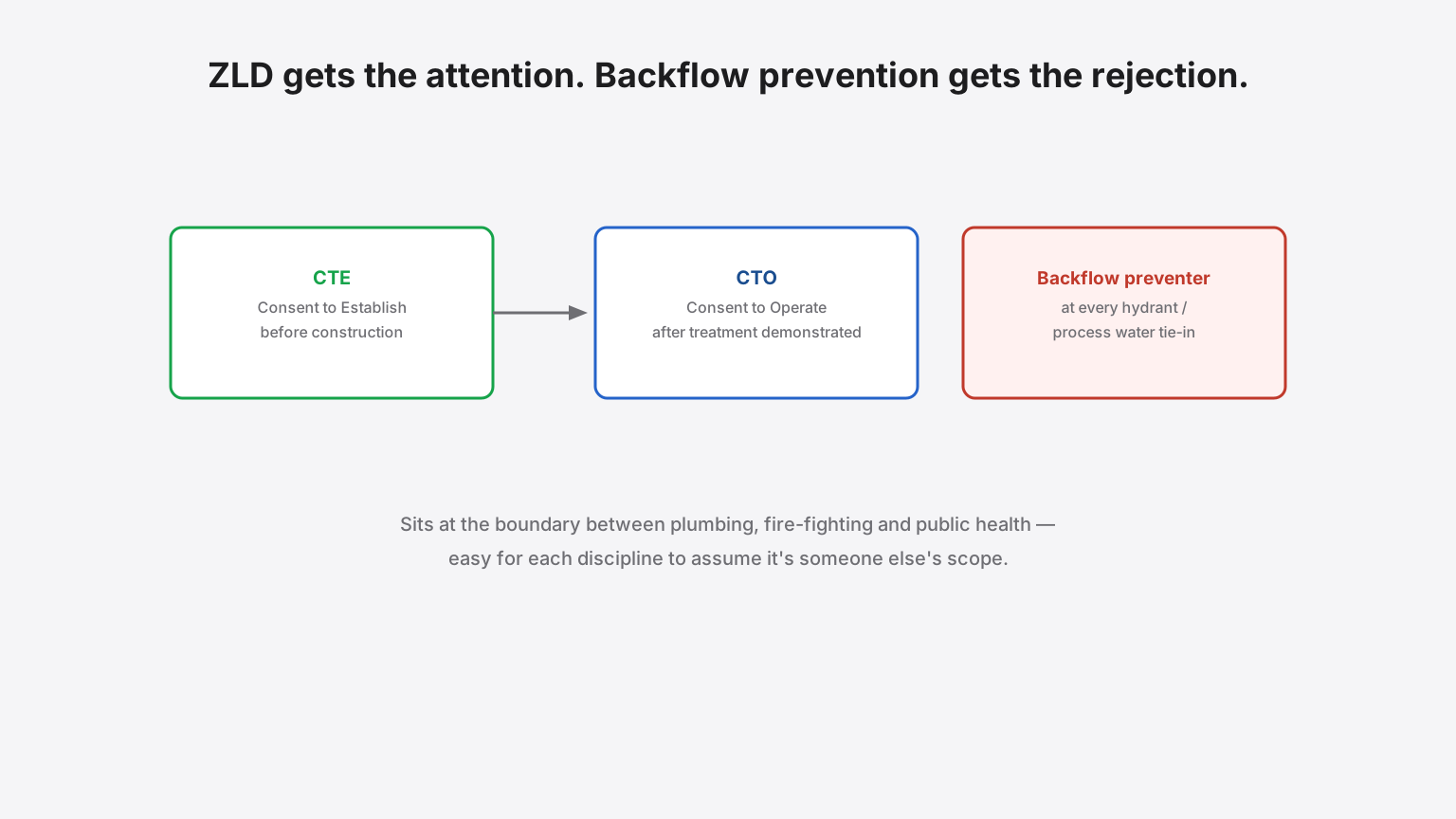
ZLD and Greywater Get the Attention. Backflow Prevention Gets the Rejection Letter.
Industrial water compliance conversations focus on effluent — ZLD, greywater recycling. The permitting step that actually stalls a project just as often is upstream of that: Consent to Establish/Operate from the pollution control board, and backflow prevention on the potable supply, which barely gets discussed until an inspector asks for it.
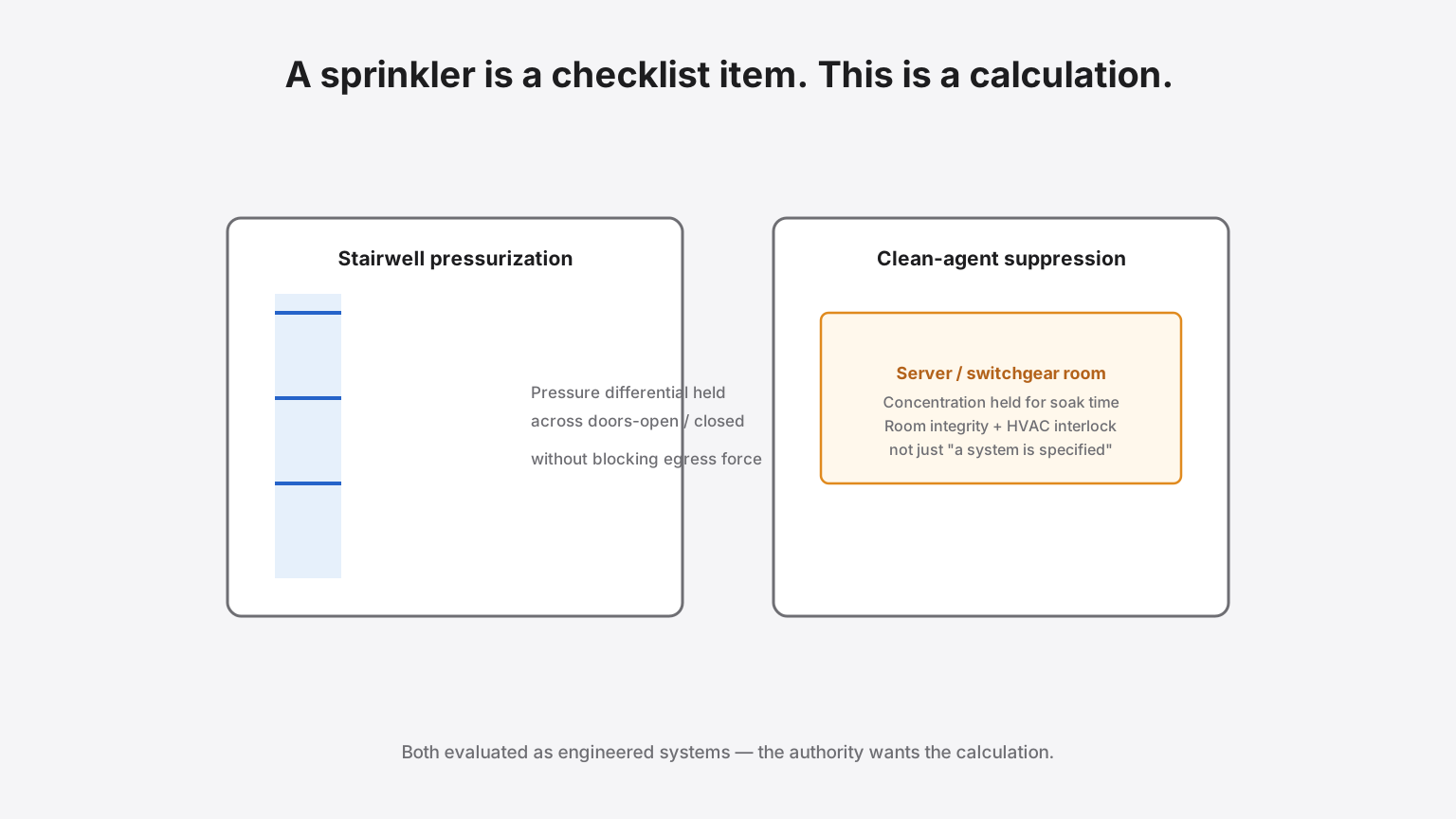
A Sprinkler Head Is Easy to Approve. A Clean-Agent System Is Not.
Most of a Fire NOC submission is standard — hydrants, sprinklers, detection. Specialized systems like stairwell pressurization and clean-agent gas suppression for server or electrical rooms get a different level of scrutiny, because they're evaluated as engineered systems, not checklist items — and that changes what the submission needs to contain.
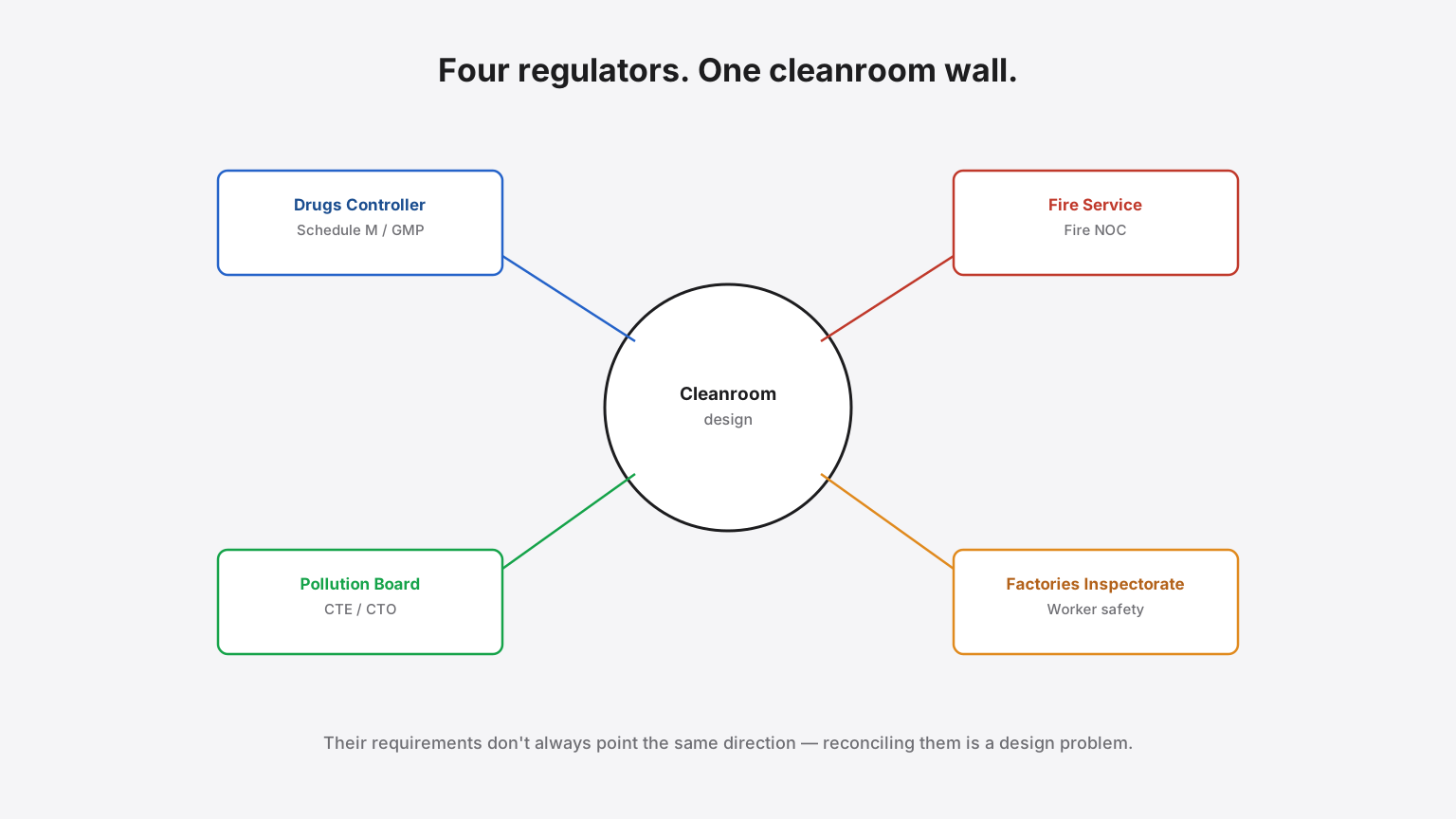
The Drugs Controller, the Pollution Board and the Fire Department All Have an Opinion on Your Cleanroom.
Our GMP HVAC and WHO-GMP guides cover how to design a cleanroom that passes its audit. A separate problem sits alongside the engineering: a pharma or food manufacturing facility answers to several regulatory bodies at once, and their requirements don't always agree with each other.
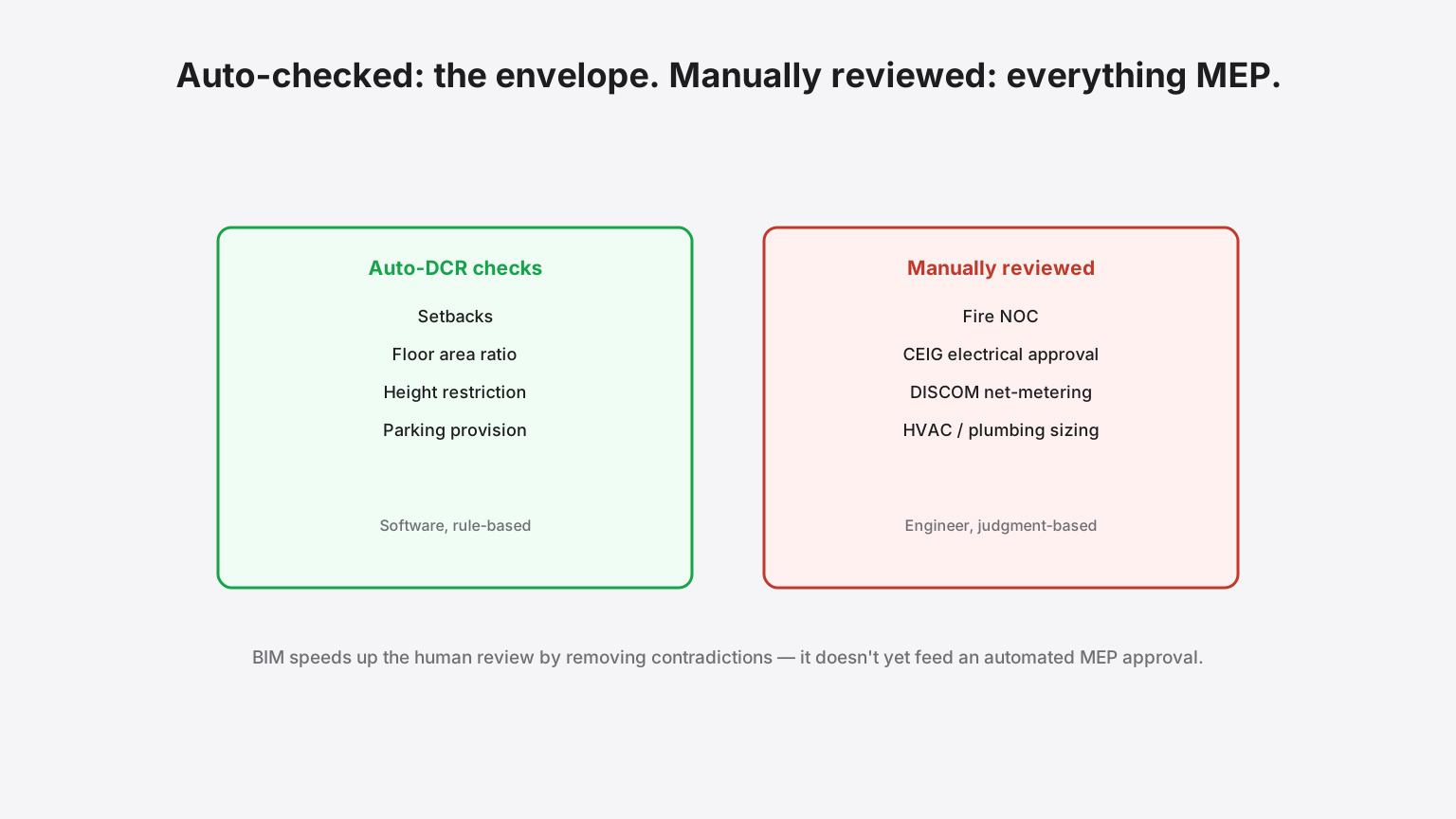
Your Municipality Already Auto-Checks the Building Envelope. It Doesn't Auto-Check Your MEP.
Many Indian municipal corporations now run Auto-DCR software that automatically checks a building's plan against local byelaws — setbacks, FAR, height. It's a genuine, useful system. It's also not an MEP code-checker, and treating BIM as if it feeds an automated MEP approval process overstates where the technology actually is today.
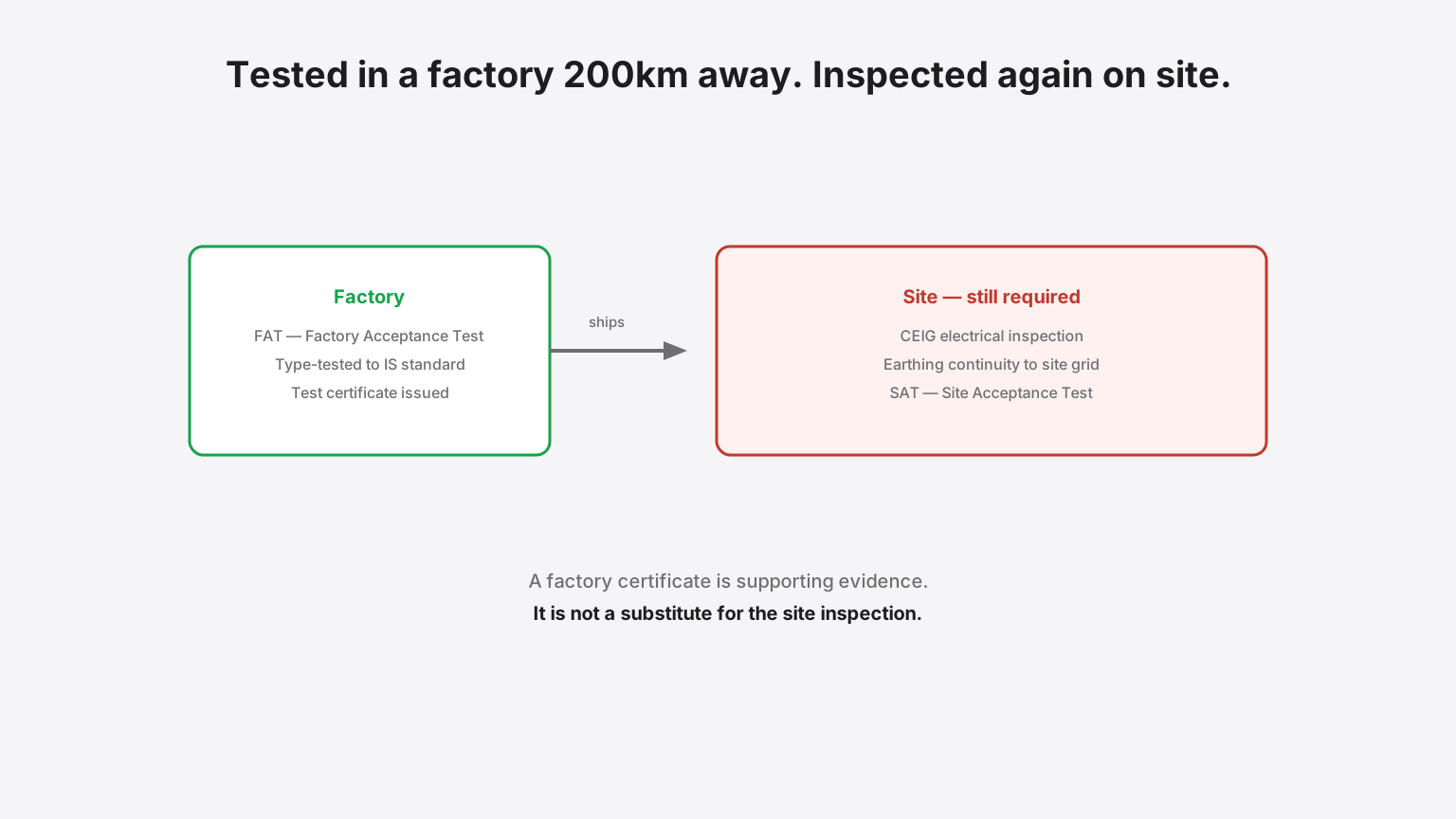
The Panel Room Was Built and Tested in a Factory 200km Away. Who Inspects It Now?
Prefabricated MEP — pump skids, packaged plant rooms, factory-built LT panel assemblies — genuinely compresses site programme. It also raises a question buyers rarely ask before ordering one: does factory testing satisfy the site electrical inspector, or does the whole assembly get re-inspected as if it were built on-site from scratch?
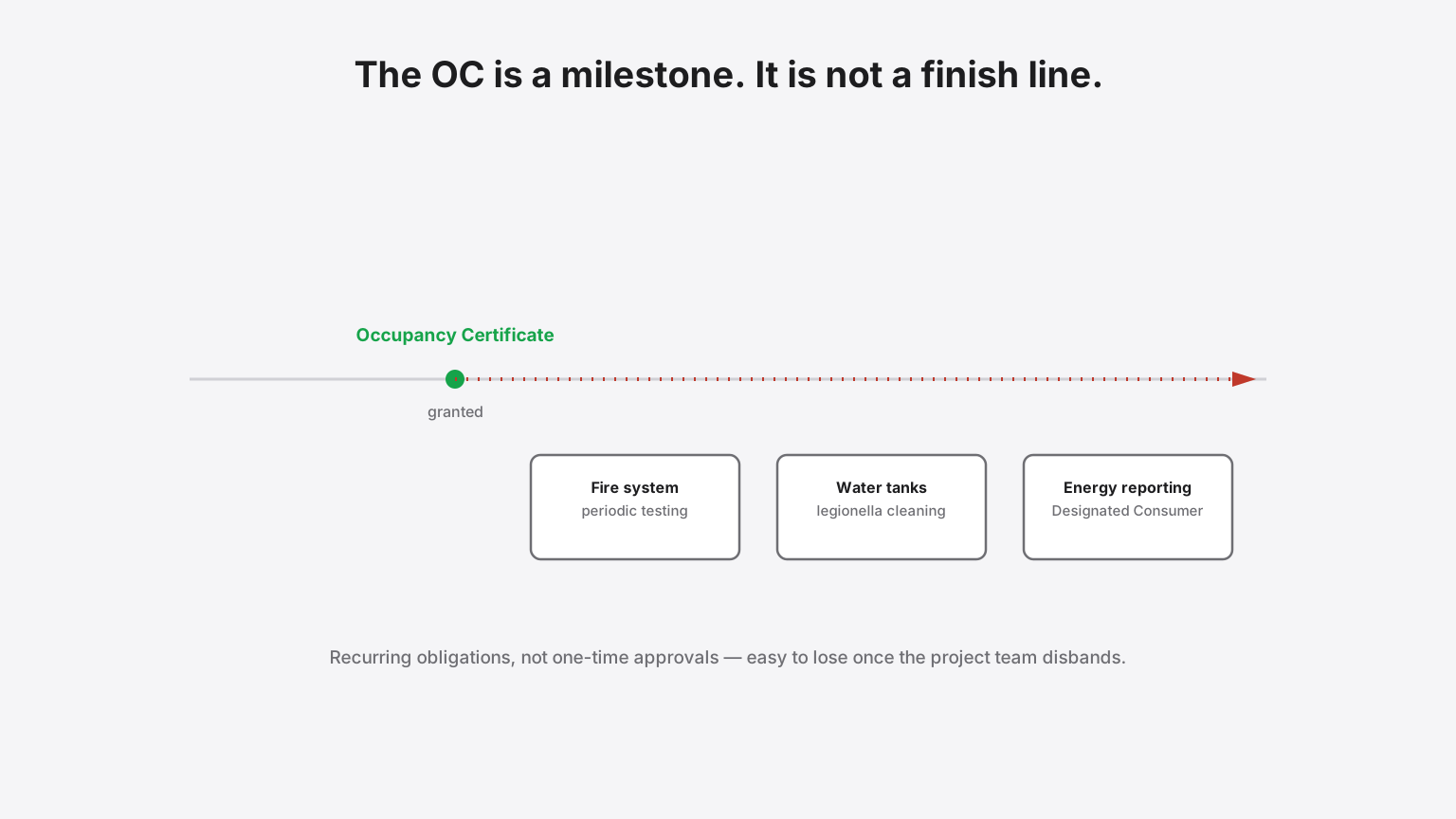
The Occupancy Certificate Is a Milestone. It Is Not a Finish Line.
Our occupancy certificate guide covers the chain that has to close before a building can be legally possessed. Compliance doesn't end there — fire systems need periodic testing, water tanks need documented cleaning against legionella risk, and larger energy consumers carry ongoing reporting obligations that start counting from handover, not before.
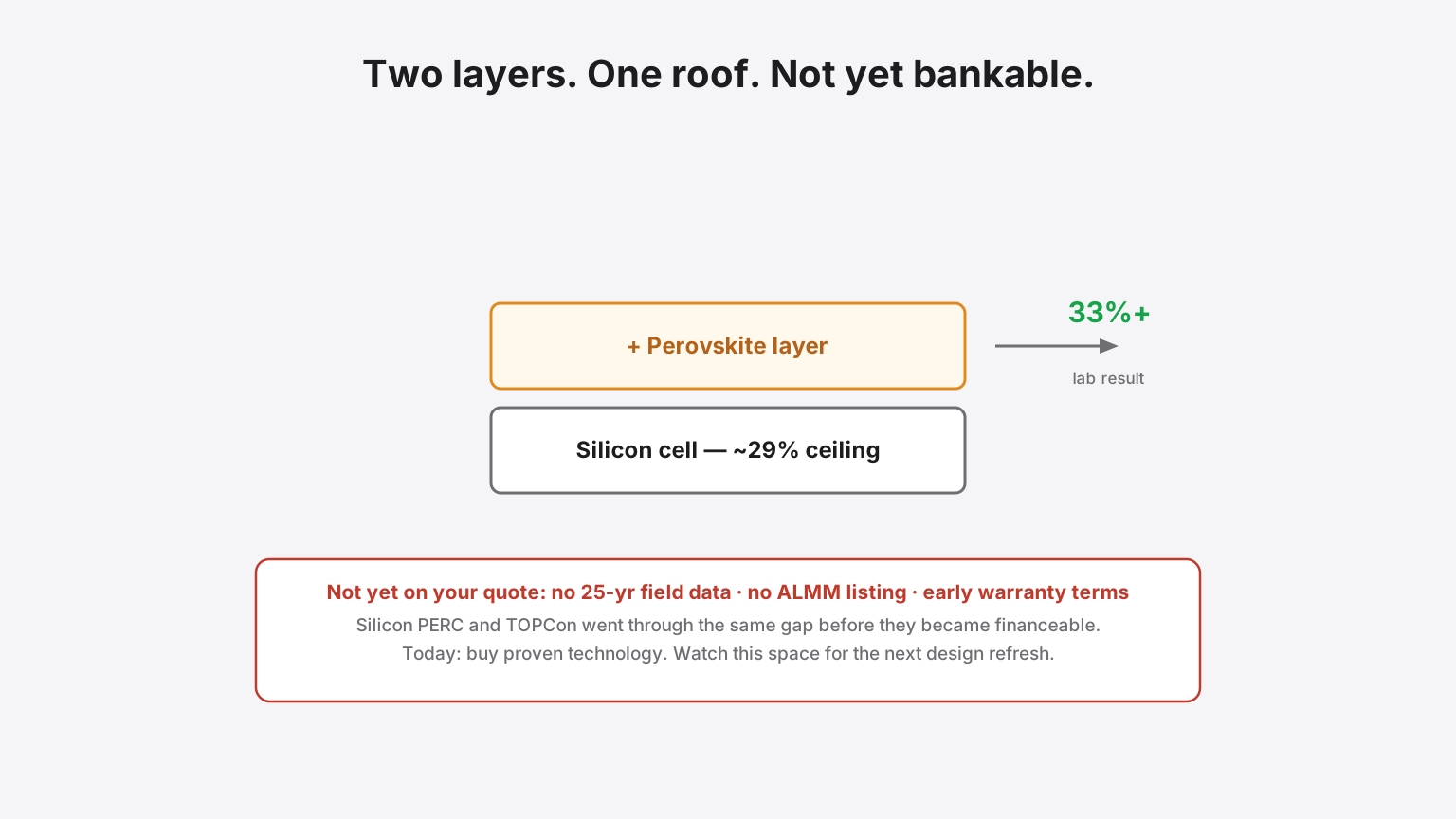
Perovskite Cells Promise 30%+ Efficiency. Your Roof Doesn't Have Ten Years to Wait and See.
Perovskite-on-silicon tandem cells are the most genuinely exciting number in solar right now — lab efficiencies past 33%, well above silicon's ceiling. They are also not yet a module you can put on an industrial roof and finance normally. Here's the honest gap between the lab result and your next RFQ.
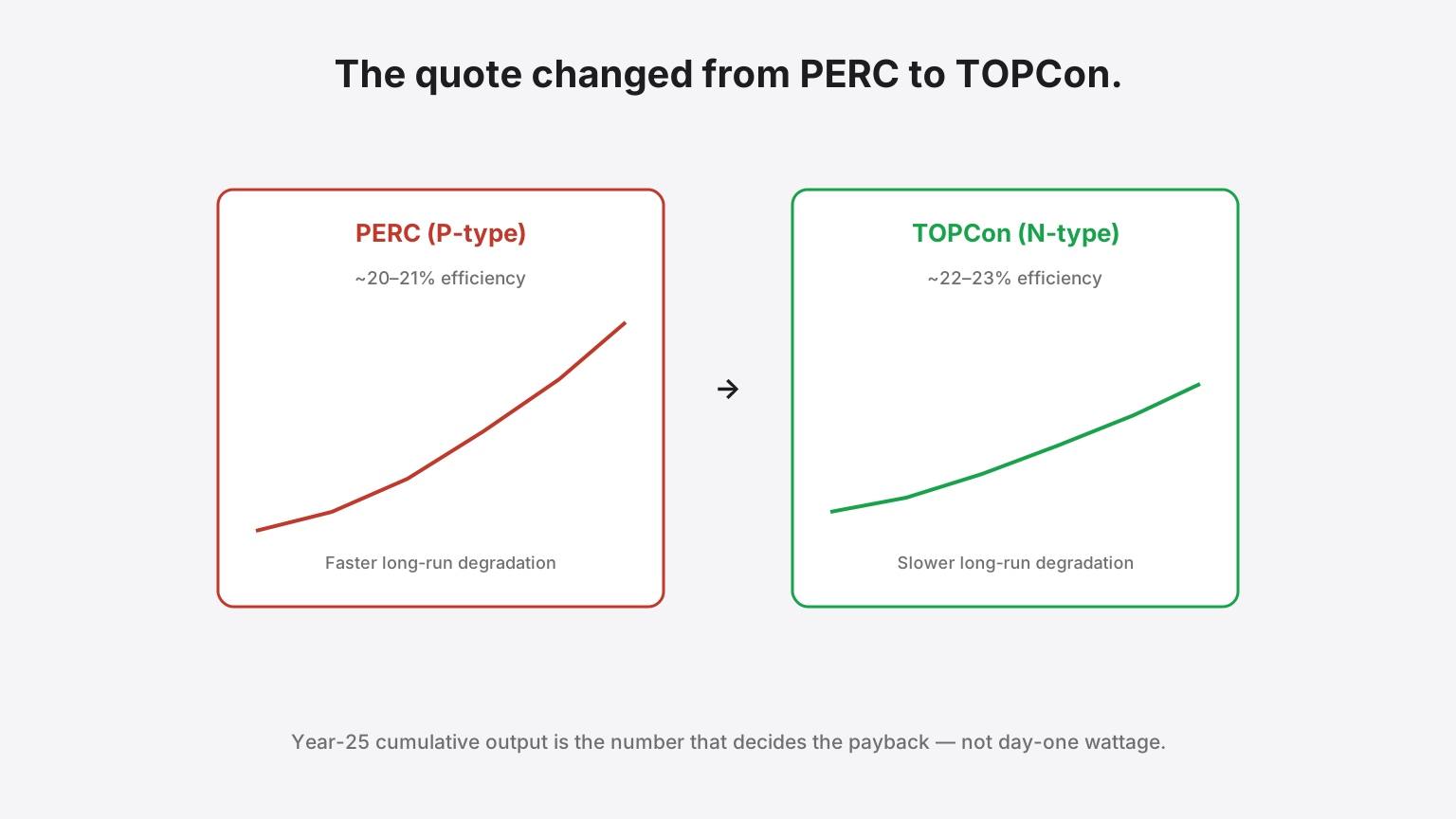
Your Quote Says TOPCon Now, Not PERC. Here's What Actually Changed.
Most commercial and industrial solar quotes in 2026 default to TOPCon modules rather than the PERC panels standard a few years ago. The efficiency number moved, but the number that matters more for a 25-year asset is the degradation curve — and that's where N-type genuinely earns the switch.
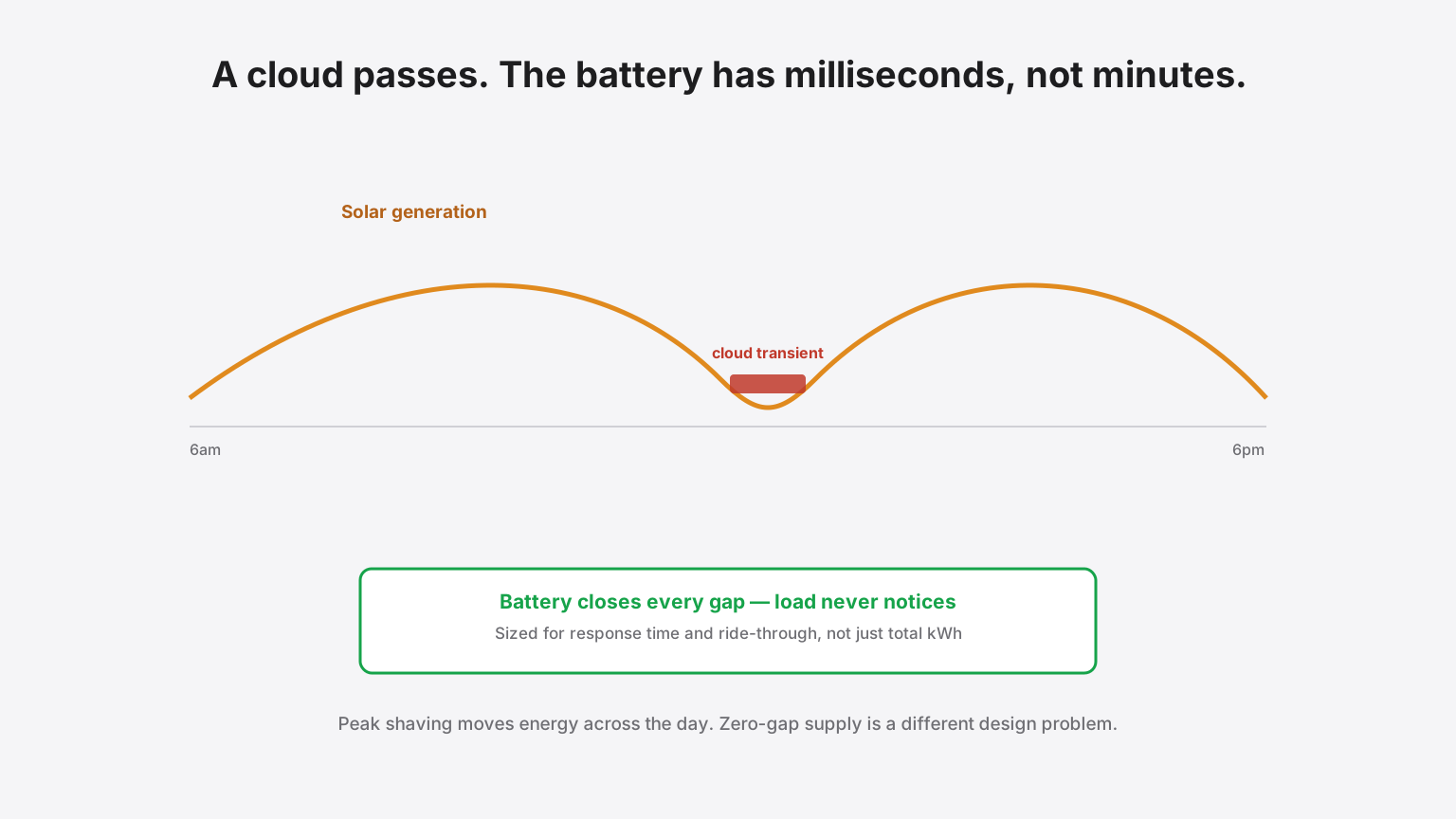
Peak Shaving Is One Battery Use Case. Zero Tolerance for a Supply Gap Is a Different Design Problem.
Solar-plus-storage for evening peak shaving is now a familiar factory decision. A different, harder problem sits behind it: continuous-process plants, cleanrooms and server rooms that cannot tolerate even the seconds-long gap between a cloud transient and a DG picking up. That needs different sizing, not just a bigger battery.
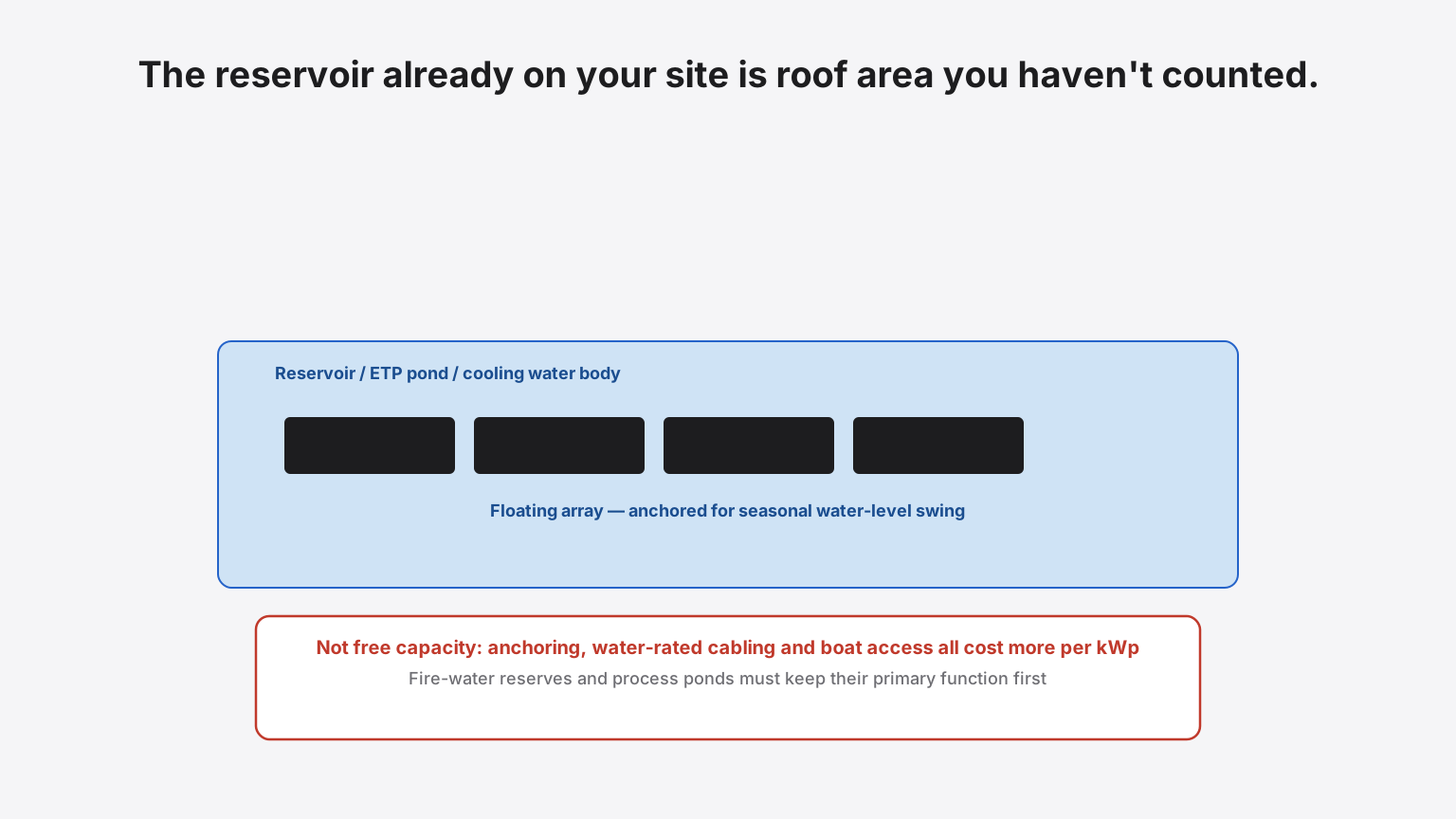
Your Factory Has a Reservoir, an ETP Pond, or a Cooling Tank. That's Roof Area You Haven't Counted.
Floating solar puts panels on water instead of roof or ground — a genuine option for factories, textile mills and campuses that already have a reservoir, effluent pond or cooling water body. It isn't free capacity, though: anchoring, water quality and access all add real engineering that a roof-mount quote doesn't have to price.
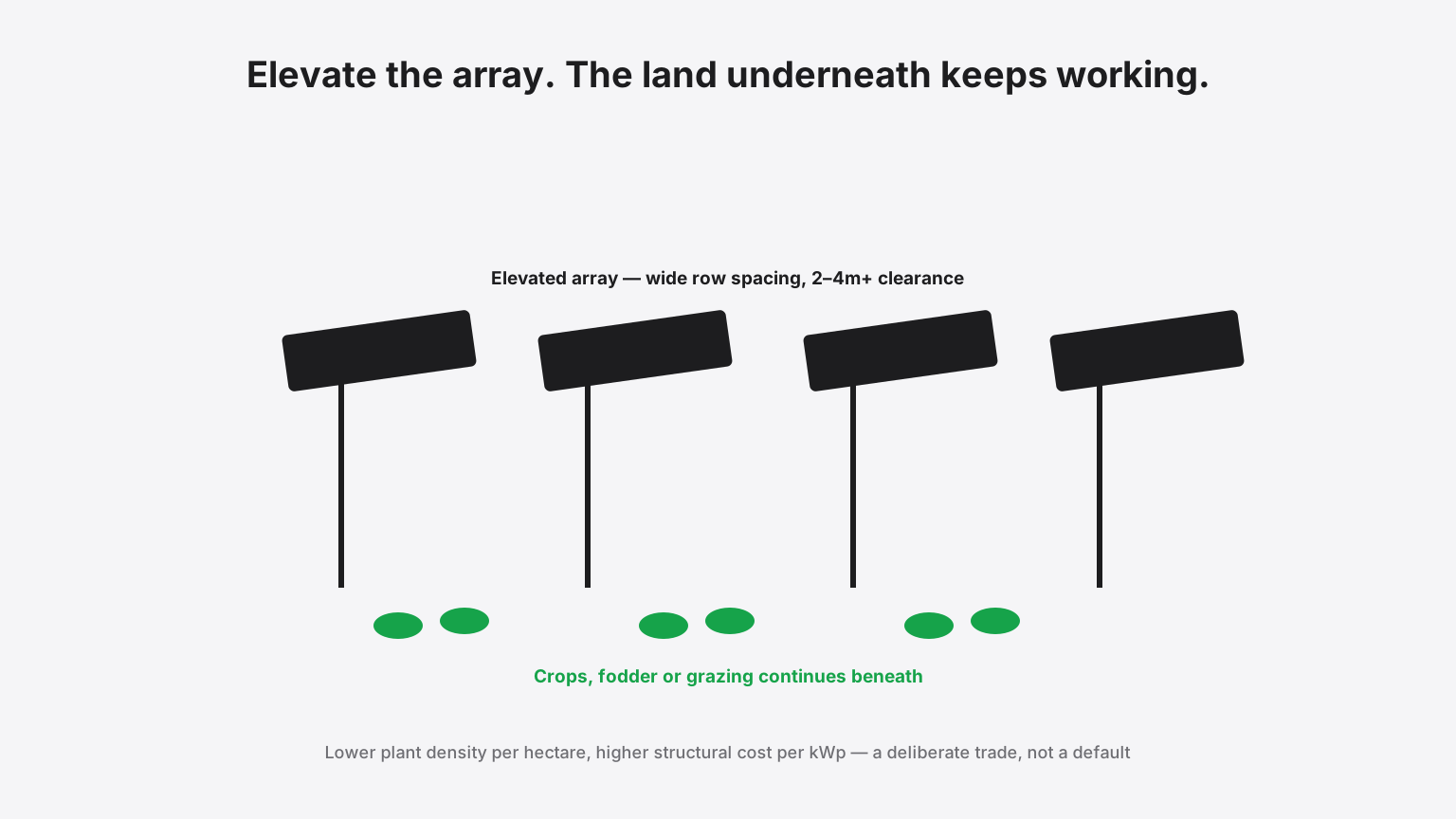
Elevate the Array, and the Land Underneath Doesn't Have to Sit Idle.
Large ground-mount captive or open-access solar plants use land that could otherwise stay in agricultural use. Agrivoltaic design — elevating and spacing the array so farming continues beneath it — is a real option for industrial buyers structuring these deals, with real structural cost and yield trade-offs, not a default.
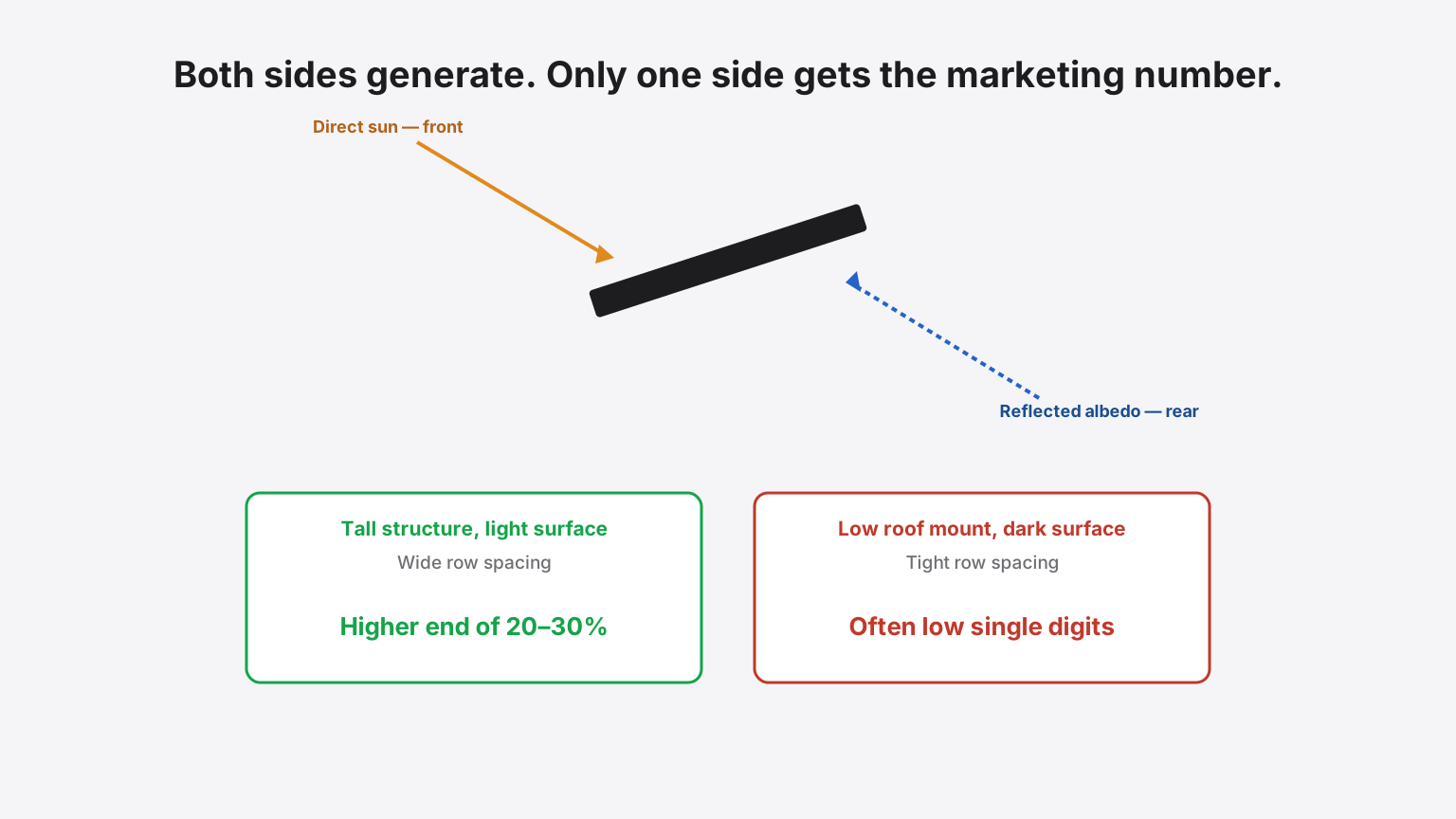
Bifacial Panels Generate From Both Sides. On the Wrong Roof, the Second Side Generates Almost Nothing.
Bifacial modules capture light reflected off the ground as well as direct sunlight — real, but the gain depends entirely on mounting height, tilt and what's actually underneath the array. Marketing puts the number at up to 20-30%. Most Indian commercial rooftops see a fraction of that, and it's worth knowing why before paying the premium.
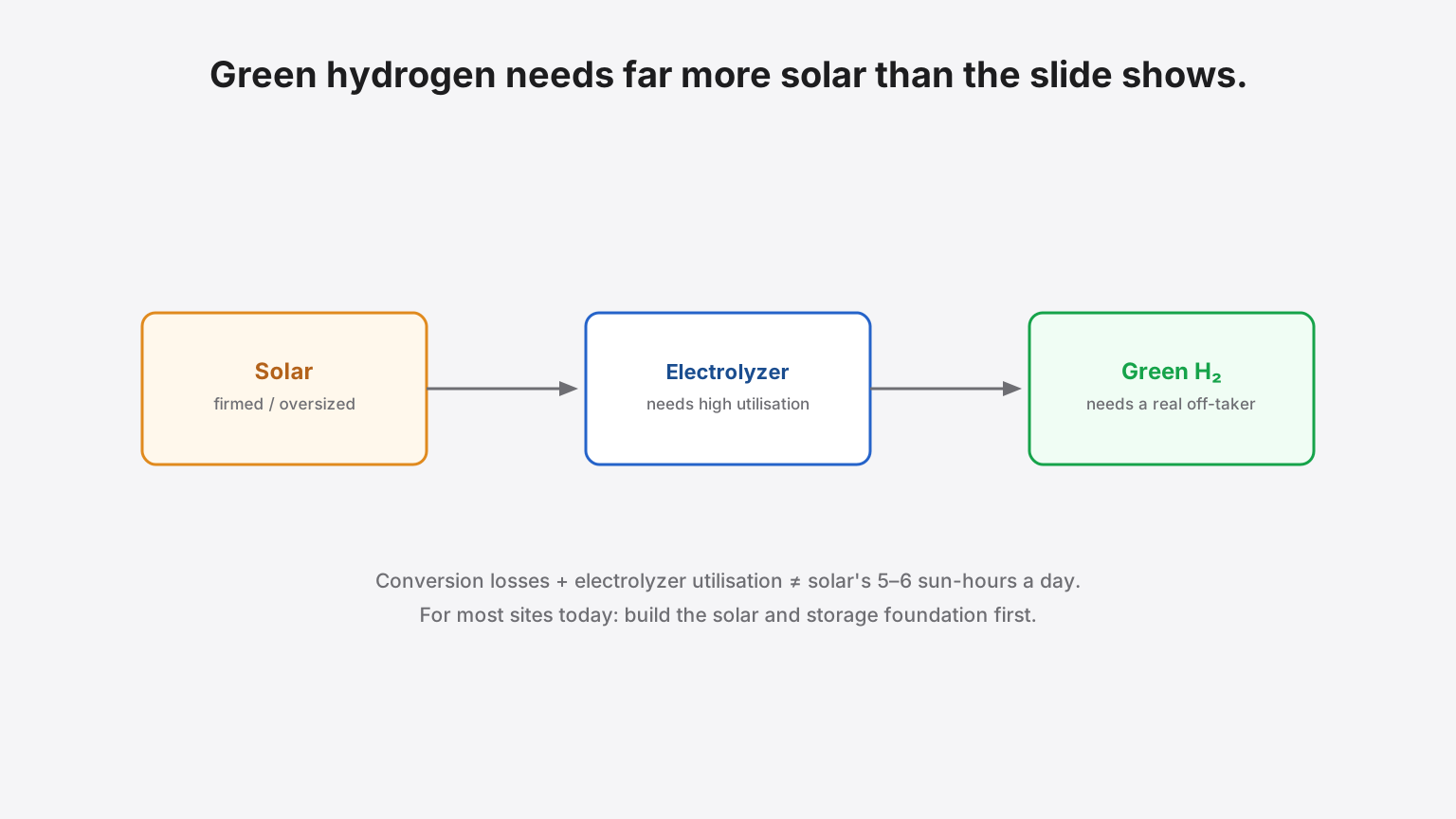
Green Hydrogen Needs a Lot More Solar Than the Slide Deck Shows.
Green hydrogen — solar power run through an electrolyzer to split water — is the path being discussed for decarbonising steel, fertiliser and other hard-to-electrify heavy industry. For most Indian industrial buyers today it's a genuine future direction, not a retrofit decision, and the honest reason why is the scale of solar capacity it actually requires.
Ready to start your project?
Get a free consultation and quote. We design, prepare and file your approvals, and execute — you deal with one team.
Related guides
- Perovskite Cells Promise 30%+ Efficiency. Your Roof Doesn't Have Ten Years to Wait and See.
- The Future of MEP Engineering: 5 Technologies to Watch
- The MSME Act Just Changed. Here Is What It Means for a Factory Owner.
- The Chiller Gave Three Weeks of Warning Before It Failed. Nobody Was Listening.
- A Plant Down 8% Looks Exactly Like a Plant Working Fine.
- Is BIM Worth It for a Factory's MEP? Clash Detection vs Cost
Related on this site
- termCAPEX vs OPEX Solar
- termShadow-Free Area
- termEPC
- servicePublic Address & Voice Evacuation (Low Voltage / ELV)
- serviceStructured Cabling & Networking (Low Voltage / ELV)
- calculatorMEP Maintenance Budget Calculator
- calculatorPipe Size Calculator
- buyer's guideHow to Select a Solar EPC Contractor
- guideCLU for industrial land
- guidePESO licence for diesel storage