
Engineering guides & industry insights — page 18
MEPF, solar and fire-safety guides — page 18
Archive page 18 of 22 — practical, no-jargon guides on MEPF, solar, fire safety and approvals.
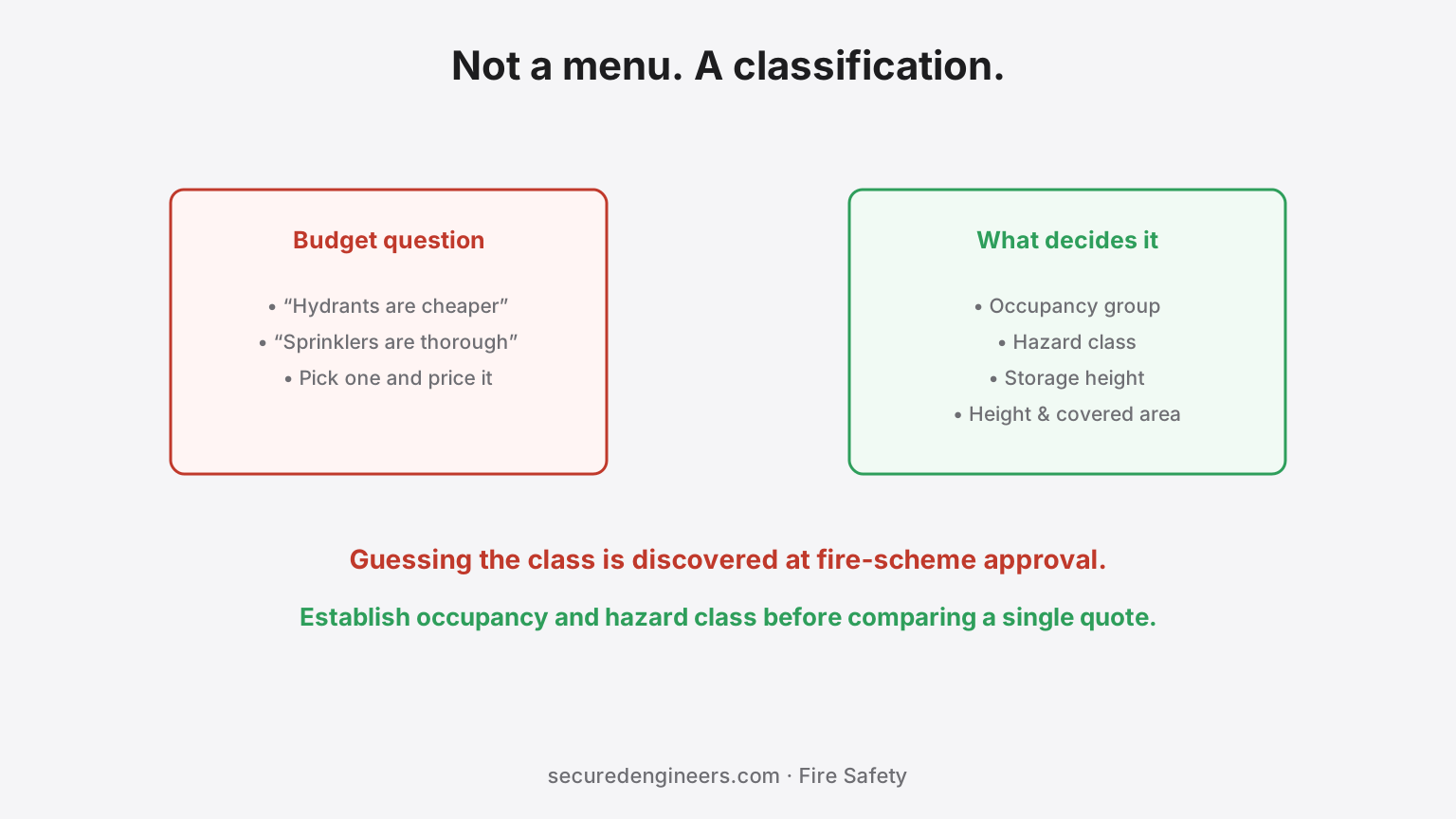
Hydrants or Sprinklers: How the Design Requirement Is Determined
Owners often price hydrants and sprinklers as alternatives. They are not: occupancy, hazard, height, area and storage, read against NBC 2016 Part 4 and the state's rules, decide which systems a building needs, and the authority can add to them. How the requirement is set, and what to have ready.
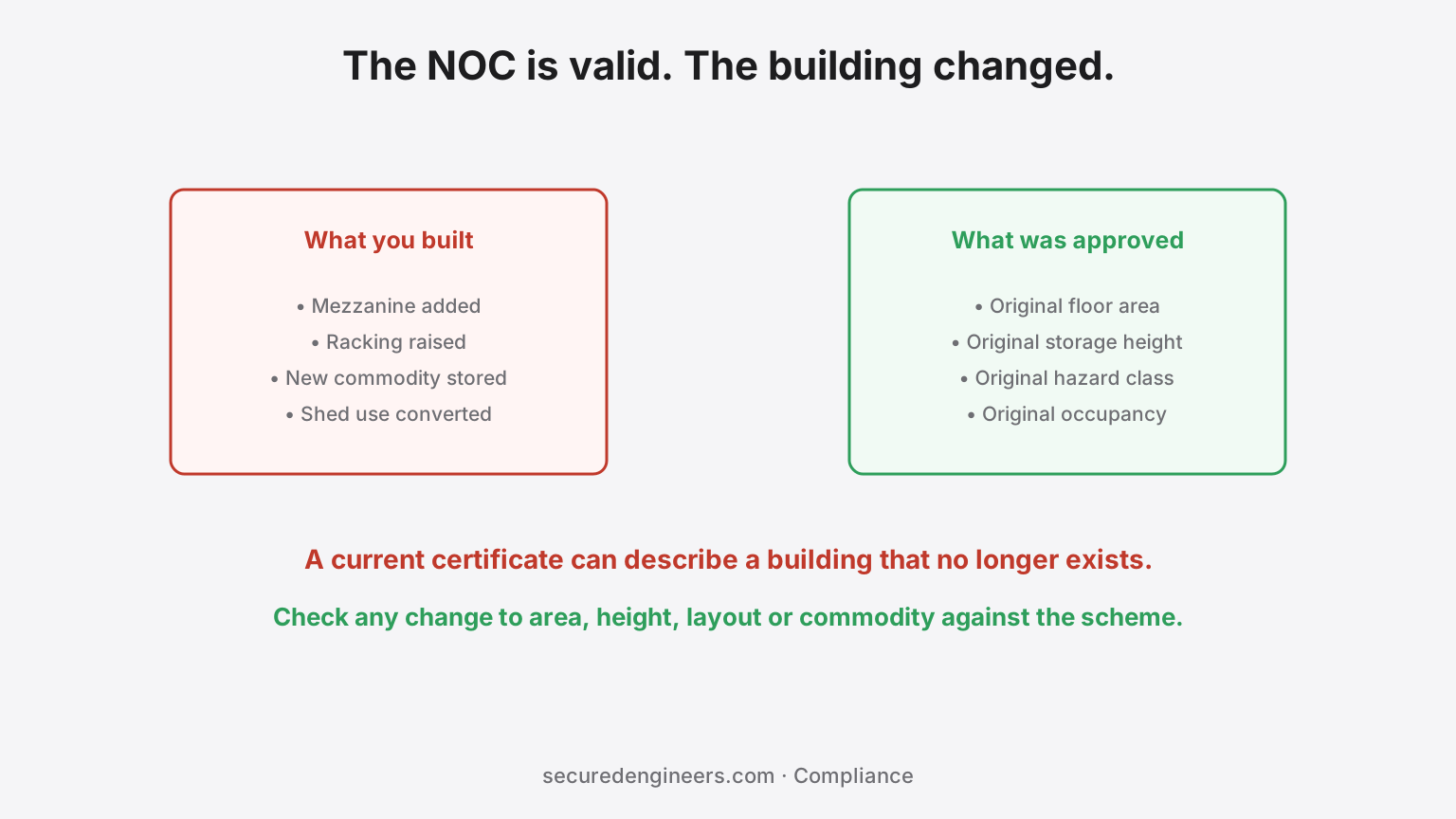
Does an Expansion or Change of Use Affect Your Fire NOC?
A Fire NOC describes the building that was approved: its occupancy, area, height, storage and fire scheme. Extend it, rack higher, store something different or change what a shed is used for, and the certificate can stop describing the building you have. What to compare, what to ask the authority, and why no exemption rule travels.
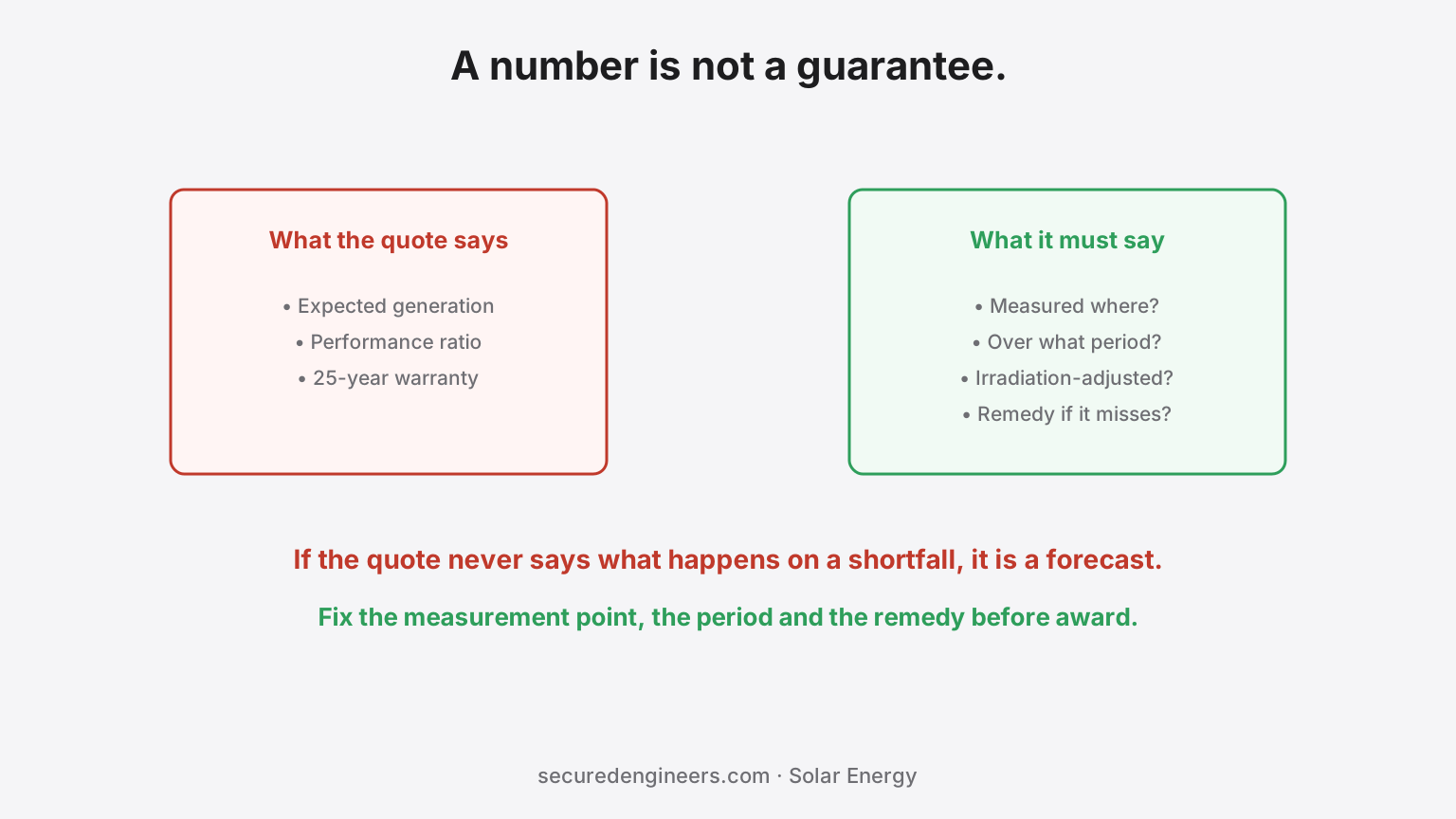
The Solar Quote Guarantees Generation. Read What Happens When It Misses.
Every solar EPC quote carries a performance figure. Almost none state what happens if the plant does not reach it — how it is measured, over what period, and what the contractor actually owes you.
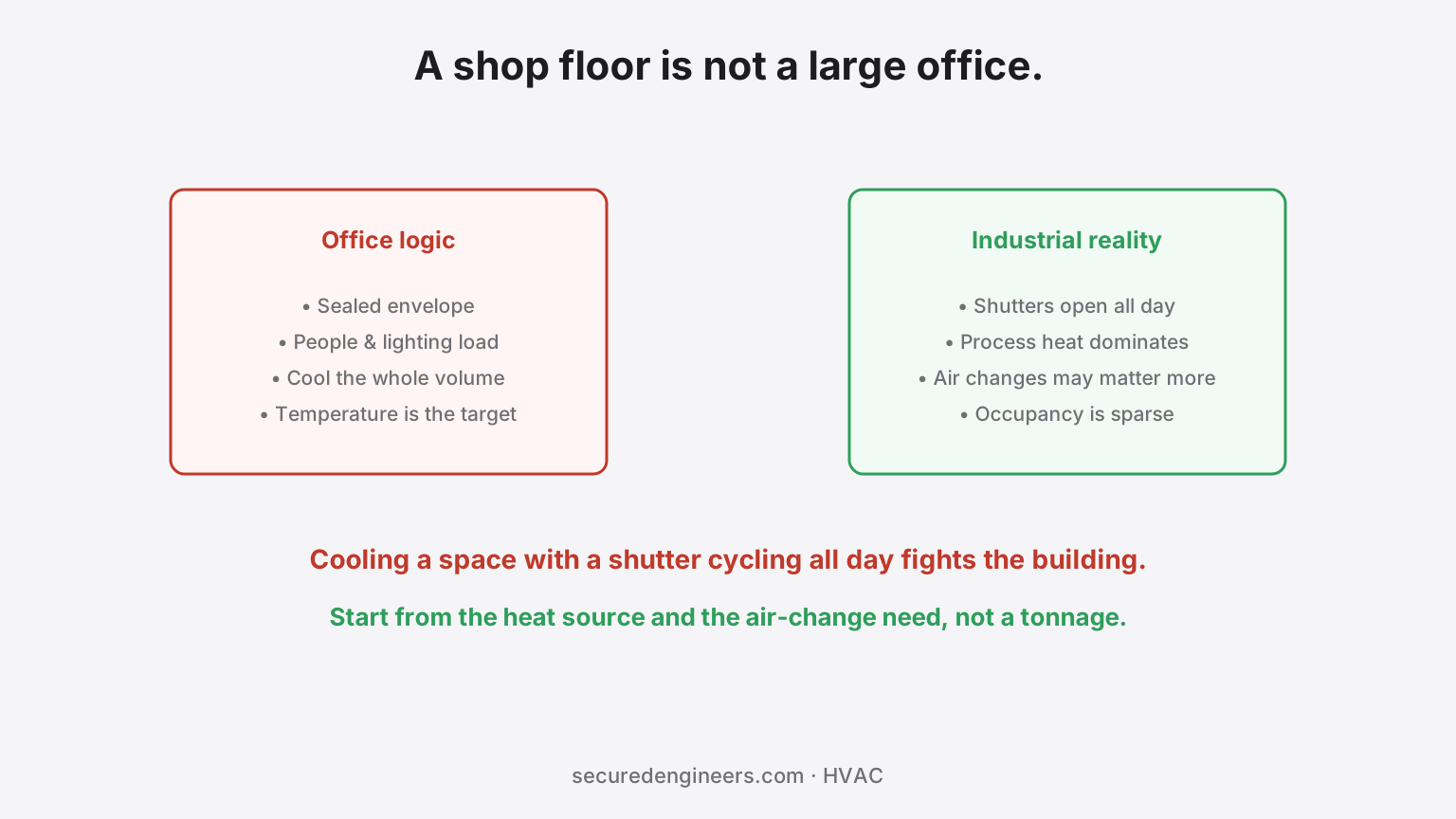
Factory Shop-Floor Cooling vs Office Air Conditioning: How to Choose
A production hall is not an office with machines in it. Process heat, open shutters, fumes and sparse occupancy mean the answer is often extraction, ventilation, evaporative or spot cooling — and the season decides which works when. The checklist, the options and the measurements that show it worked.
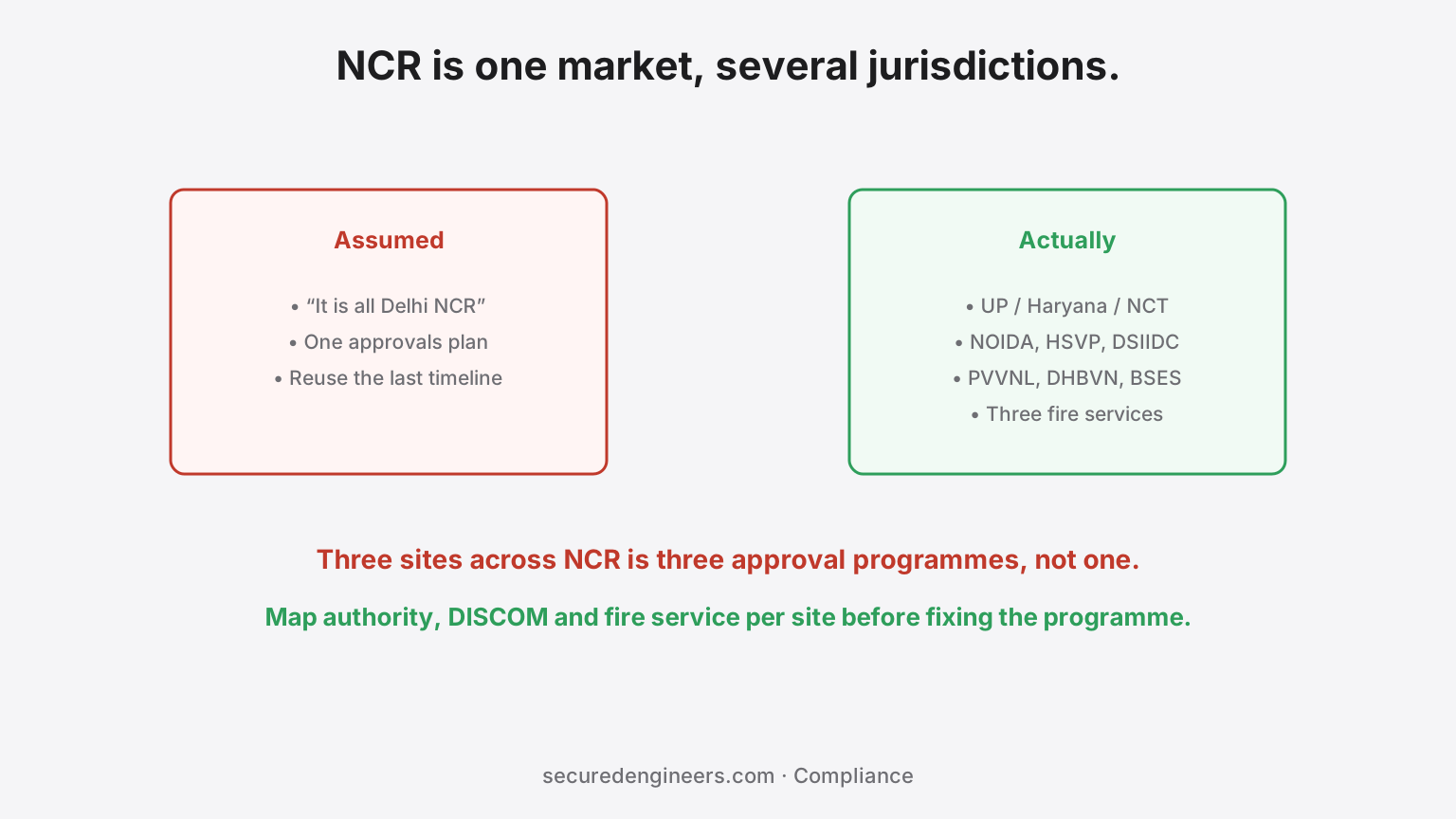
Delhi NCR Is Not One Jurisdiction. Your MEP Approvals Prove It.
Noida, Greater Noida, Gurugram, Faridabad and Delhi sit within an hour of each other and answer to different authorities, different DISCOMs and different state fire services. A programme built for one does not transfer to the next.
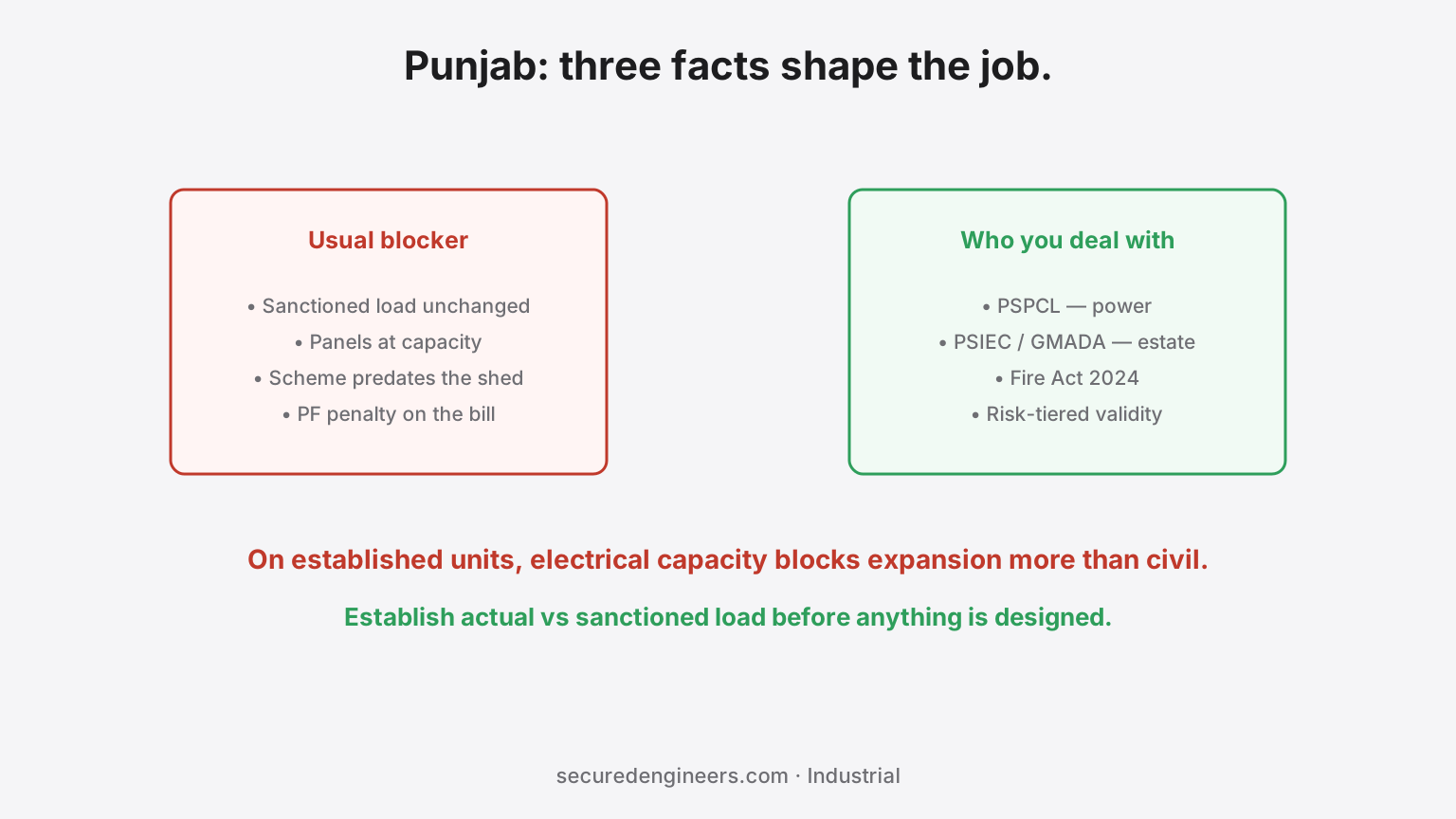
Expanding a Factory in Punjab: The Power and MEP Approval Checklist
Before a Punjab plant adds machines or sheds, several authorities need to see it: PSPCL for the load, the Electrical Inspector for the installation, the fire service for the building, and the pollution and water regulators for the process. The checklist, the thresholds that change the route, and who owns each document.
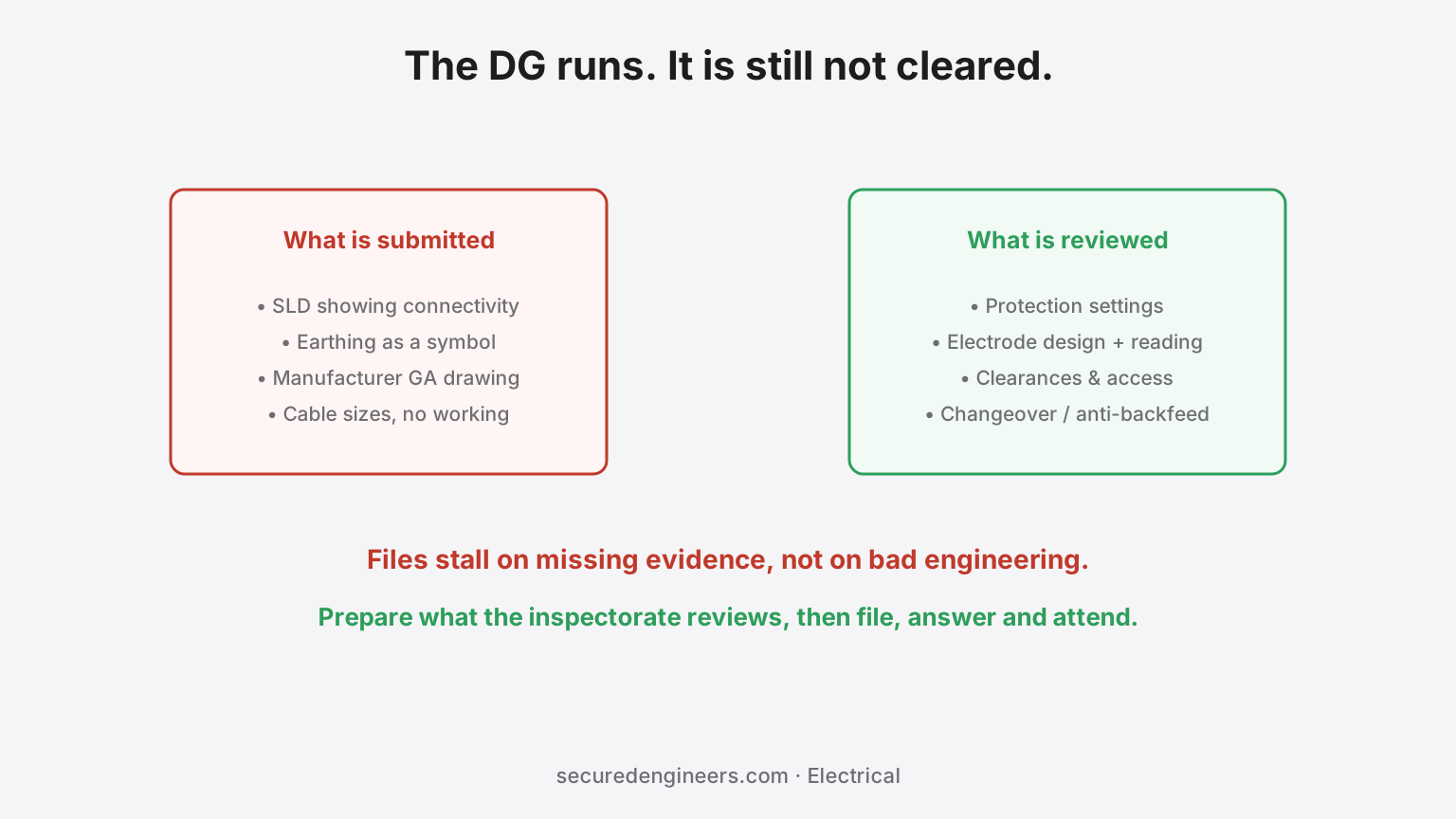
The DG Set Is Installed and Tested. The Inspectorate Still Has Not Cleared It.
A DG set is commonly treated as equipment you buy and commission. Where it falls within the electrical inspectorate scope, it is an installation requiring approval before energisation — and the drawings, not the machine, are what get scrutinised.
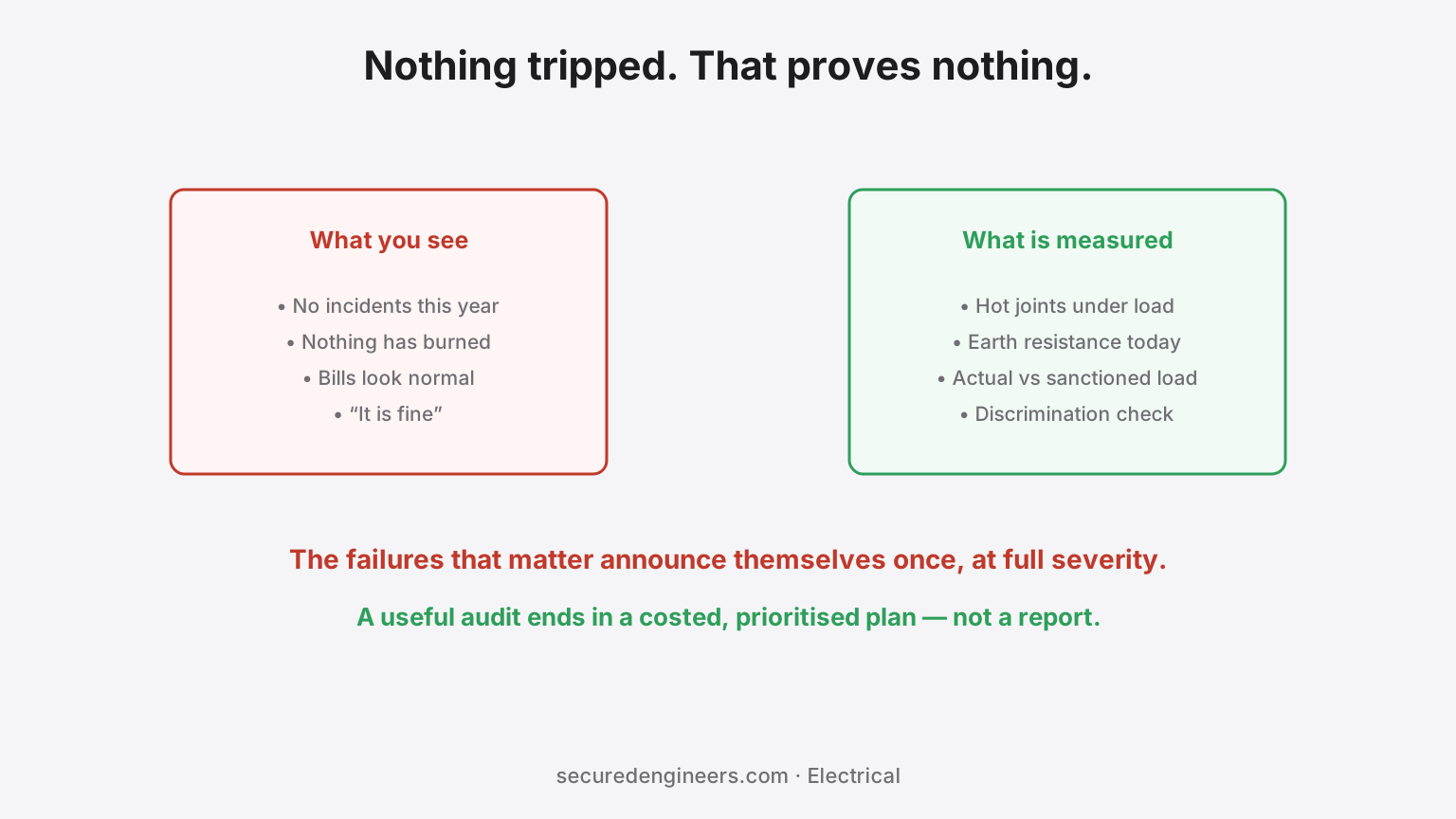
Electrical Safety Audit Before a Renovation or Expansion
An uneventful electrical system is not a verified one. Before a renovation or expansion adds load, document the installation, have competent people test it, and turn the findings into an evidence-ranked rectification scope — the additions themselves need inspector approval or self-certification before they are connected.
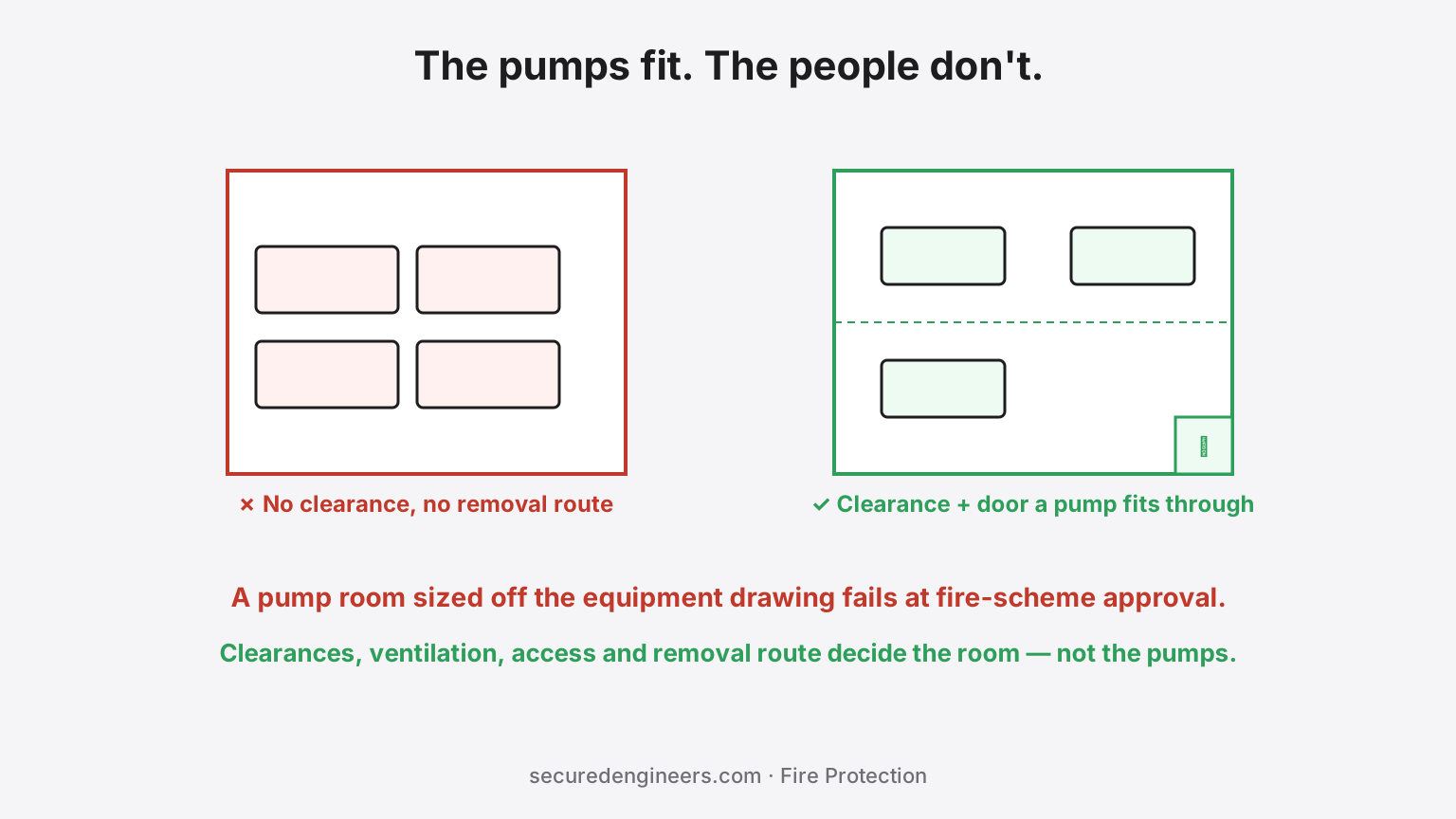
Fire Pump Room Planning and Retrofit Checklist
A pump room that only fits the pumps is hard to maintain, test and approve. A planning and retrofit checklist for maintenance space, suction and access, power and drainage interfaces, manufacturer layouts, and the tests the fire authority may want to witness.
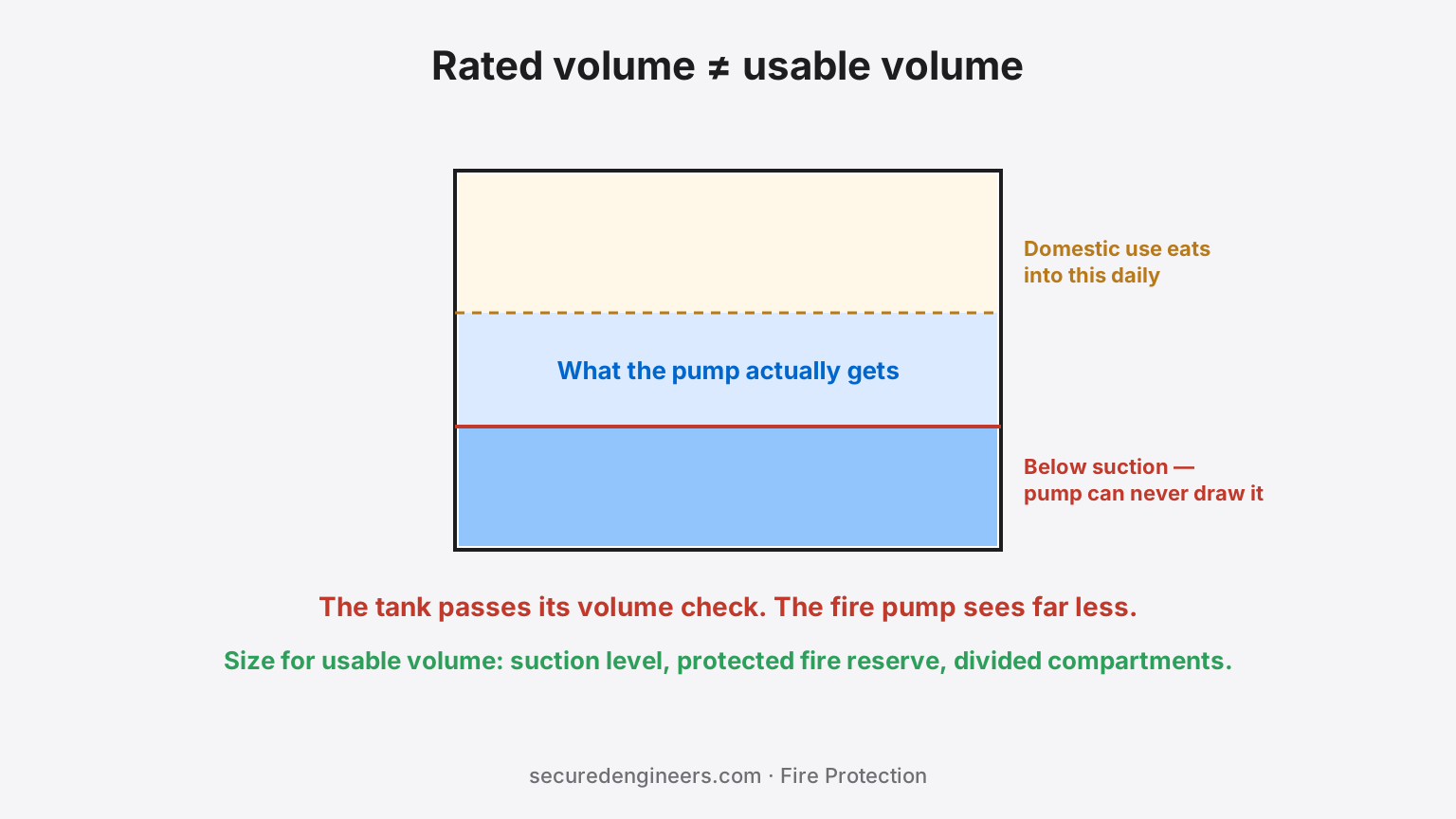
Fire Water Storage: Gross Volume vs Usable Capacity
A fire tank's gross volume is not the reserve the pumps can use. How to work from the approved demand and duration, subtract dead volume and freeboard, keep fire storage dedicated and compartmented, and avoid counting on refill you cannot rely on.
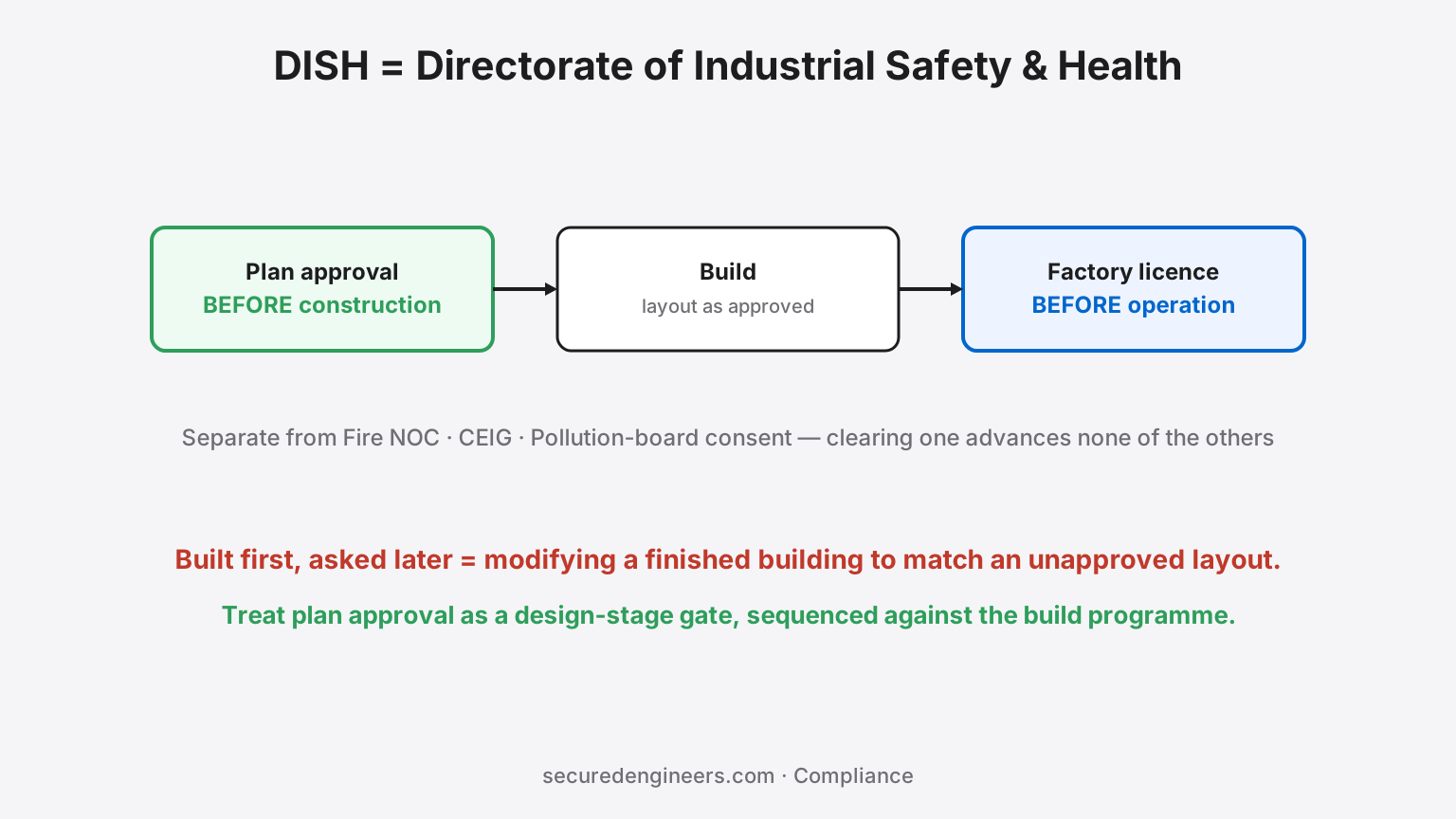
DISH Approval: The Factory Clearance Most Projects Discover Too Late
DISH is the Directorate of Industrial Safety and Health — the authority that approves factory building plans and issues the factory licence. It is a separate approval from fire, electrical and pollution clearances, it applies before construction rather than after, and missing it is one of the more expensive sequencing errors in an industrial project.
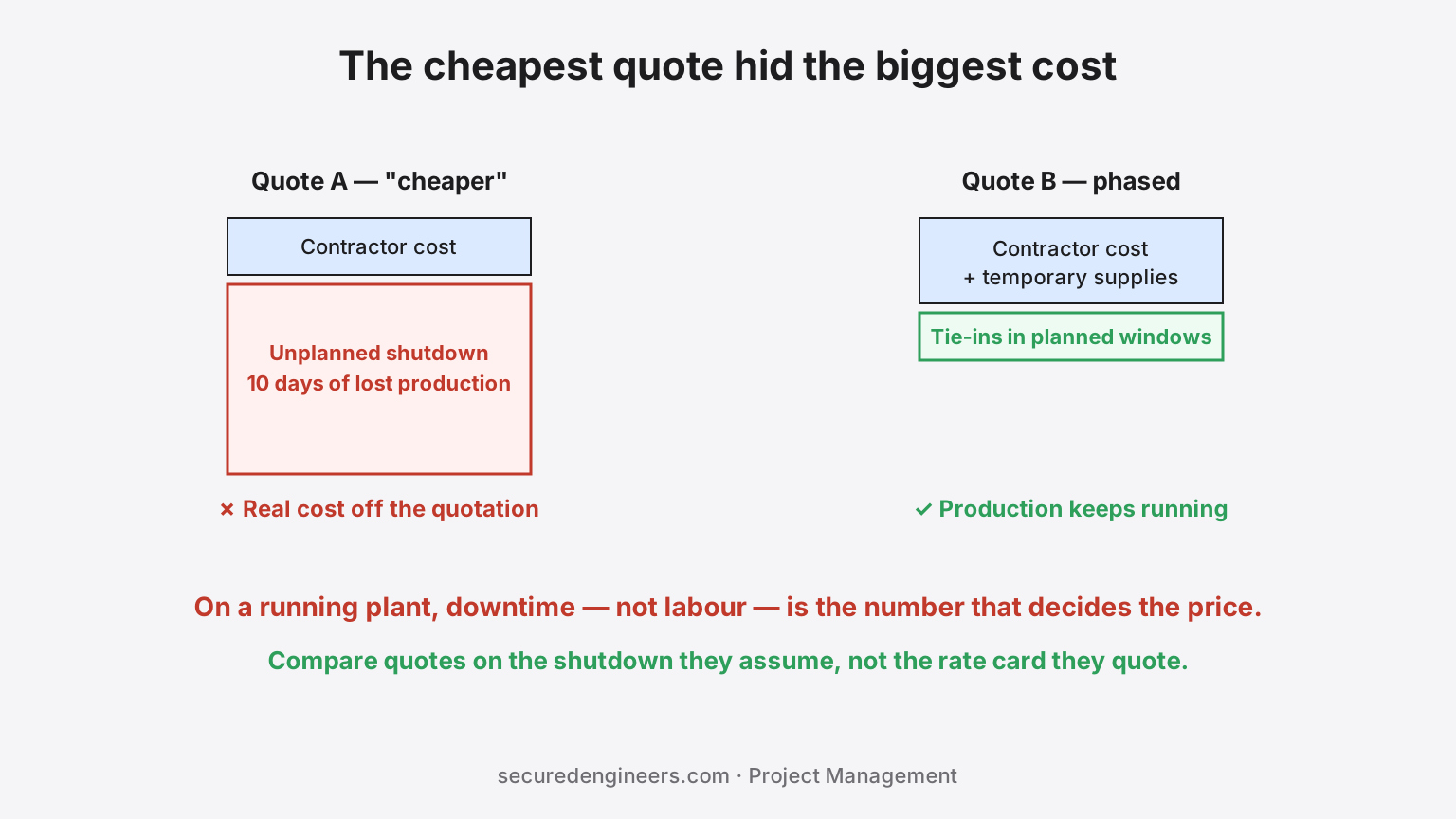
MEP Retrofit in a Running Plant: Phase the Shutdowns
In a running factory, an MEP retrofit is decided by what has to be switched off, for how long, and how it comes back. How to survey the live system, set isolation boundaries, price temporary utilities, plan shutdown windows with a rollback, and commission before restart.
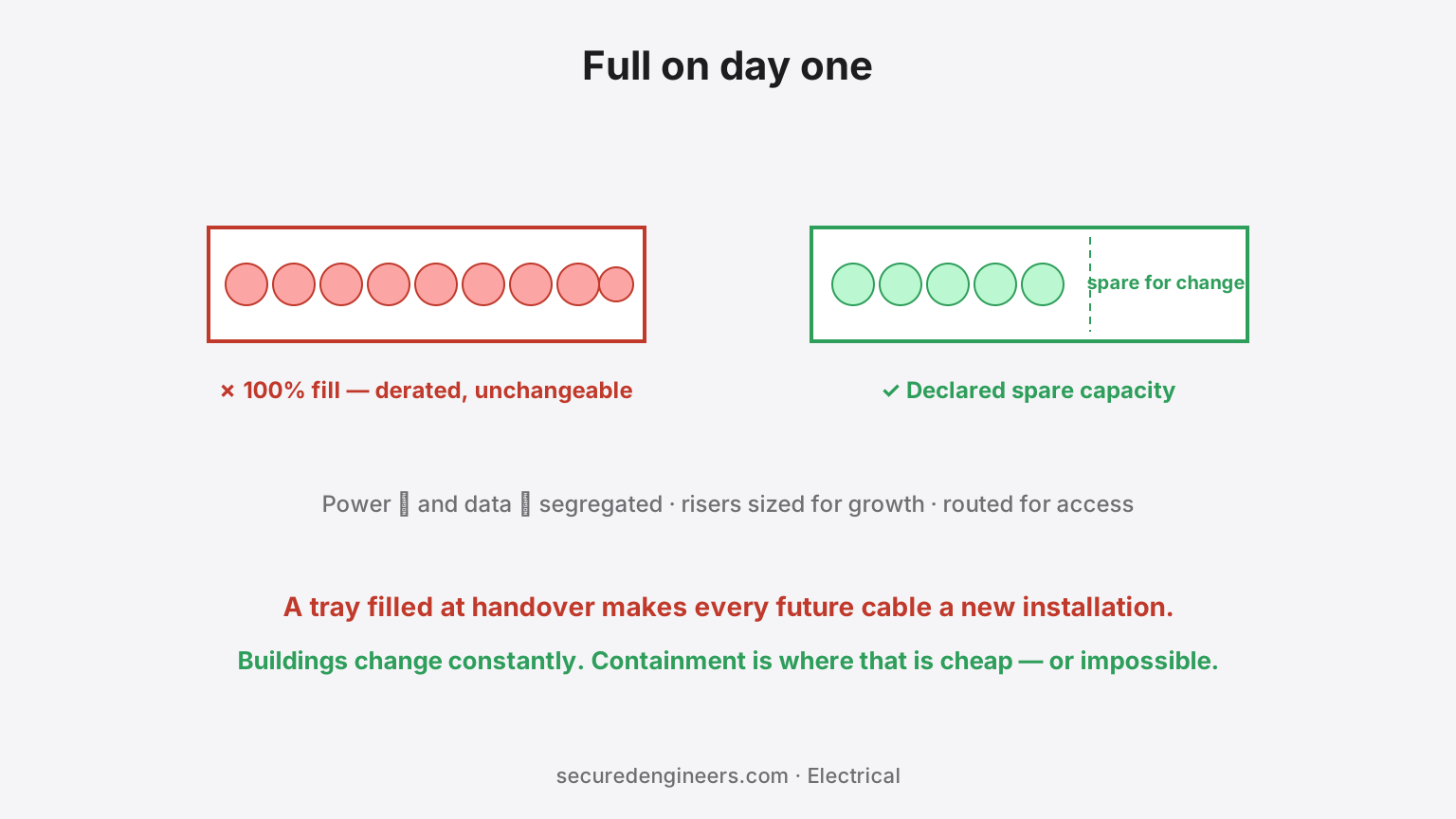
The Cable Tray Was Full on Day One. Every Change After That Cost Money.
Cable containment is treated as a commodity — trays, raceways and conduit bought on rate. But the containment decision fixes how much the electrical system can change for the rest of the building life, and a tray filled to capacity at handover makes every future addition a new installation.
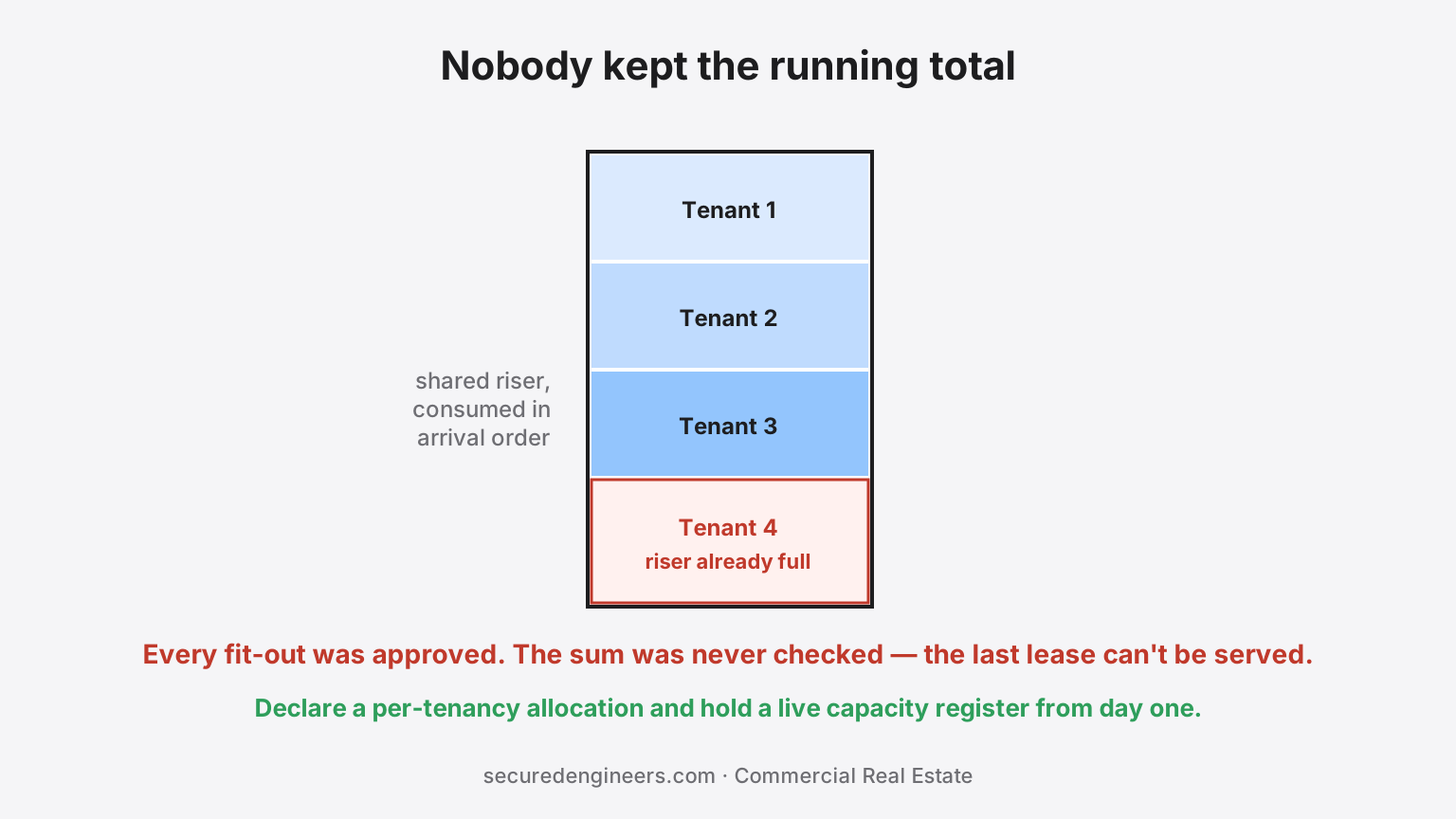
Riser and Shaft Capacity Before an Office Expansion
An office expansion is limited by what the building's risers and shafts can still deliver to your floor. How to survey usable riser space, check the power, cooling, fresh-air and water allocations, keep firestopping intact, and assemble the package the landlord will review.
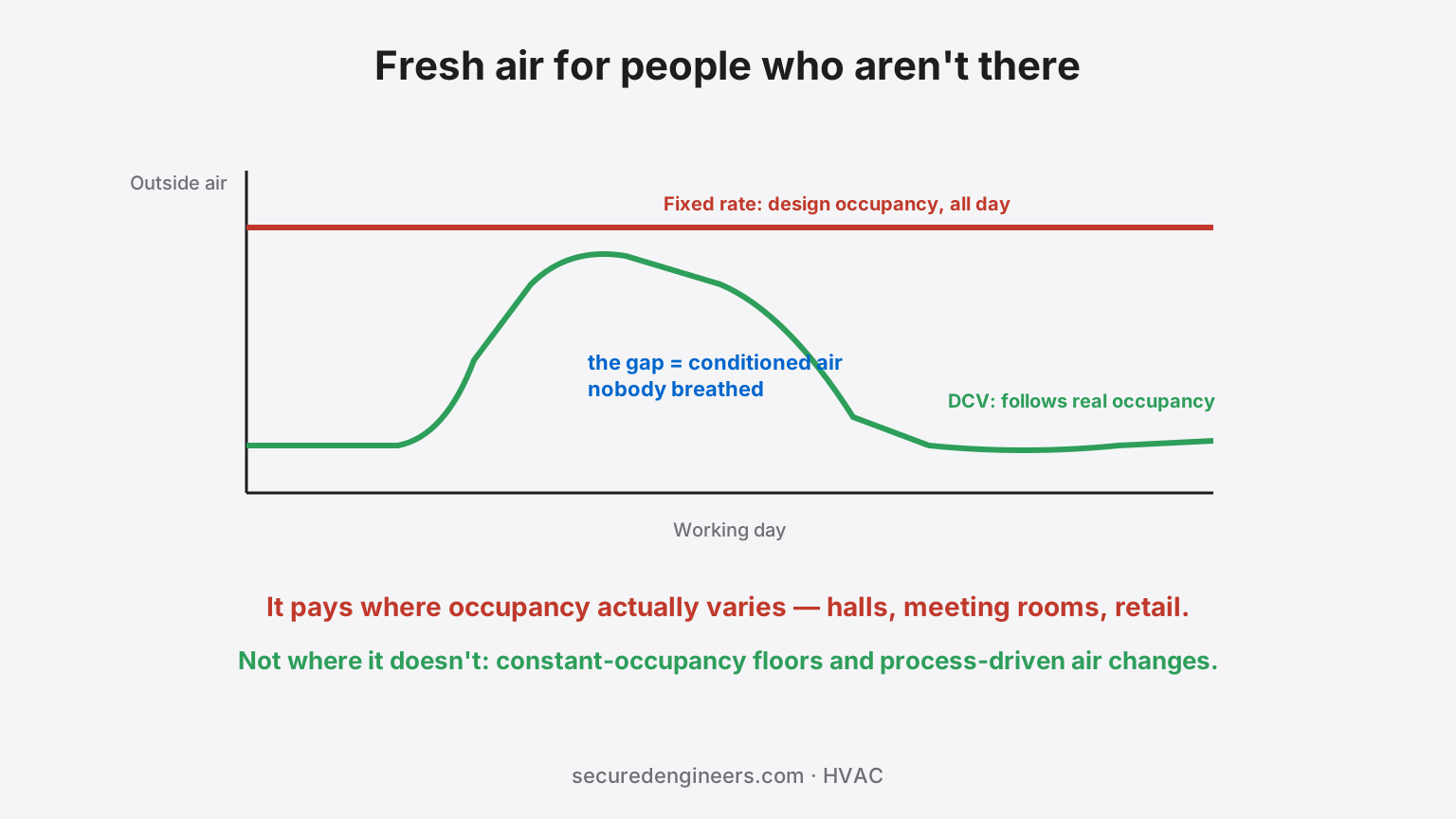
Ventilating for a Full Building That Is Rarely Full
Ventilation is sized for peak occupancy and then run at peak regardless of who is actually in the building. Demand-controlled ventilation modulates against real occupancy — but it only pays where occupancy genuinely varies, and it is frequently sold where it does not.
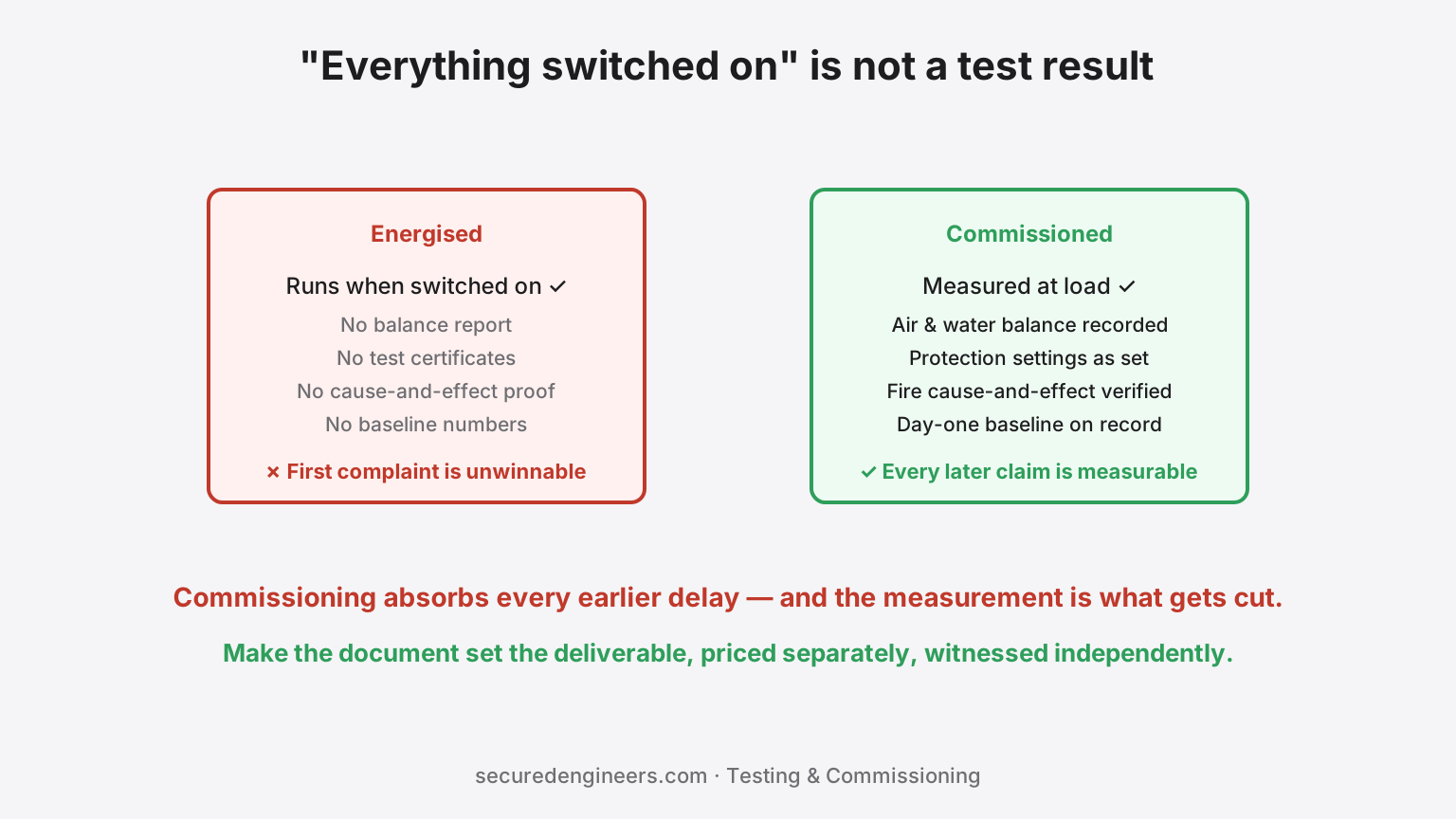
MEP Commissioning and Handover Checklist
Switching systems on is not commissioning. A checklist for the system-level tests each service needs, the integrated fire interfaces, performance criteria agreed before witnessing, the punch list, and the records a building should not be handed over without.
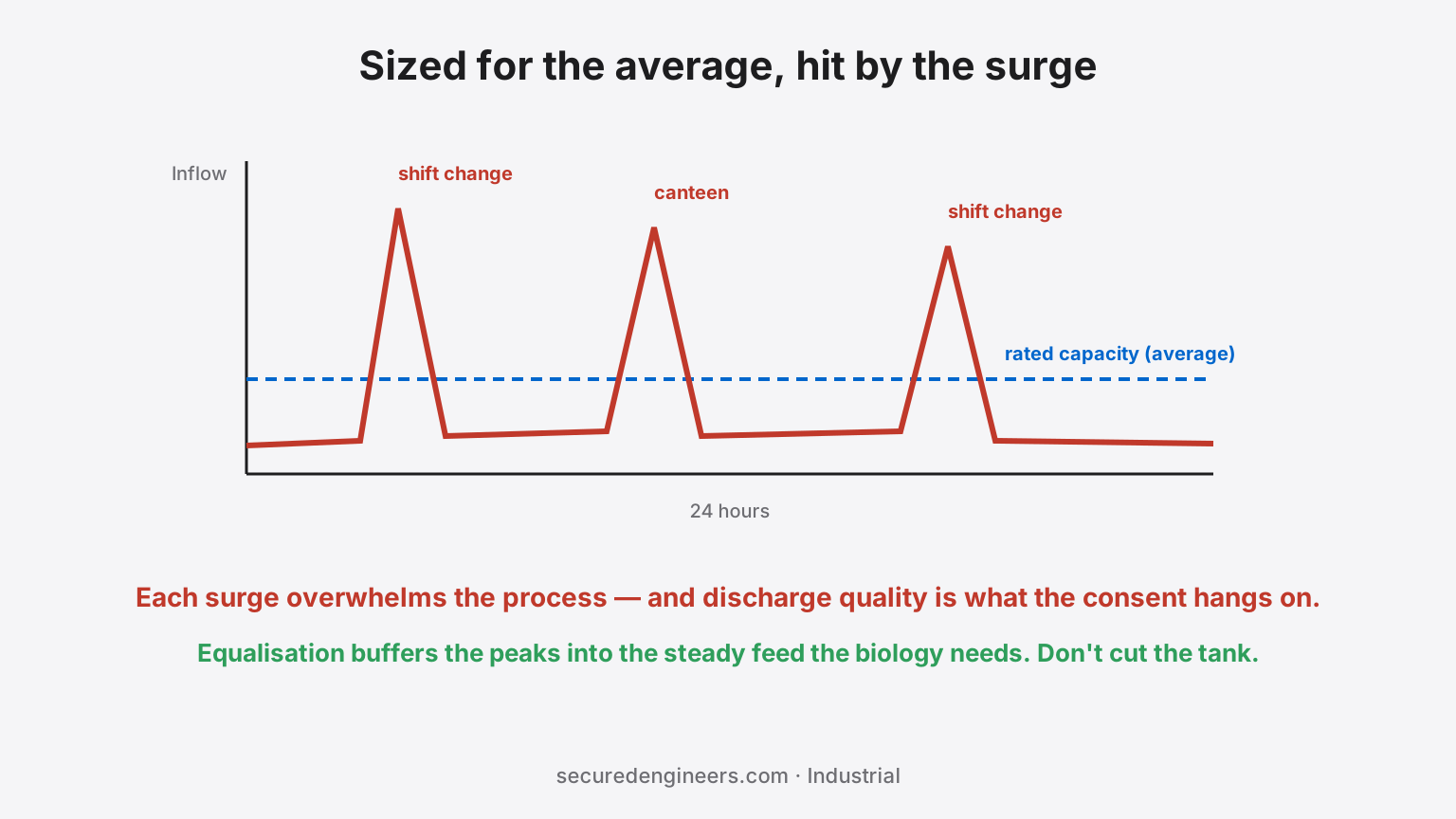
STP Expansion: Check Hydraulic and Organic Load
A sewage treatment plant rated in KLD has two separate limits: the flow every unit can pass at the peak hour, and the BOD and nitrogen load the biology can treat each day. How to measure both, forecast shifts and occupancy, and set treatment and reuse acceptance criteria before you expand.
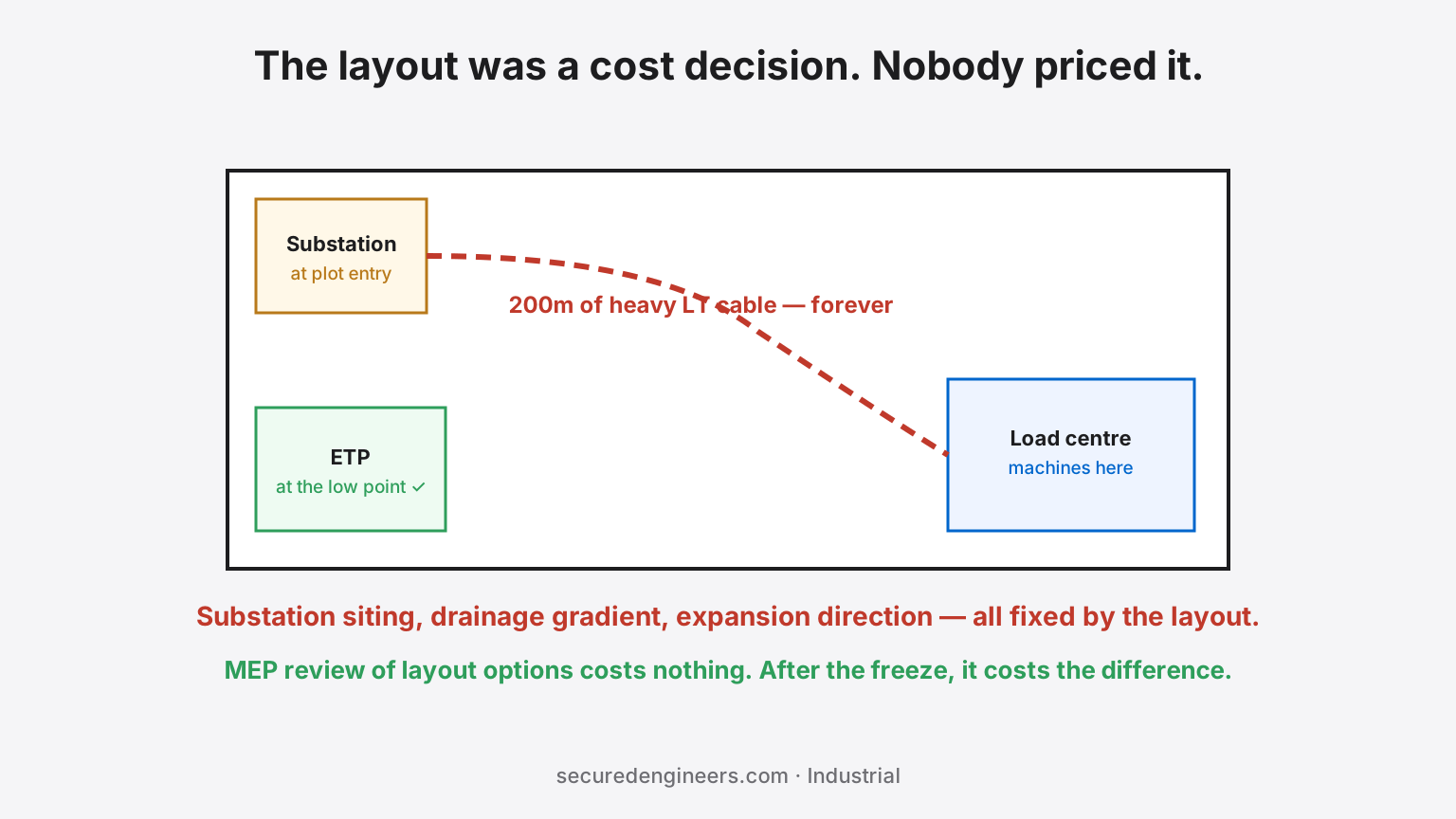
Factory Layout Decisions That Affect MEP Cost
A factory layout is drawn for production flow, but it also fixes cable and pipe lengths, plant-room positions, maintenance access and whether the next phase can be fed. The clearances, service routes and expansion allowances to check before the layout is frozen.
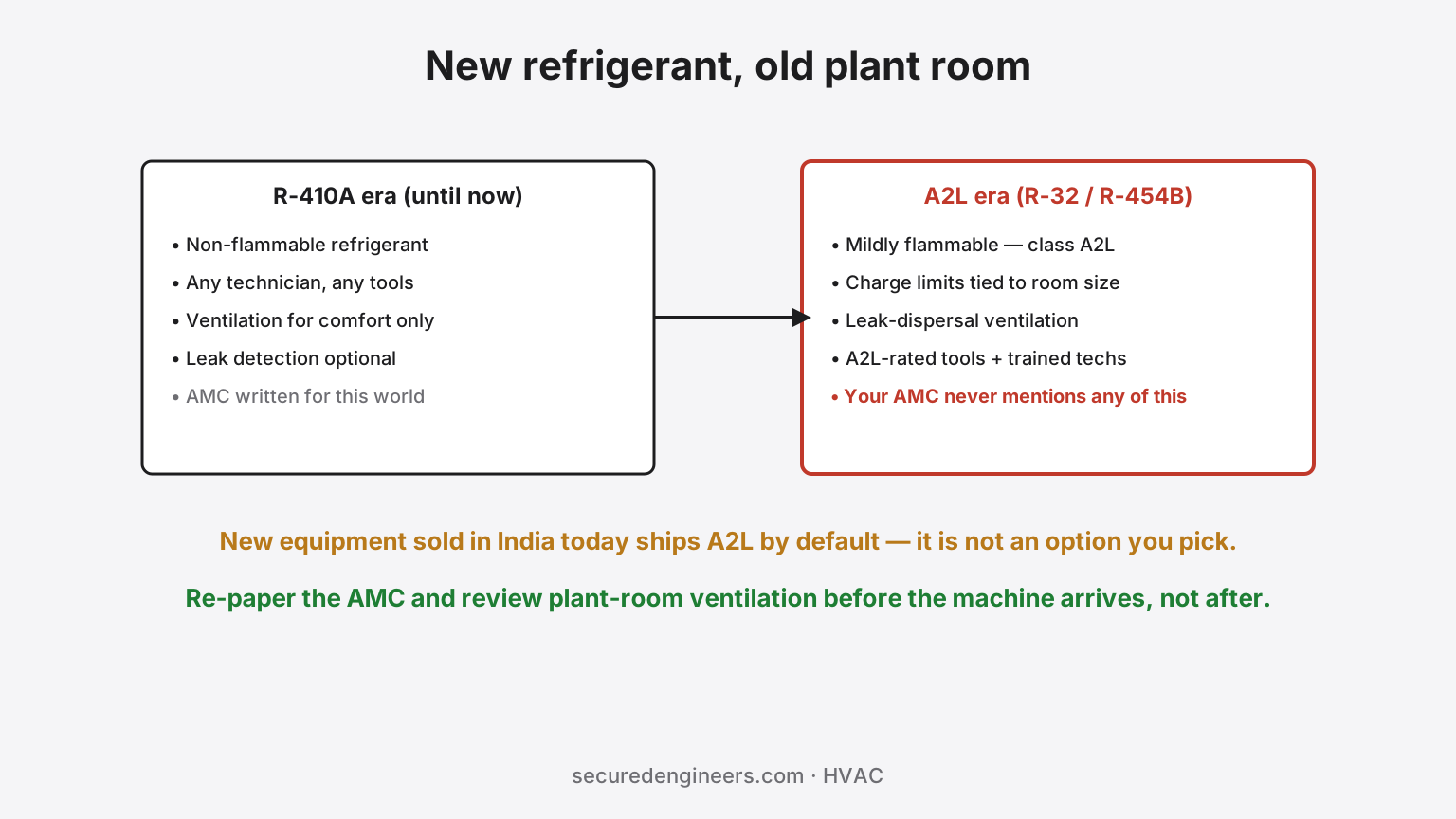
The New Chiller Runs on a Mildly Flammable Refrigerant. Your Plant Room Was Never Designed for That.
R-32 and R-454B — mildly flammable A2L refrigerants — are now the default in new chillers, VRF and splits sold in India as R-410A phases down. Most building owners haven't noticed that this changes plant-room ventilation, leak detection, technician requirements and the AMC contract itself.
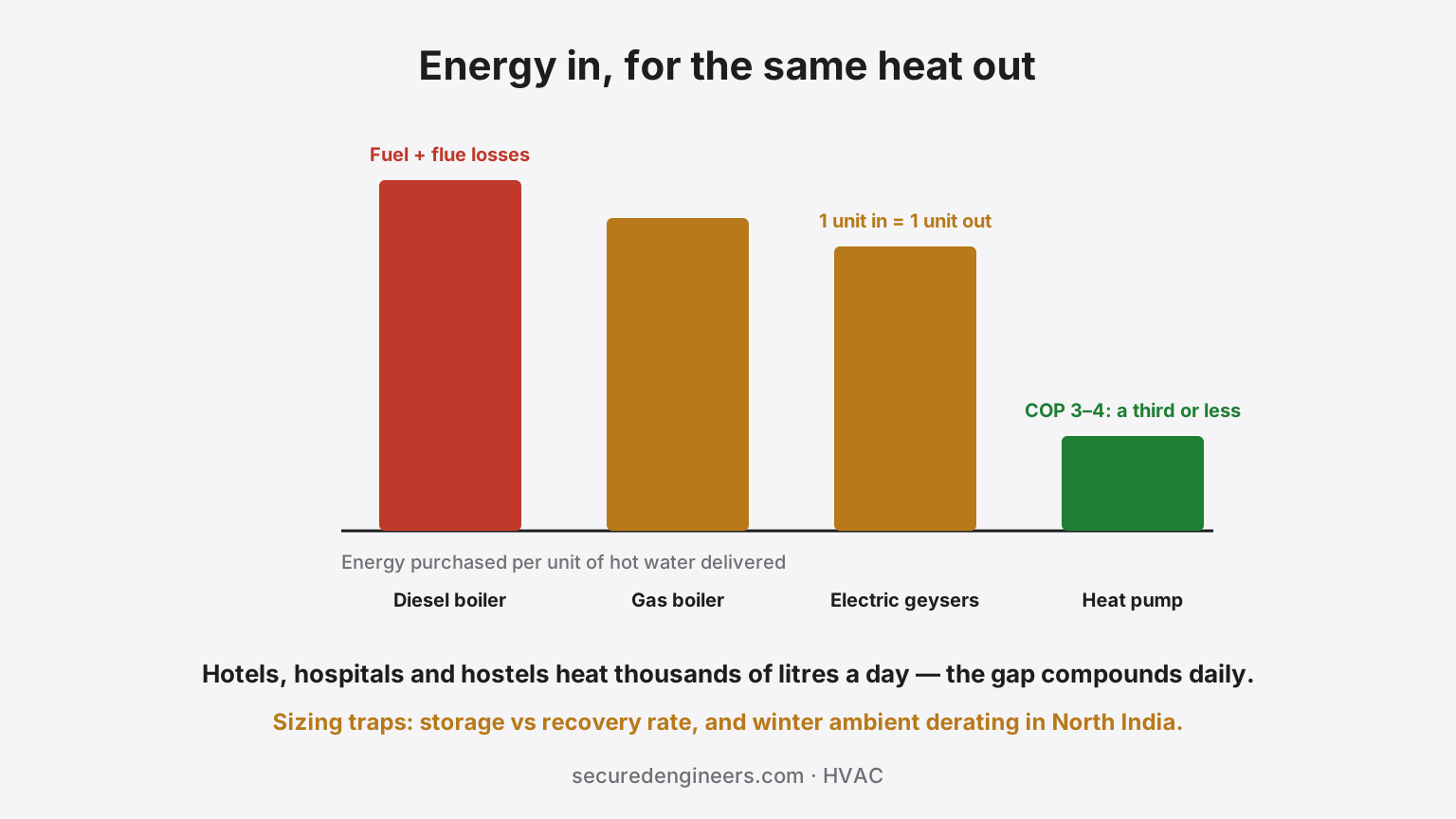
You're Still Burning Diesel to Heat Water. A Heat Pump Delivers the Same Heat for a Fraction of the Energy.
Hotels, hospitals, hostels and food plants burn diesel, gas or raw electricity for large hot-water loads that a heat pump can serve at roughly a third of the input energy. Rising fuel costs and the electrification push have shifted the math decisively — but sizing traps in North India's winters catch the unwary.
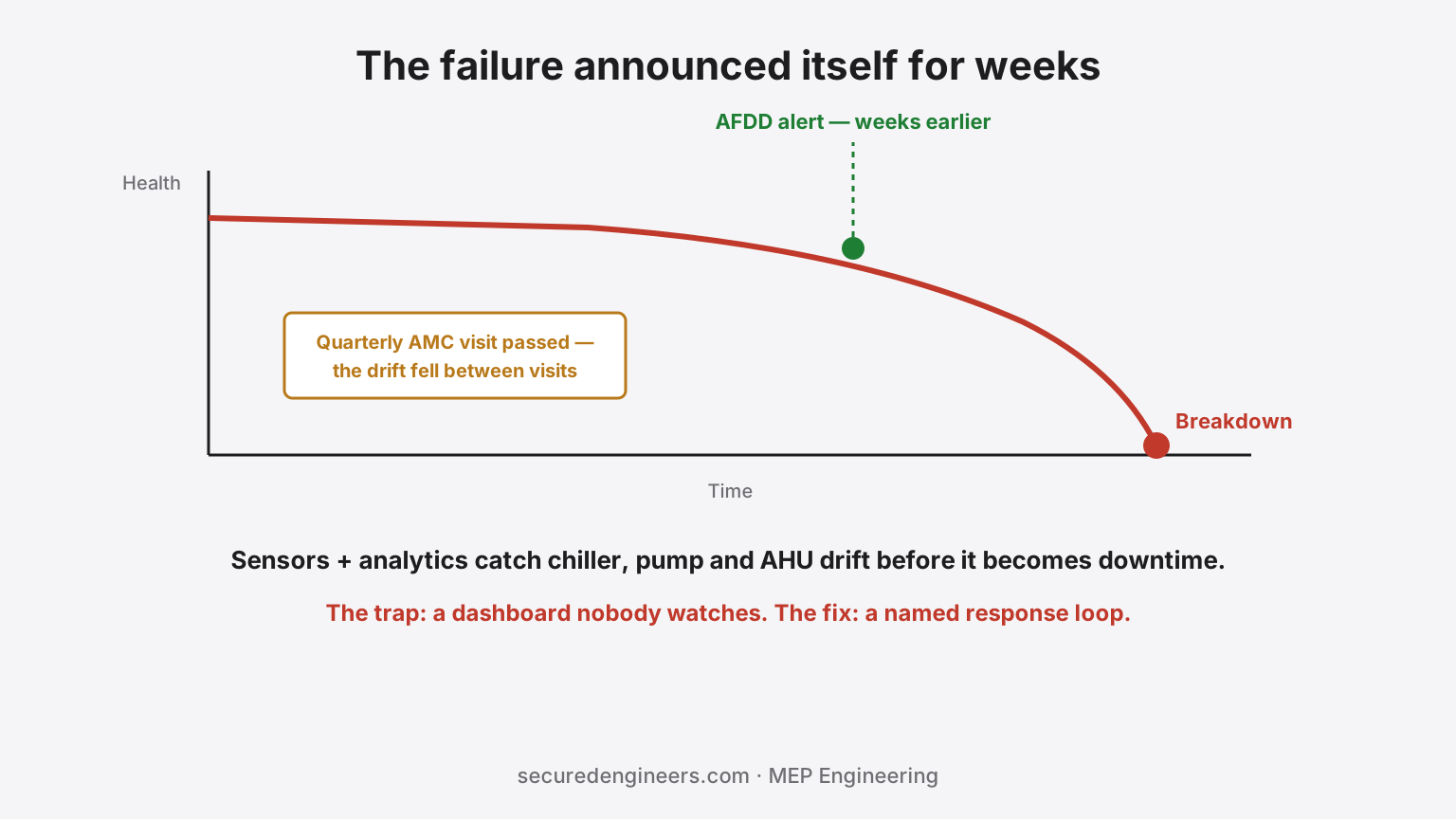
The Chiller Gave Three Weeks of Warning Before It Failed. Nobody Was Listening.
Automated fault detection and diagnostics — sensors plus analytics watching chillers, pumps and AHUs — now catches degradation weeks before failure, and has shifted from luxury to standard practice at serious operators. But the technology is the easy half; the hard half is metering, connectivity, and someone who actually acts on alerts.
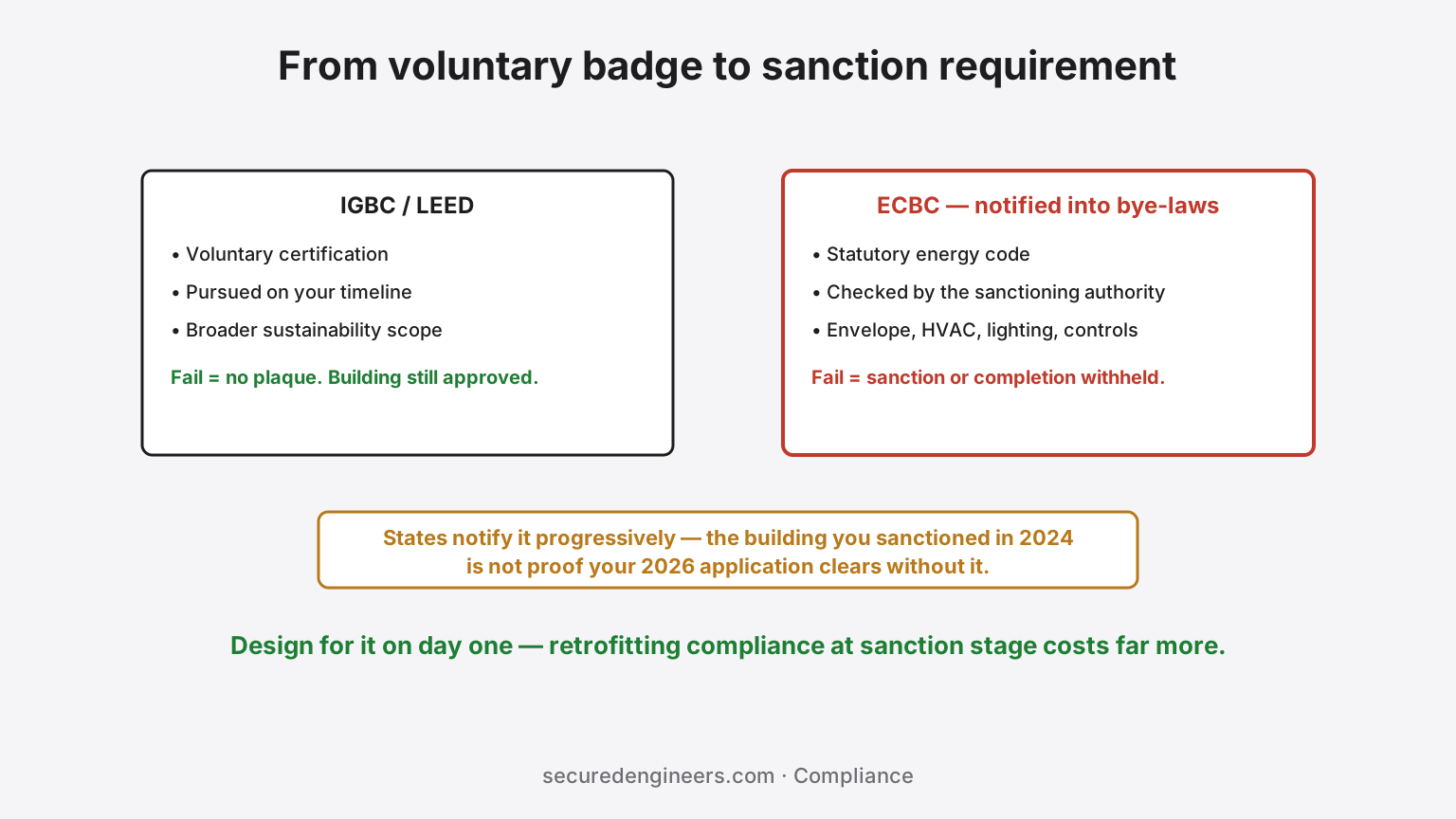
ECBC or ECSBC? How to Check Which Energy Code Applies to Your Building
BEE publishes the national energy code; your state decides whether, which version and from when it binds your building. How ECBC 2017 and ECSBC 2024 become requirements, which buildings they cover, what they touch in the MEP design, and who has to evidence compliance.
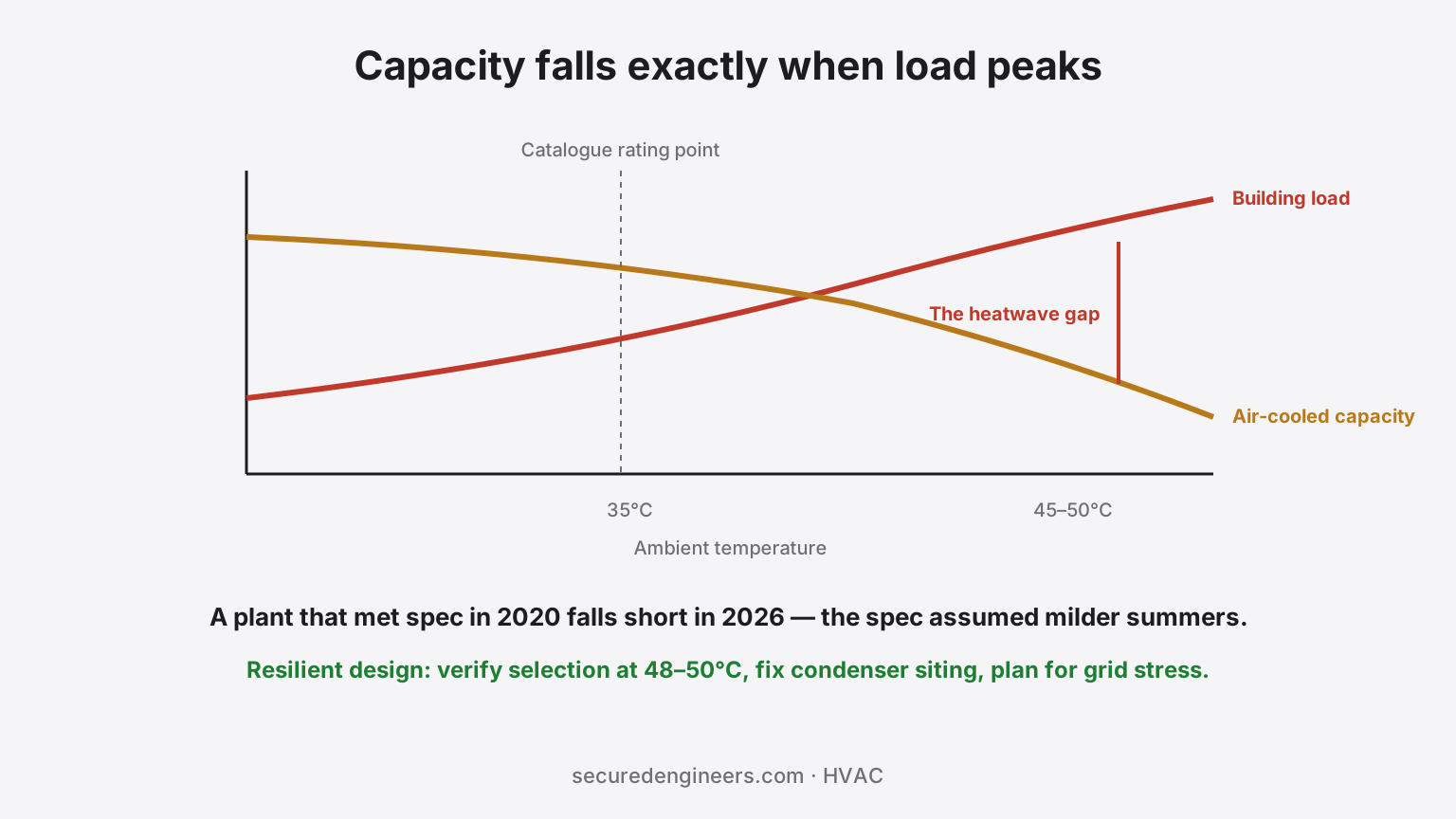
The Plant Met Spec in 2020. The Spec Assumed Summers North India No Longer Has.
45–50°C heat events now hit North India regularly, and air-cooled equipment catalogued at 35°C ambient derates hardest exactly when the load peaks. Climate-resilient HVAC design changes the ambient basis, condenser strategy, plant-room heat handling and the backup plan for heatwave grid stress.
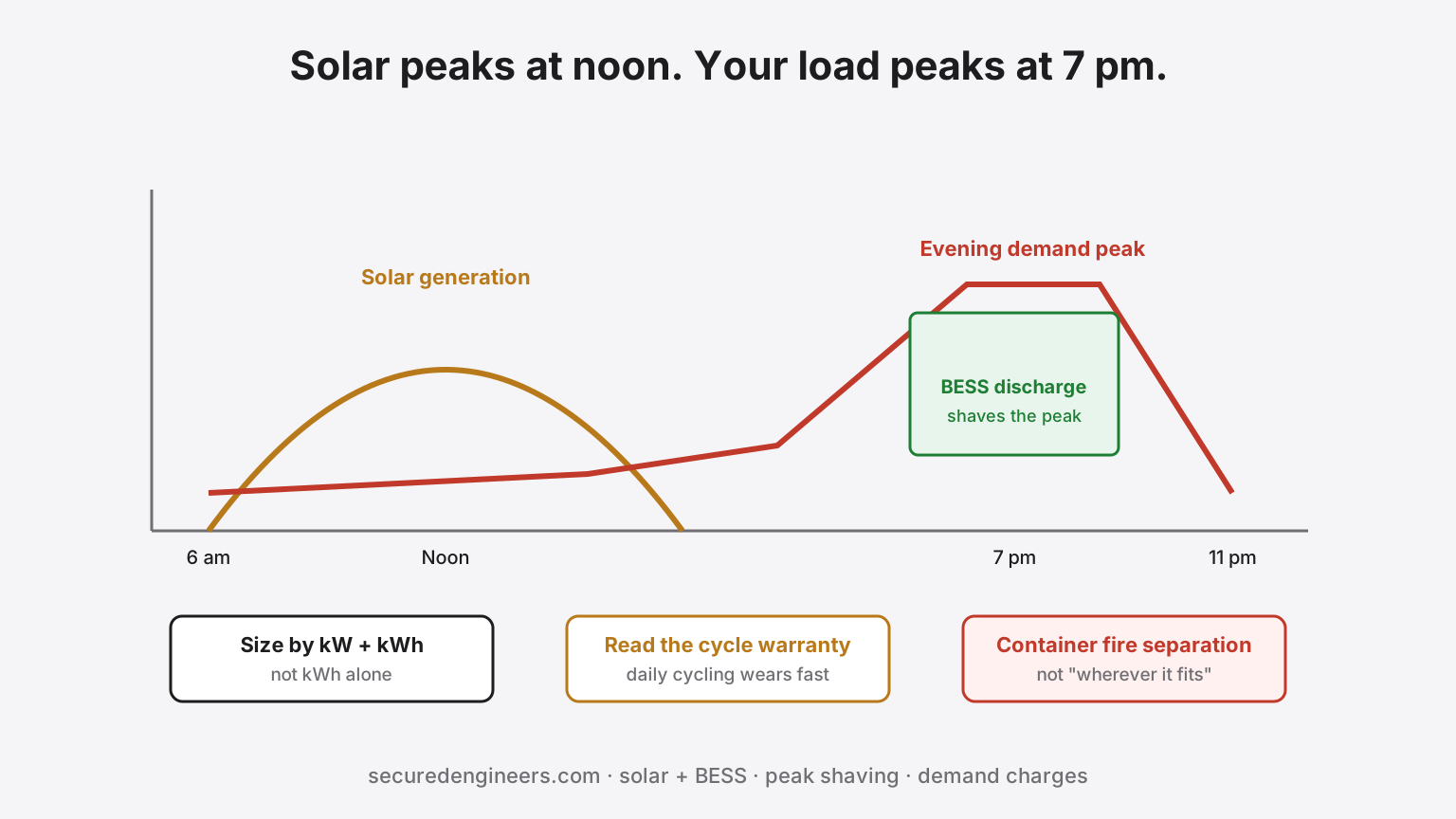
Your Solar Plant Sleeps Through Your Evening Peak. A Battery Doesn't Have To.
Battery energy storage paired with rooftop solar lets a factory shave demand peaks, cut demand charges and shrink DG hours — and 2026 is the year the economics started genuinely working. But buyers keep sizing by kWh alone, skipping cycle-life warranty terms, and parking containers where fire codes say they can't sit.
Ready to start your project?
Get a free consultation and quote. We design, prepare and file your approvals, and execute — you deal with one team.
Related guides
- MEPF Cost per Sq Ft in India: How to Build a Budget You Can Defend
- One Bill, Six Tenants, and No Way to Prove Who Used What.
- A Digital Twin Is Not a 3D Model. It Is a Live Data Obligation.
- The Most Dangerous Electrical Installation You Will Ever Own Is the Temporary One
- Three Vendors, One Roof, Three Different Generation Figures.
- Why a Lower MEP Design Fee Usually Costs More at Construction
Related on this site
- termString Inverter vs Central Inverter
- termALMM
- termEPC
- serviceStructured Cabling & Networking (Low Voltage / ELV)
- serviceInverters (String / Central) (Solar EPC)
- calculatorMEP Renovation Budget Calculator
- calculatorSolar Calculator
- buyer's guideHow to Select an MEP Contractor
- guideEnvironmental clearance (EIA 2006)
- guideNBC 2016 fire and life safety for factories