
Engineering guides & industry insights — page 17
MEPF, solar and fire-safety guides — page 17
Archive page 17 of 22 — practical, no-jargon guides on MEPF, solar, fire safety and approvals.
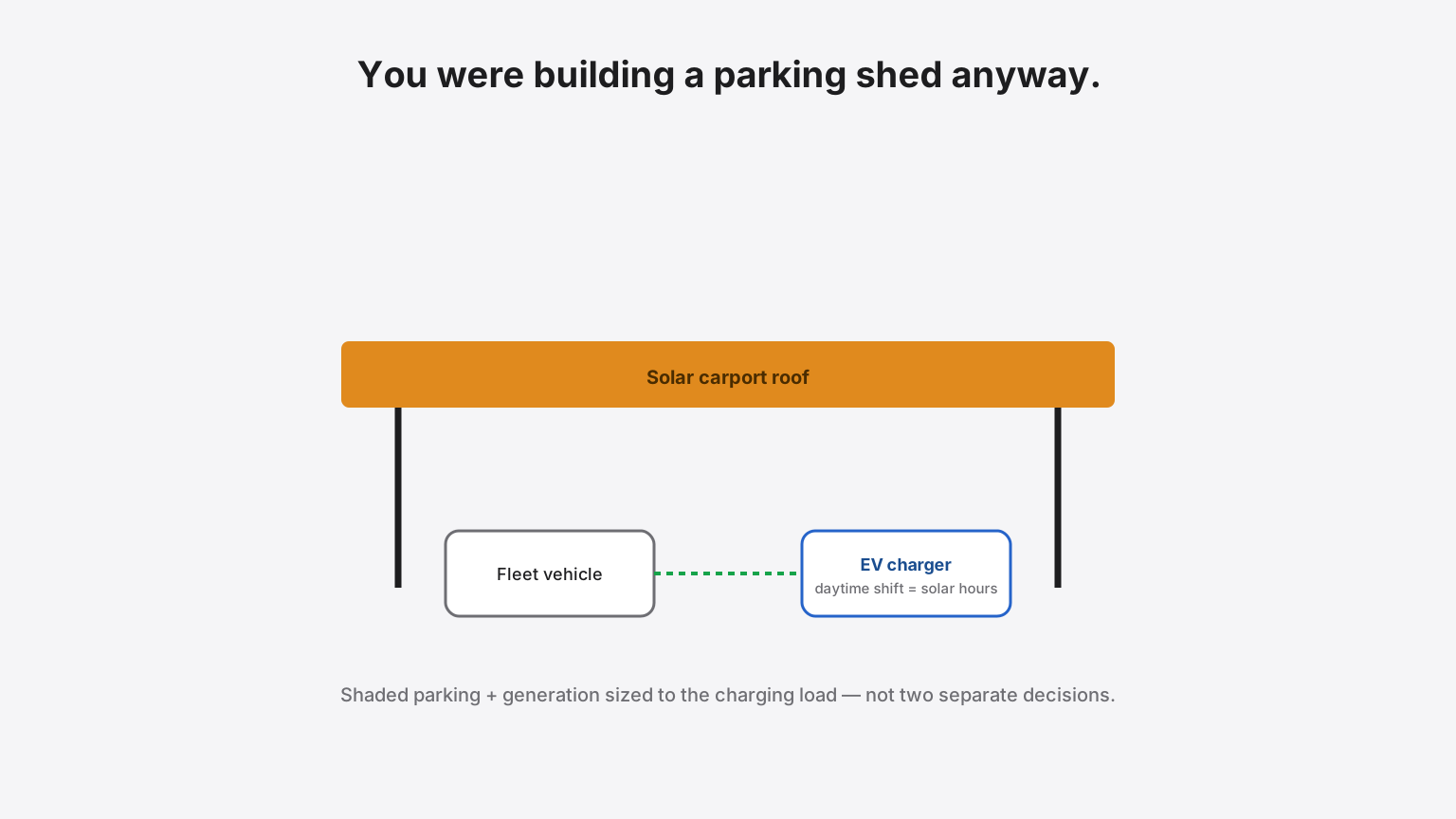
You Were Going to Build a Parking Shed Anyway. Put Solar on It Before the EV Chargers Go In.
Factories with EV logistics fleets, hotels, and corporate campuses adding EV charging usually treat the charger and the parking structure as two separate decisions. A solar carport combines them — shaded parking plus a generation source sized to actually offset the new charging load, rather than dumping it straight onto the grid connection.
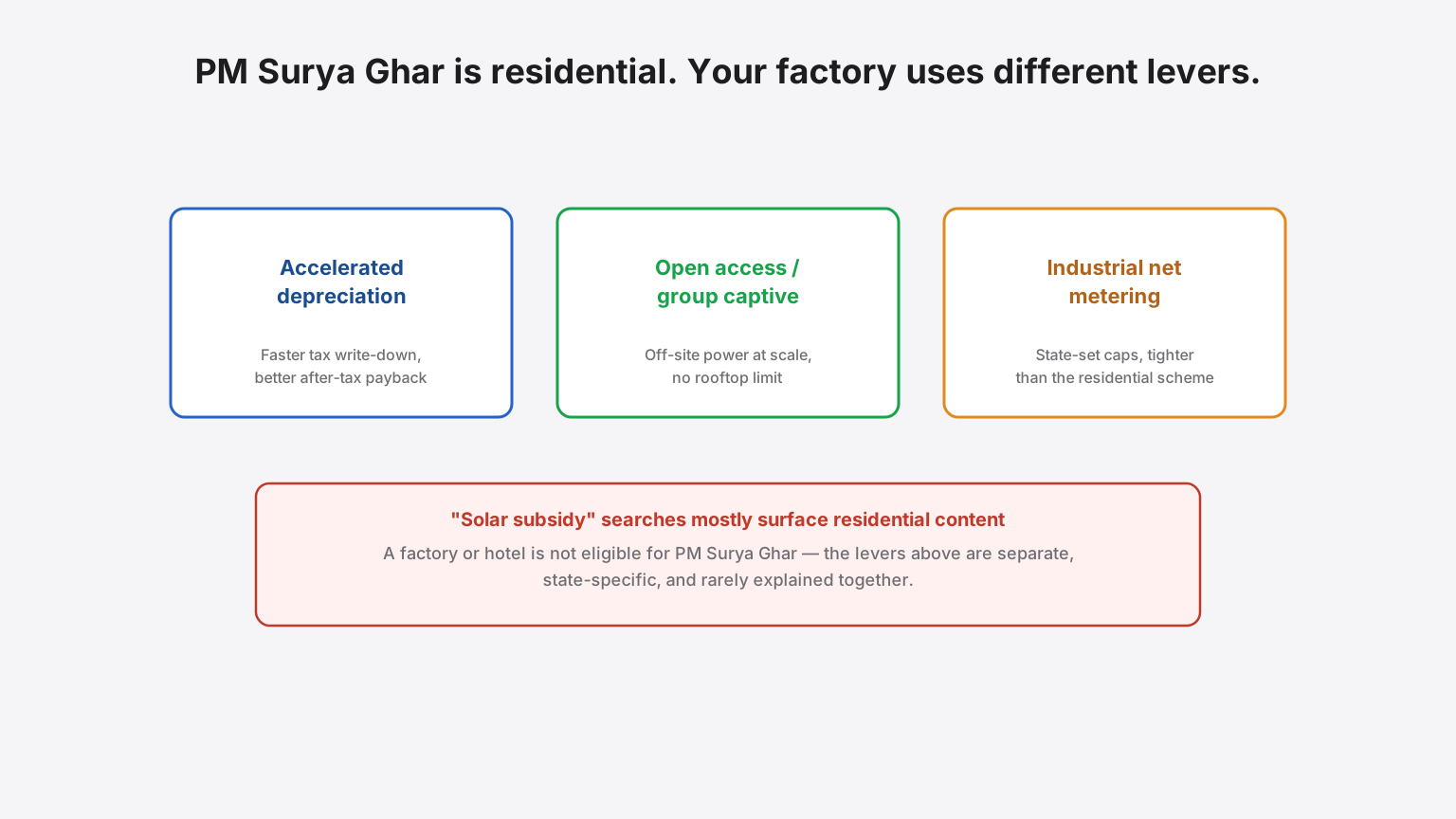
PM Surya Ghar Is a Residential Scheme. Your Factory's Solar Incentives Work Differently.
PM Surya Ghar dominates solar-incentive coverage in India — and it's a residential rooftop scheme your factory or hotel isn't eligible for. Commercial and industrial buyers work a different set of levers: accelerated depreciation, open access, and industrial net-metering rules that are more restrictive, not more generous, than the residential ones.
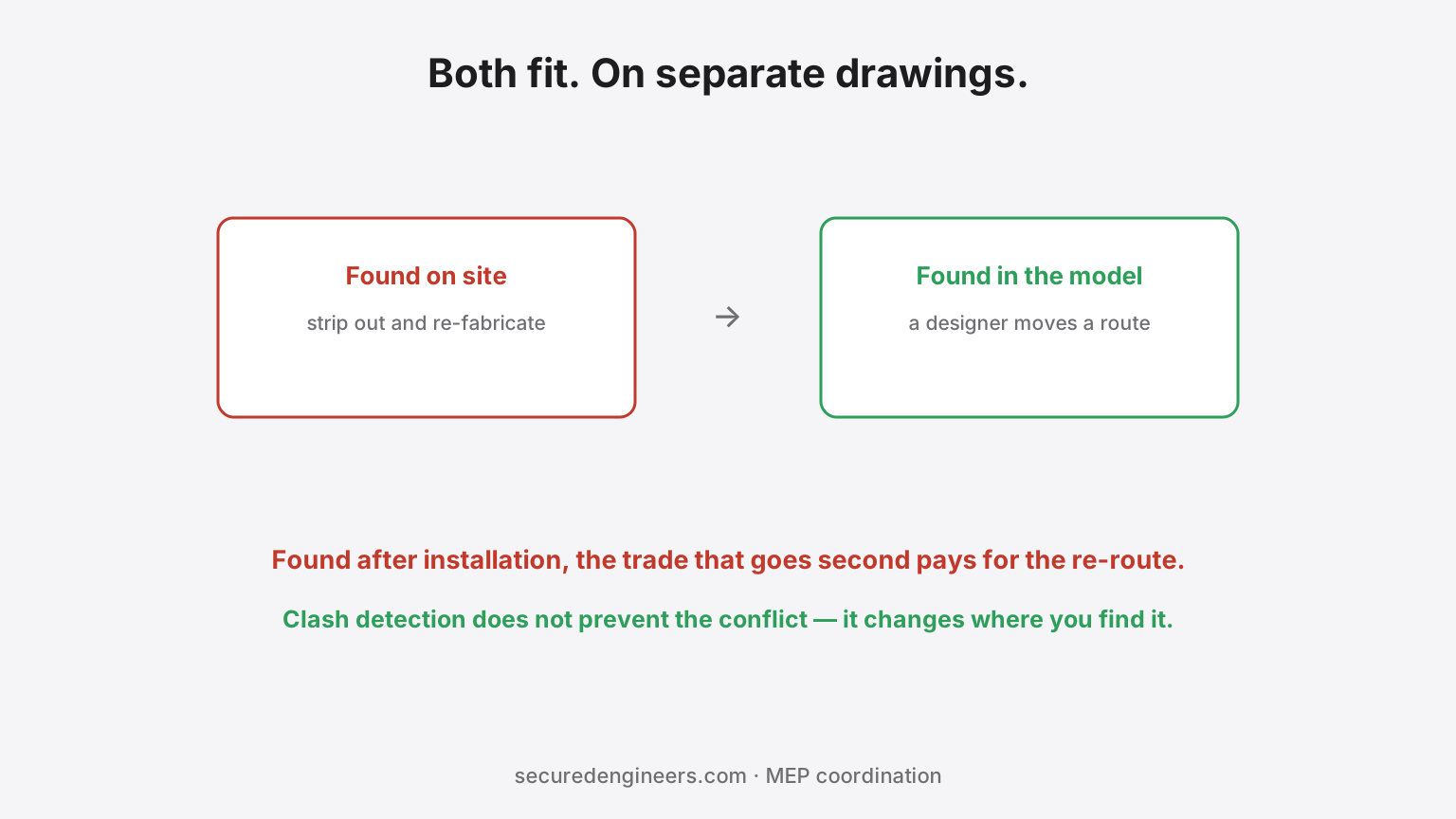
The Duct and the Beam Both Fit. On Separate Drawings.
Every services trade produces a layout that works in isolation. They only conflict once installed — and on a 2D workflow that discovery happens on site, with steel already up. Clash detection moves the argument to a screen, where changing it costs nothing.
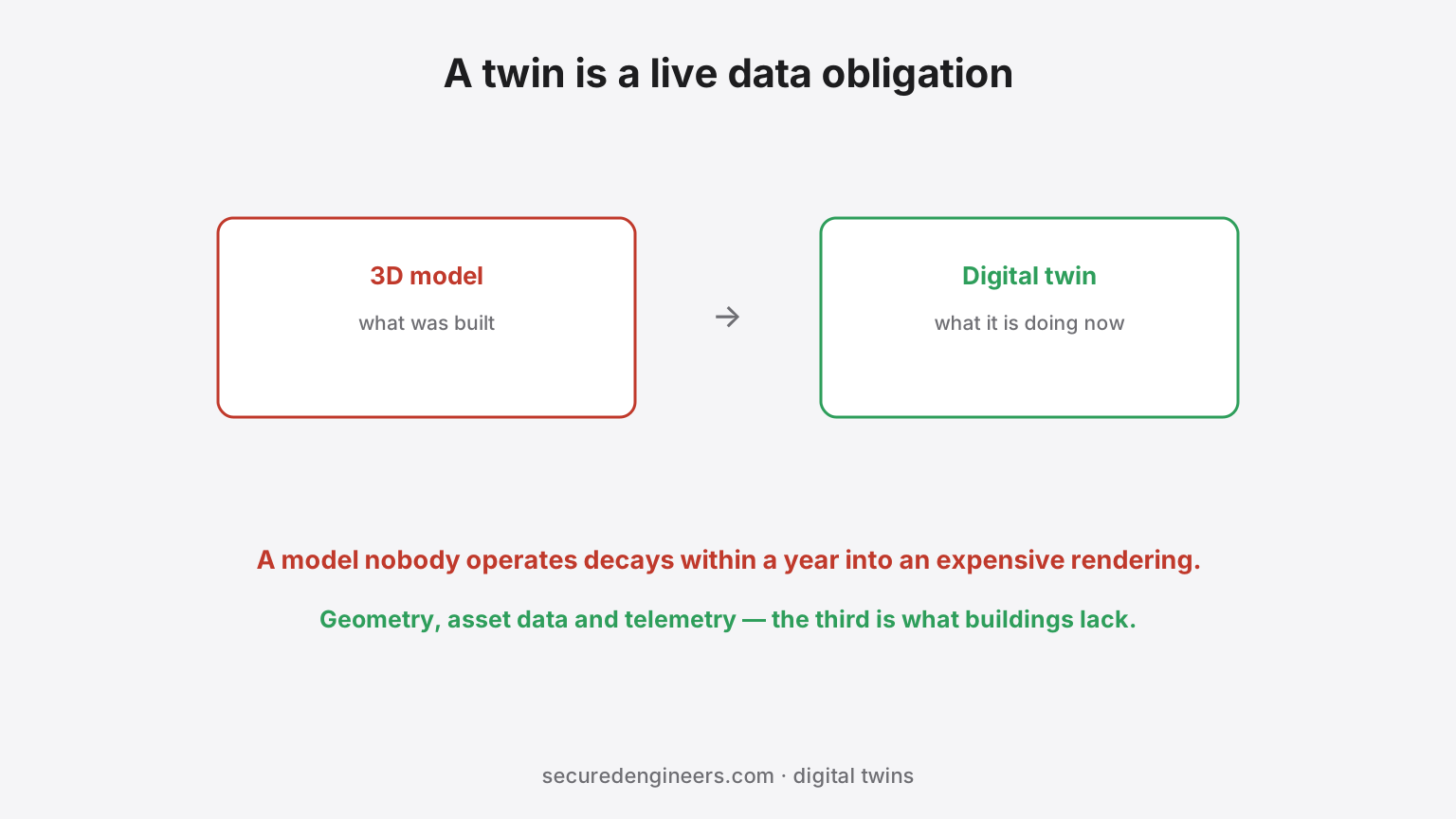
A Digital Twin Is Not a 3D Model. It Is a Live Data Obligation.
Digital twins are sold as a visualisation. What makes one useful is the live data behind it — which means metering, BMS integration and an as-built model that stays true. Most twins fail not at creation but at maintenance.
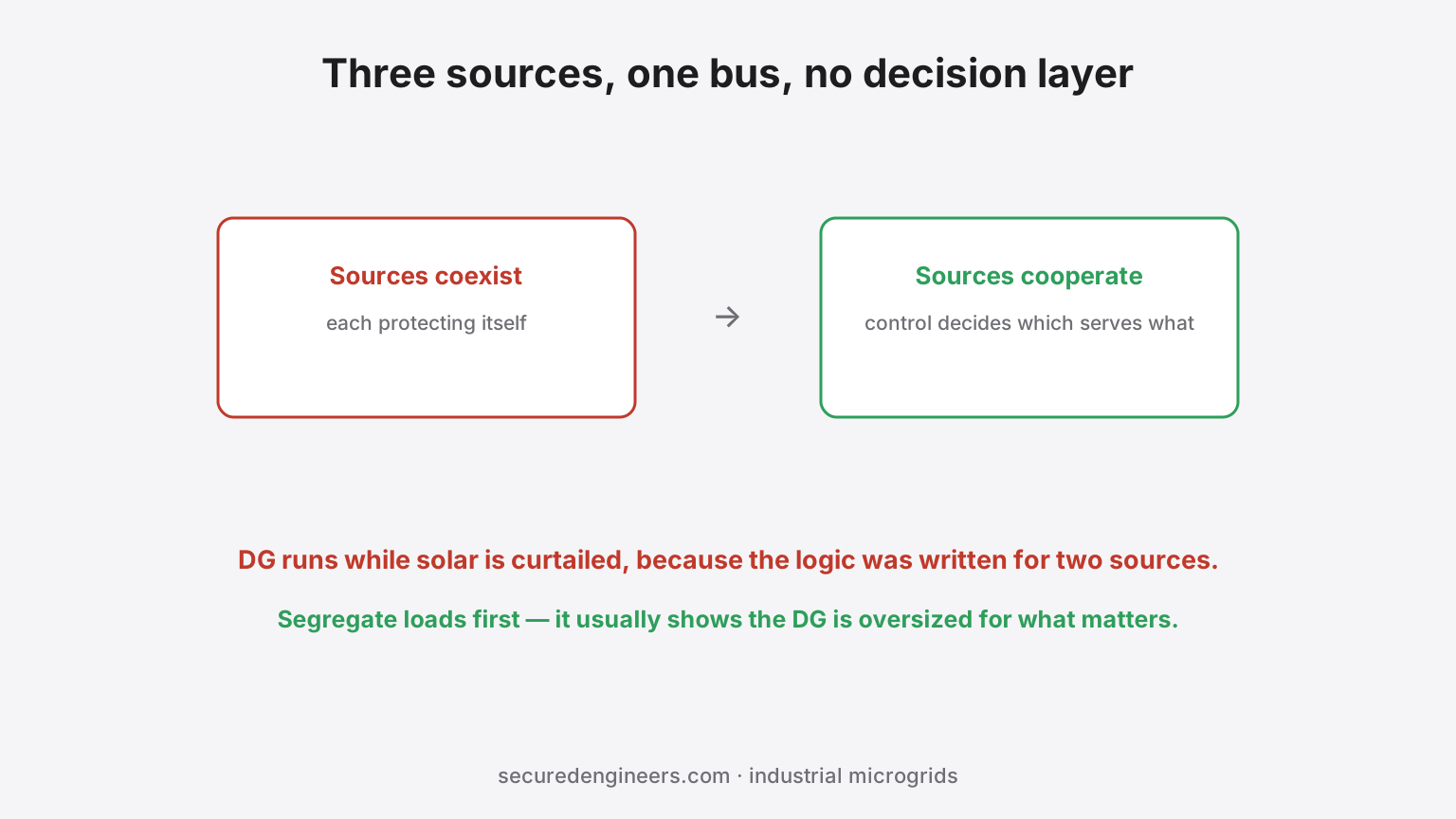
Solar, DG and Battery Integration for a Factory: Outages, Protection and Control
A grid-tied solar plant stops the moment grid supply fails, by design. Making solar, a DG set and batteries work together during outages is an architecture decision — which loads are critical, which source serves them, and the protection and controls that keep the grid, the DG and the inverters out of each other's way.
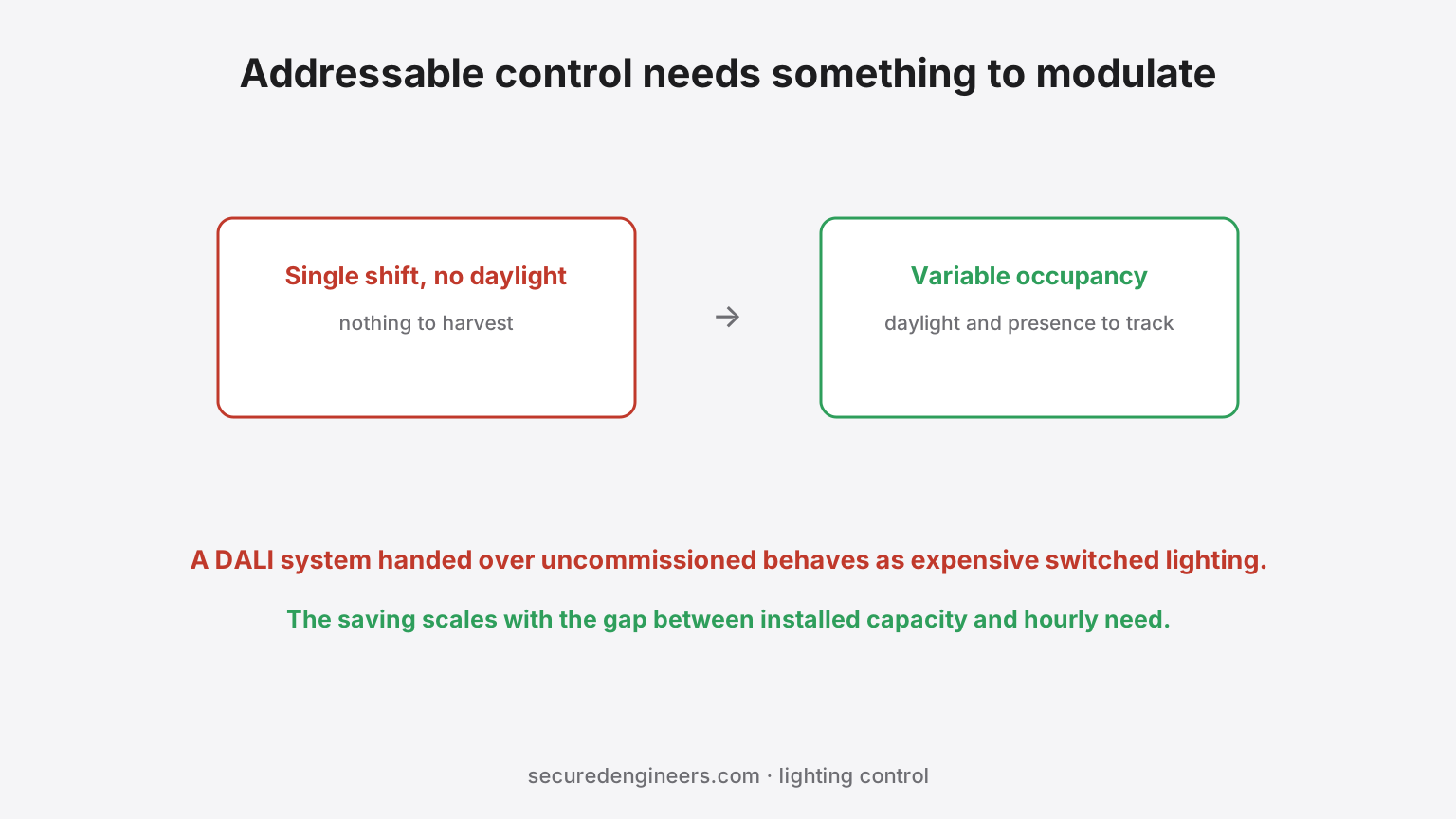
Addressable Lighting Control Pays in Some Buildings and Not in Others.
DALI and KNX let every fitting be addressed, dimmed and scheduled individually. That is genuinely valuable where occupancy and daylight vary — and close to worthless in a space that runs one shift at full output.
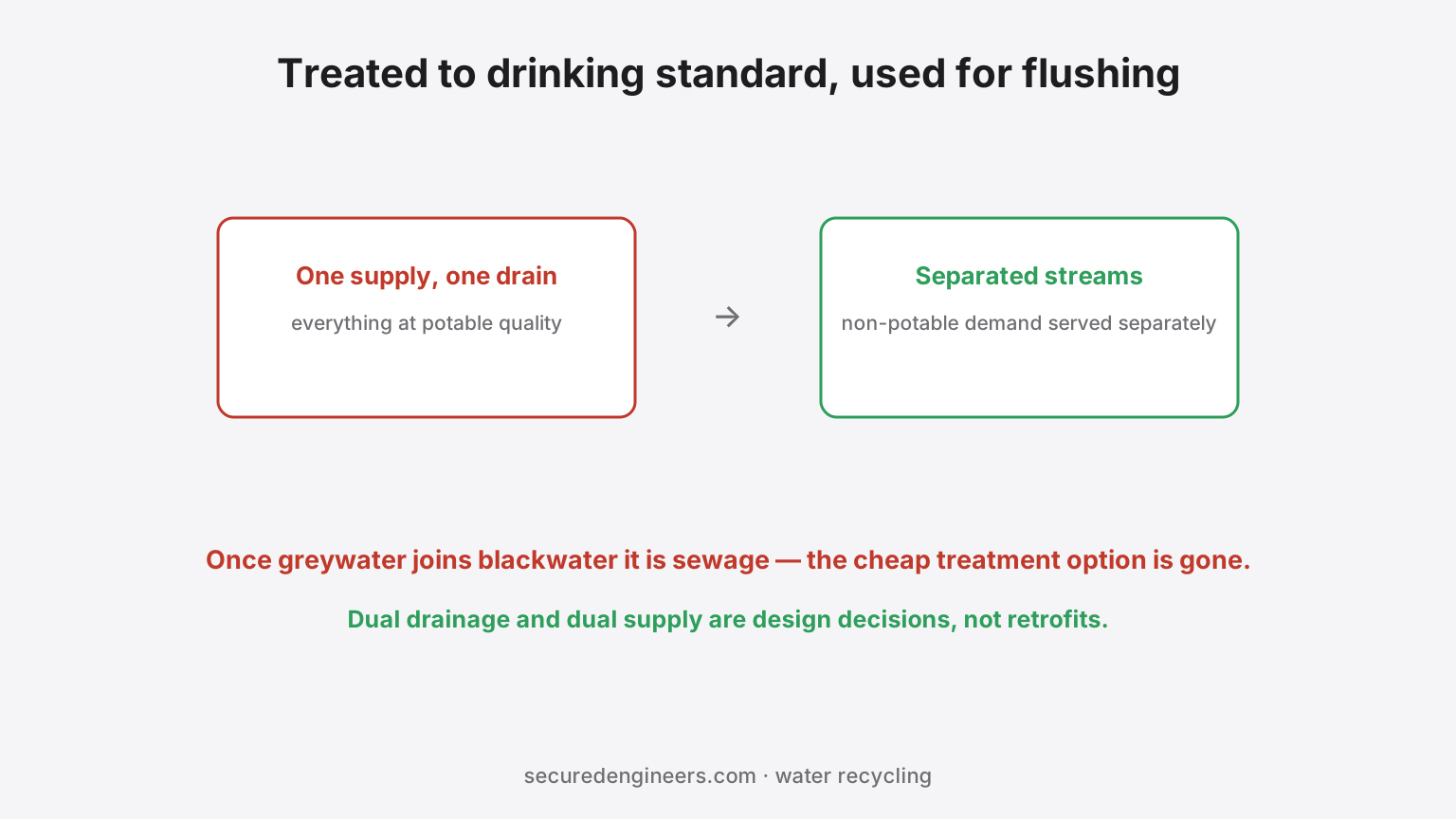
Water Reuse in Factories: Building a Savings Case That Holds Up
Treated water saves money only when it replaces water you would otherwise buy or pump, at the quality and time the use needs. A savings case built on matched demand, the full cost of treatment and pumping, and an honest allowance for downtime and monitoring.
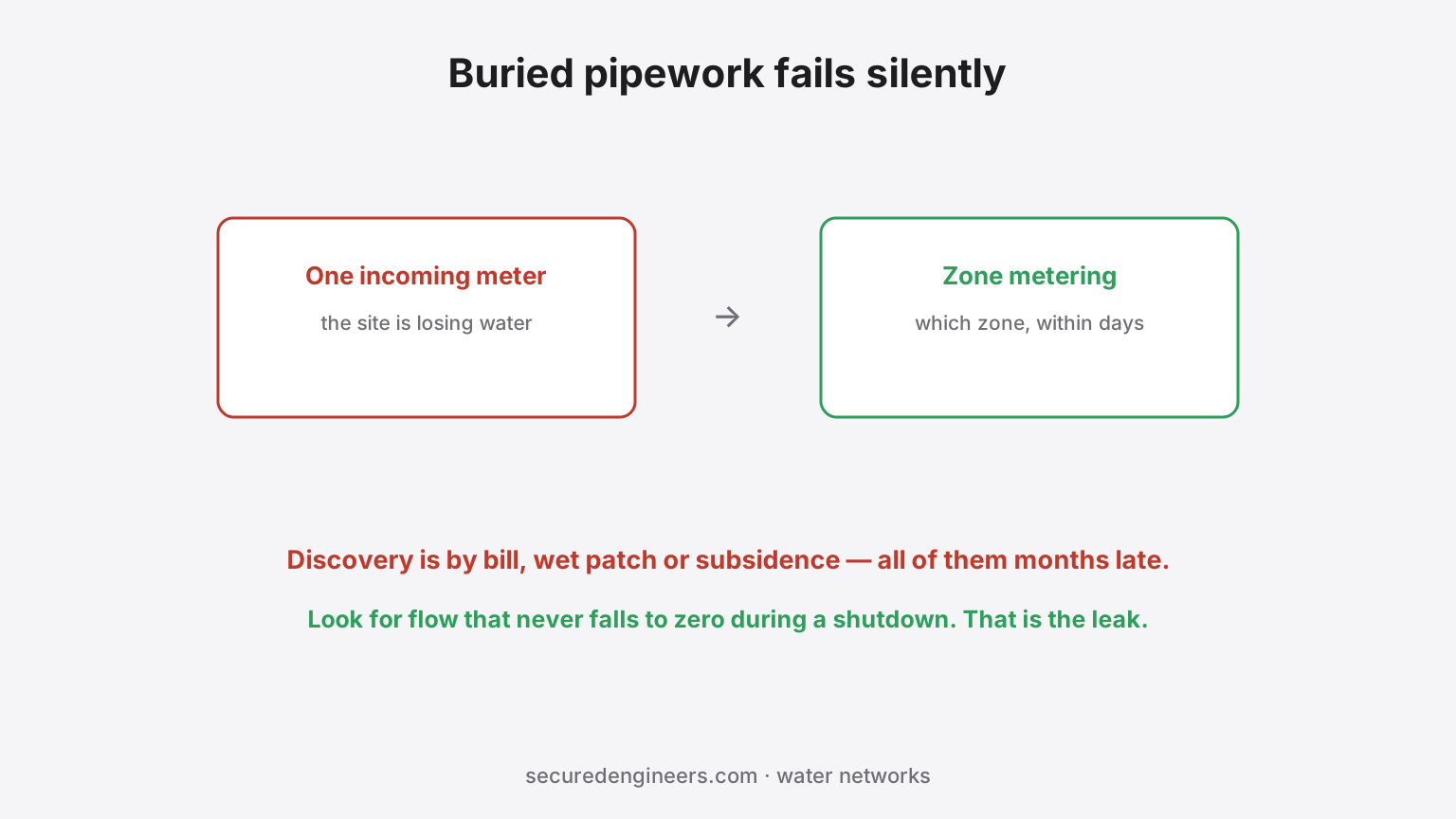
The Leak Started in March. You Found It in the August Water Bill.
Buried and concealed pipework fails silently. On an industrial site the loss is discovered by a bill, a wet patch or a sinkhole — all of them late. Flow monitoring finds it in days by watching for consumption that never stops.
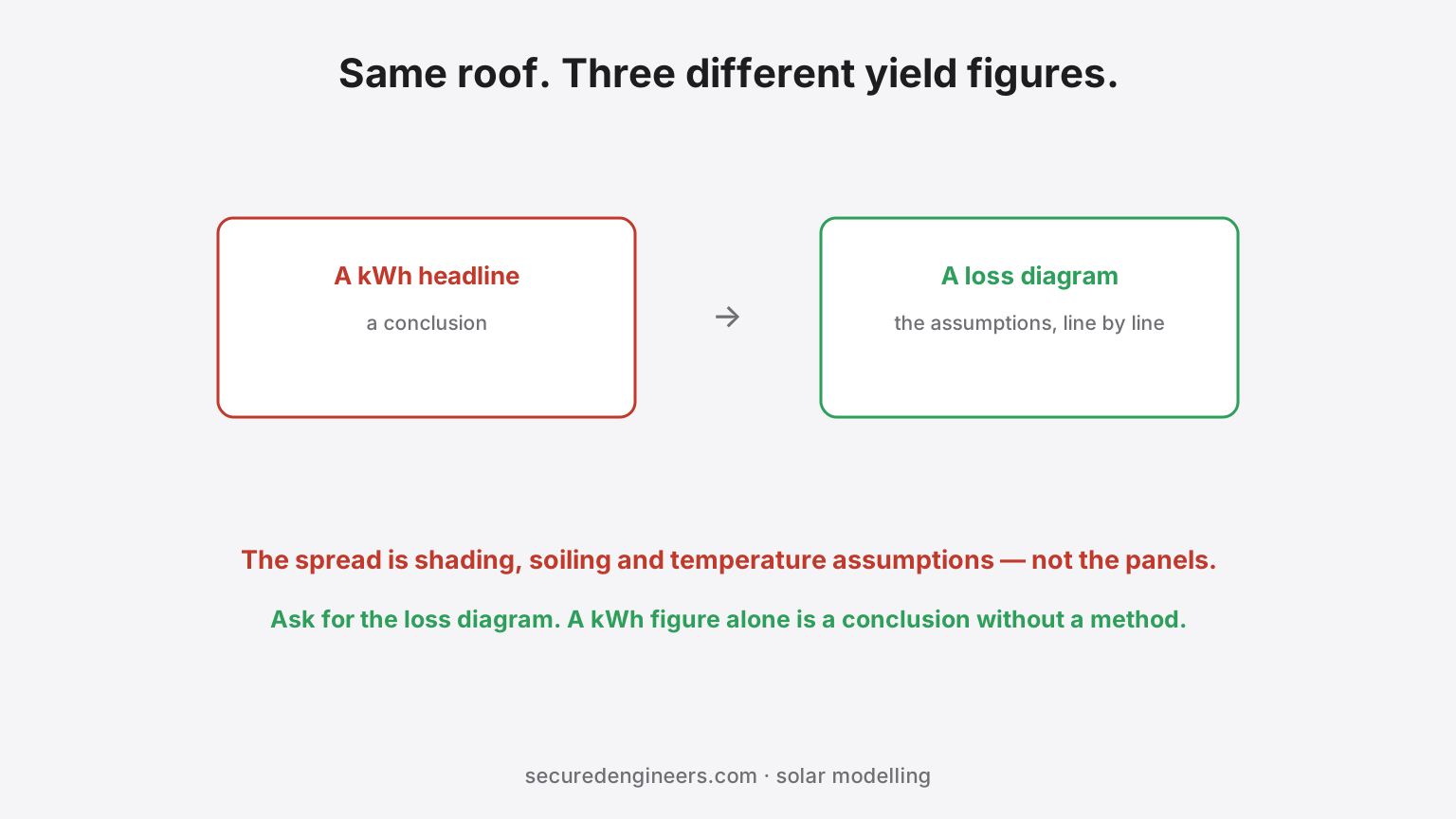
Three Vendors, One Roof, Three Different Generation Figures.
Solar yield estimates for the same roof routinely differ by double digits. The gap is rarely the panels — it is what each model assumed about shading, soiling, temperature and losses, and almost none of it is visible in the headline number.

A Plant Down 8% Looks Exactly Like a Plant Working Fine.
Solar underperformance is invisible from the ground and rarely obvious in the monitoring portal. Aerial thermography inspects every module in a fraction of the time a manual survey takes — and finds the specific failures that inverter data cannot localise.
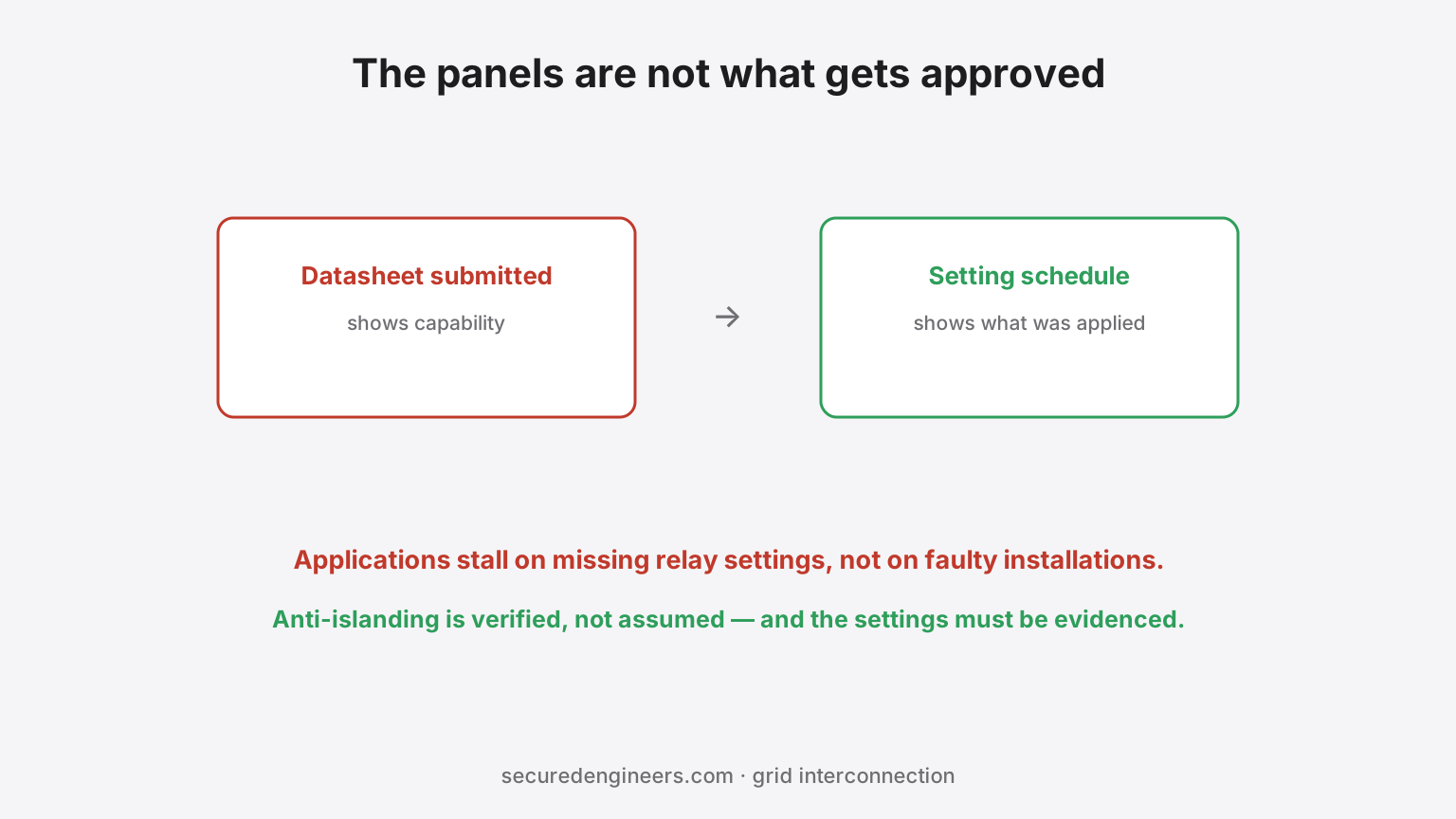
The Array Is Built. The Protection Settings Decide Whether It Ever Exports.
A rooftop plant cannot export until the DISCOM is satisfied it will disconnect safely, protect its own network, and stay within limits. Those requirements sit in the protection settings and the interconnection documentation, not in the panels.
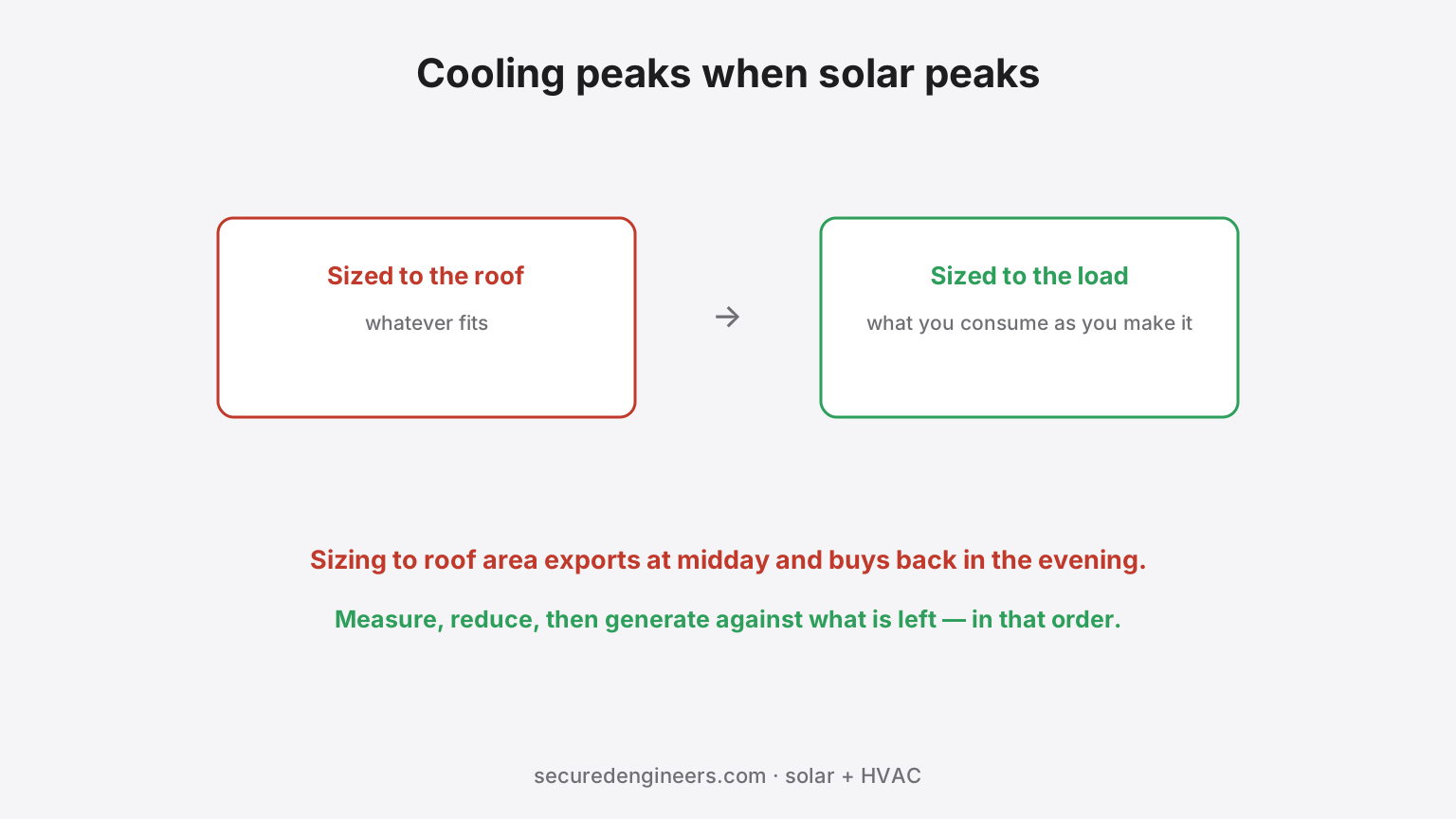
Size Rooftop Solar Against Your Factory's Daytime Load, Not the Roof
A rooftop plant pays best when the factory uses its output as it is generated. Sizing it means overlaying interval load data on the generation curve — weekdays, shutdowns and seasons included — and deciding what happens to the surplus before choosing the kW.
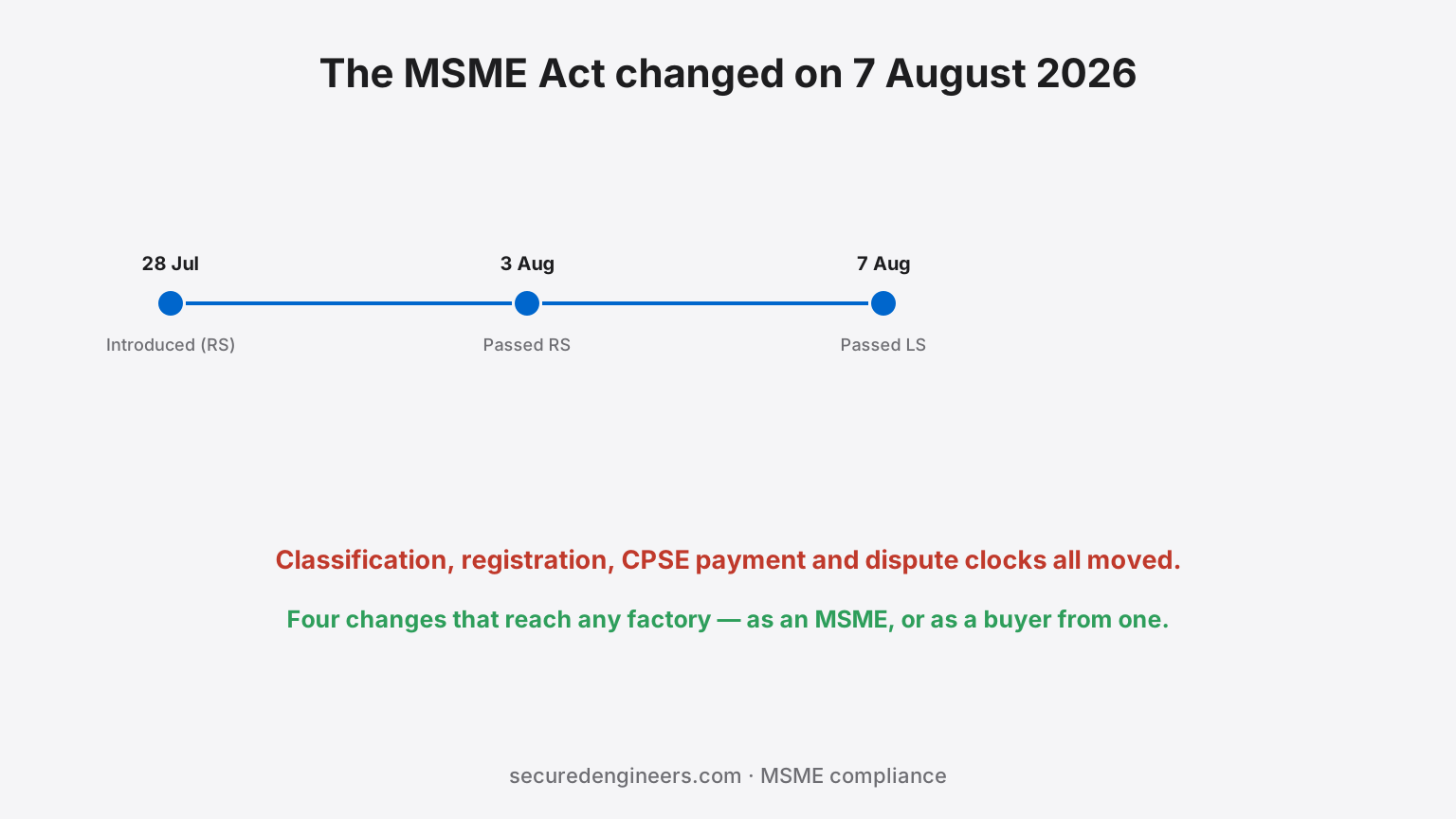
The MSME Act Just Changed. Here Is What It Means for a Factory Owner.
Parliament passed the MSME Development (Amendment) Bill on 7 August 2026. It moves classification thresholds out of the Act, makes registration voluntary, puts CPSE payments on TReDS, and imposes hard clocks on delayed-payment disputes.
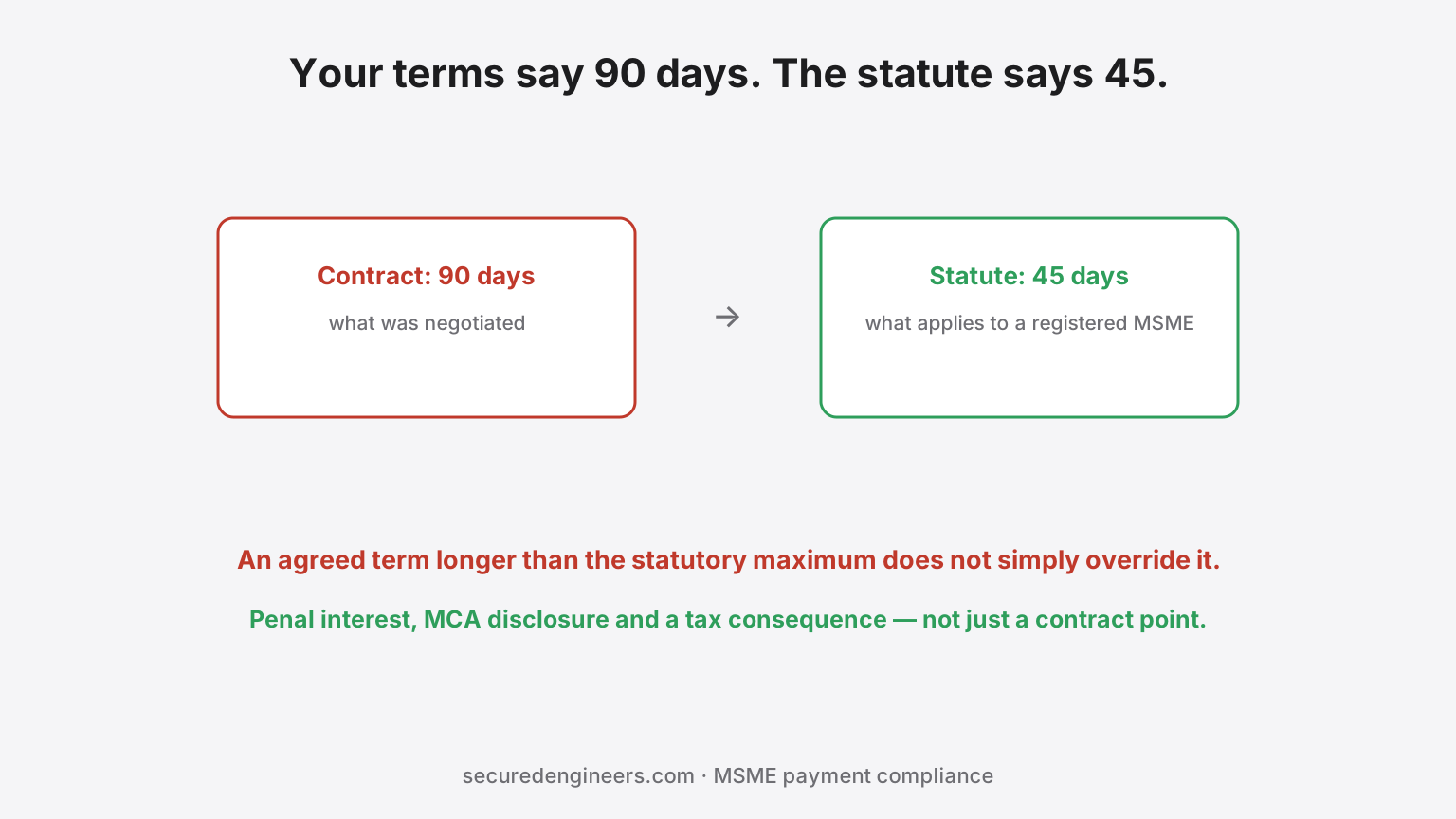
Your MEP Contractor Is an MSME. Your Payment Terms Say 90 Days.
Construction payment terms are negotiated as though they are free to agree. Where the supplier is a registered MSME, the statutory 45-day clock does not care what the contract says — and the consequences of ignoring it are financial, not merely contractual.
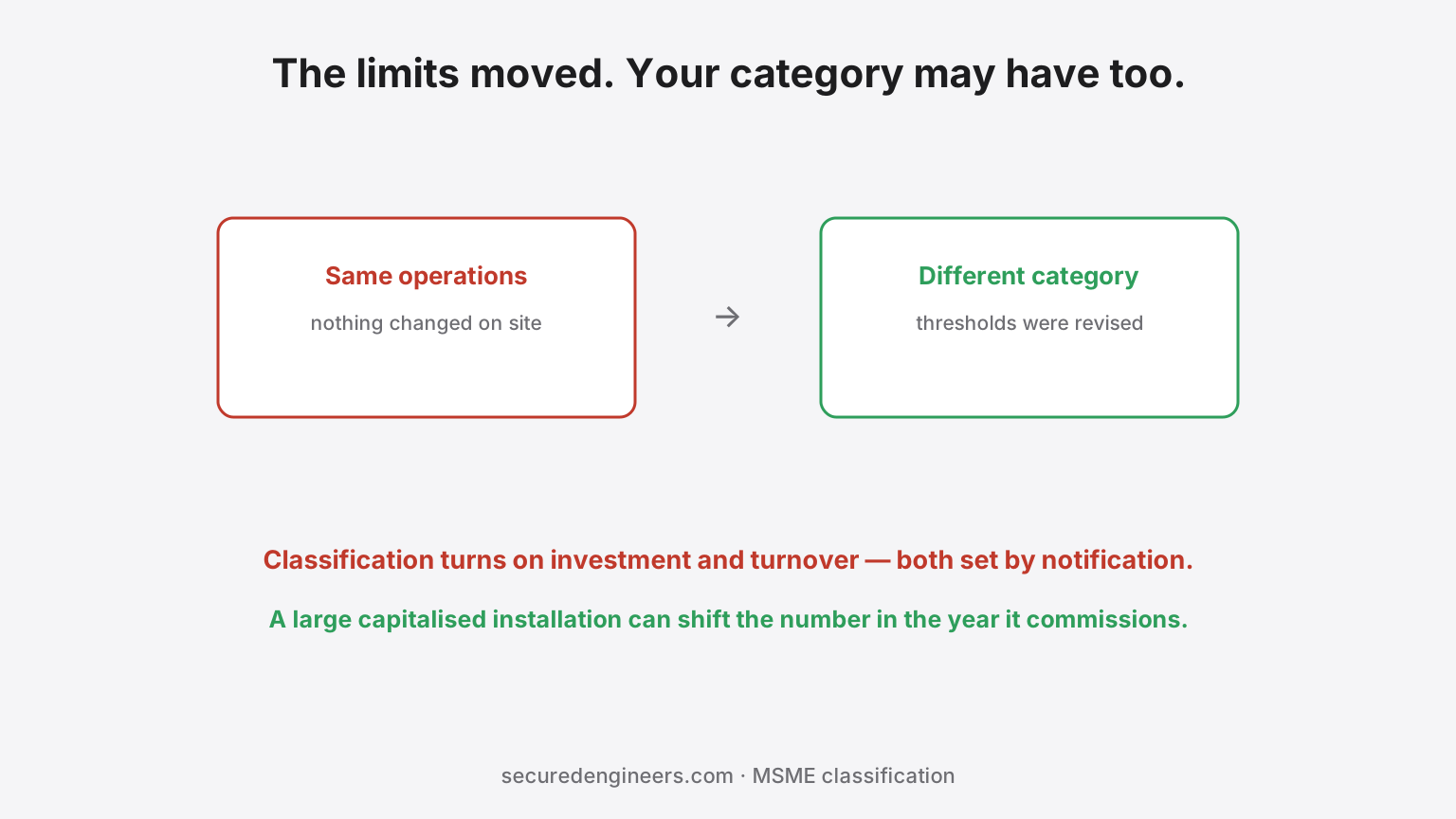
The Thresholds Moved. Your Factory May Have Changed Category Without Doing Anything.
MSME classification is set by investment in plant and machinery and by turnover. When the notified limits rise, enterprises change category without any change in their own operations — and both the benefits and the obligations move with them.
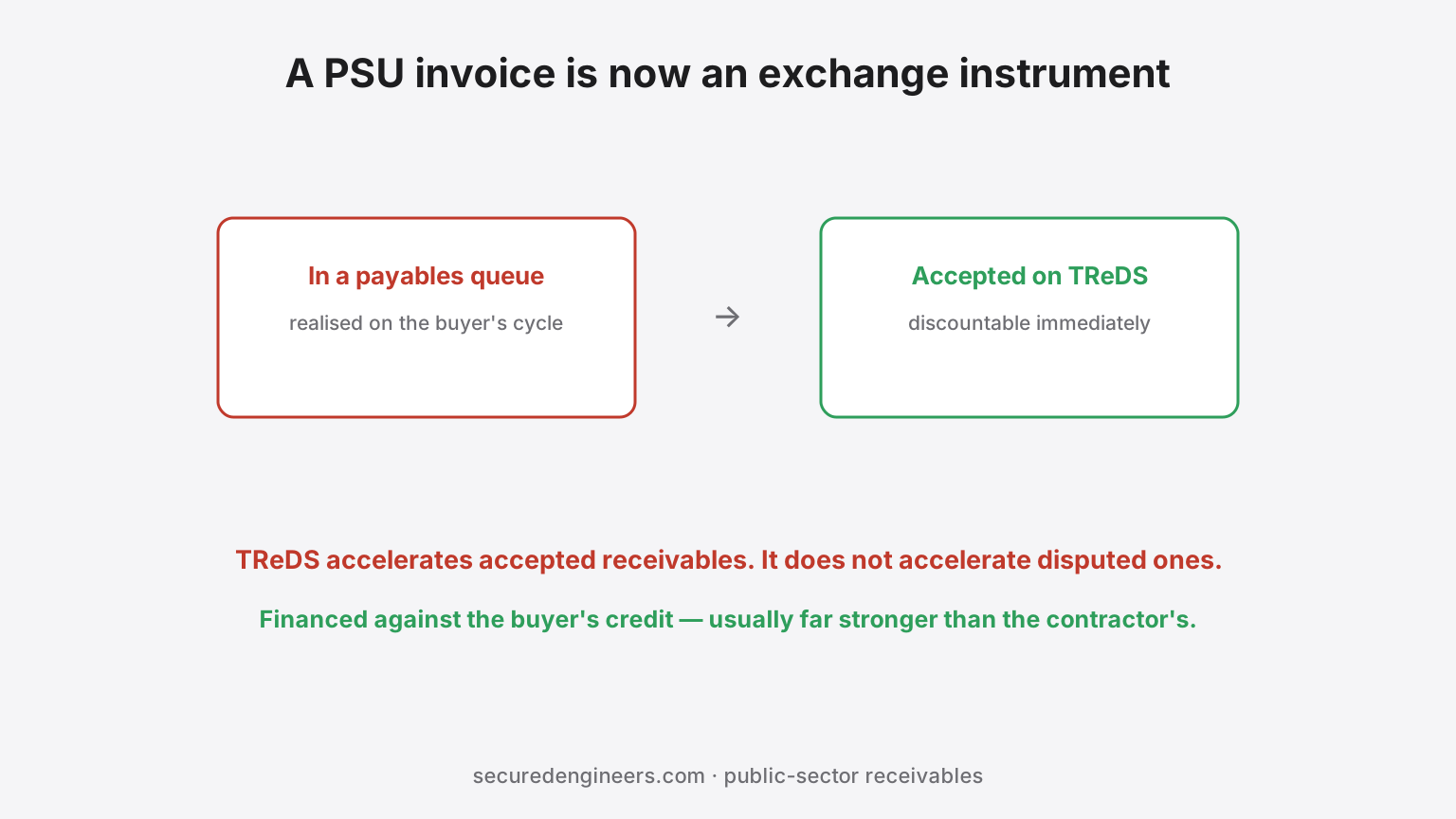
Supplying a PSU? Your Invoice Now Has to Go on TReDS.
The 2026 amendment requires every central public sector enterprise to settle MSME invoices on the Trade Receivables Discounting System. For contractors on PSU work, that turns a receivable in a queue into a discountable instrument on a regulated exchange.
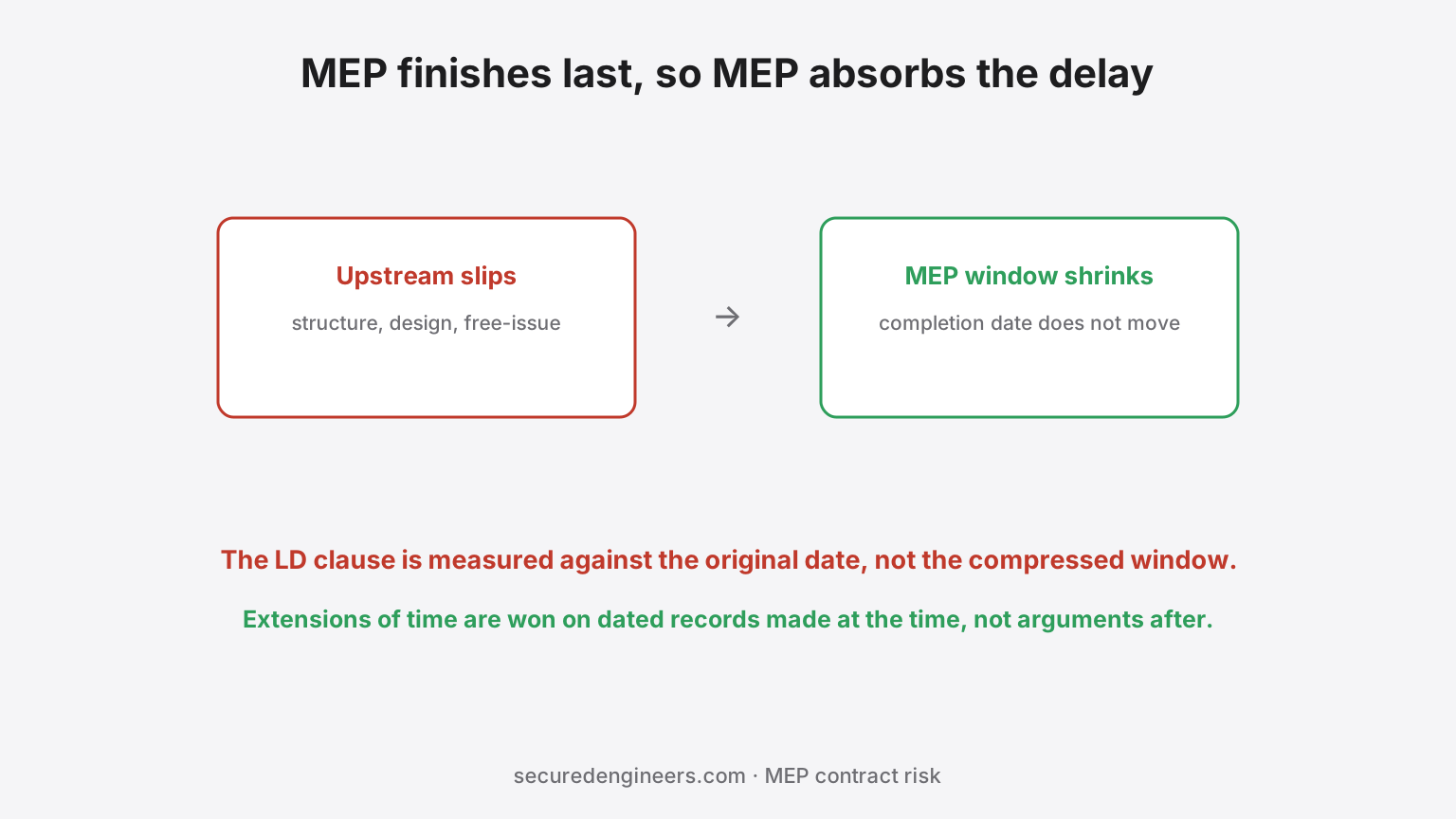
The LD Clause Punishes Whoever Was Working Last, Not Whoever Caused the Delay.
MEP is the final trade on site, so it absorbs every delay upstream of it and then meets a liquidated-damages clause written against the original date. Without contemporaneous records, the contractor who caused the slip is rarely the one who pays for it.
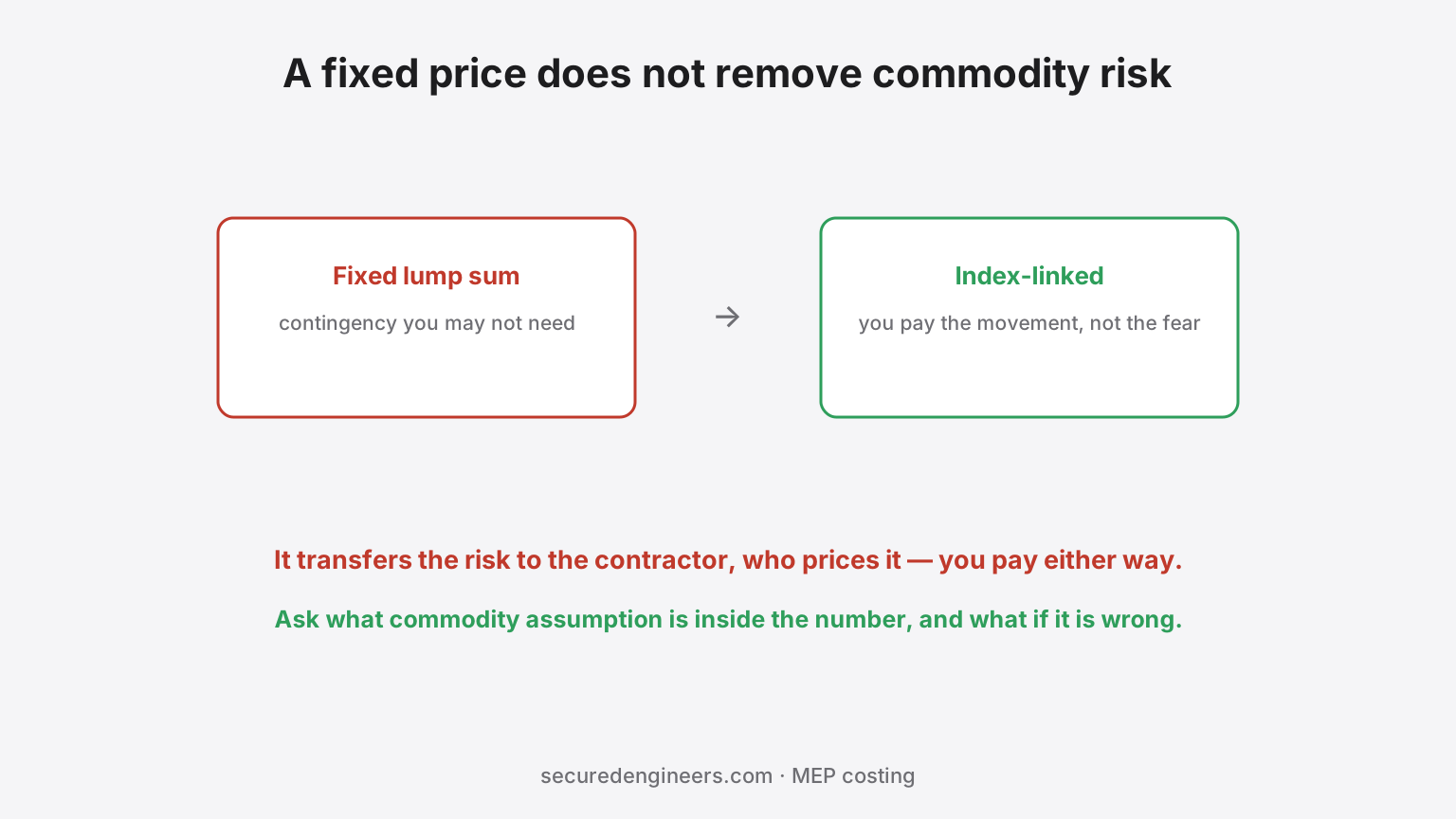
A Fixed Price for 14 Months of Copper. Someone Is Carrying That Risk.
MEP is unusually exposed to metal prices — copper in cable and motors, steel in pipe, tray and structure. A fixed lump sum over a long programme does not remove that risk. It just decides who holds it, and prices it in.
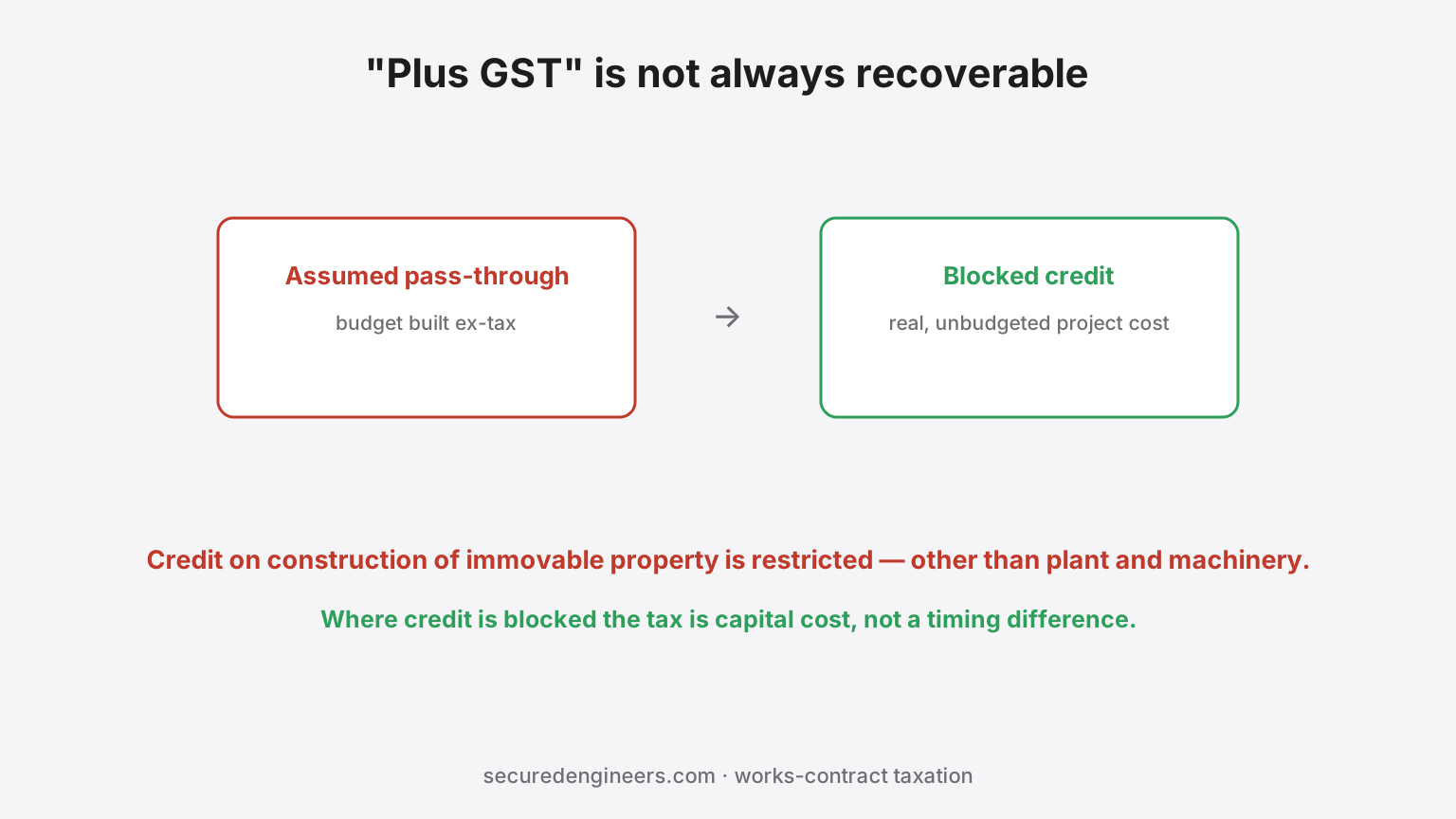
The Quote Said "Plus GST". Whether You Can Reclaim It Is a Different Question.
MEP installation is a works contract, and works contracts have their own GST treatment. The trap is not the rate — it is that input tax credit on construction of immovable property is restricted, so tax that looks recoverable sometimes is not.
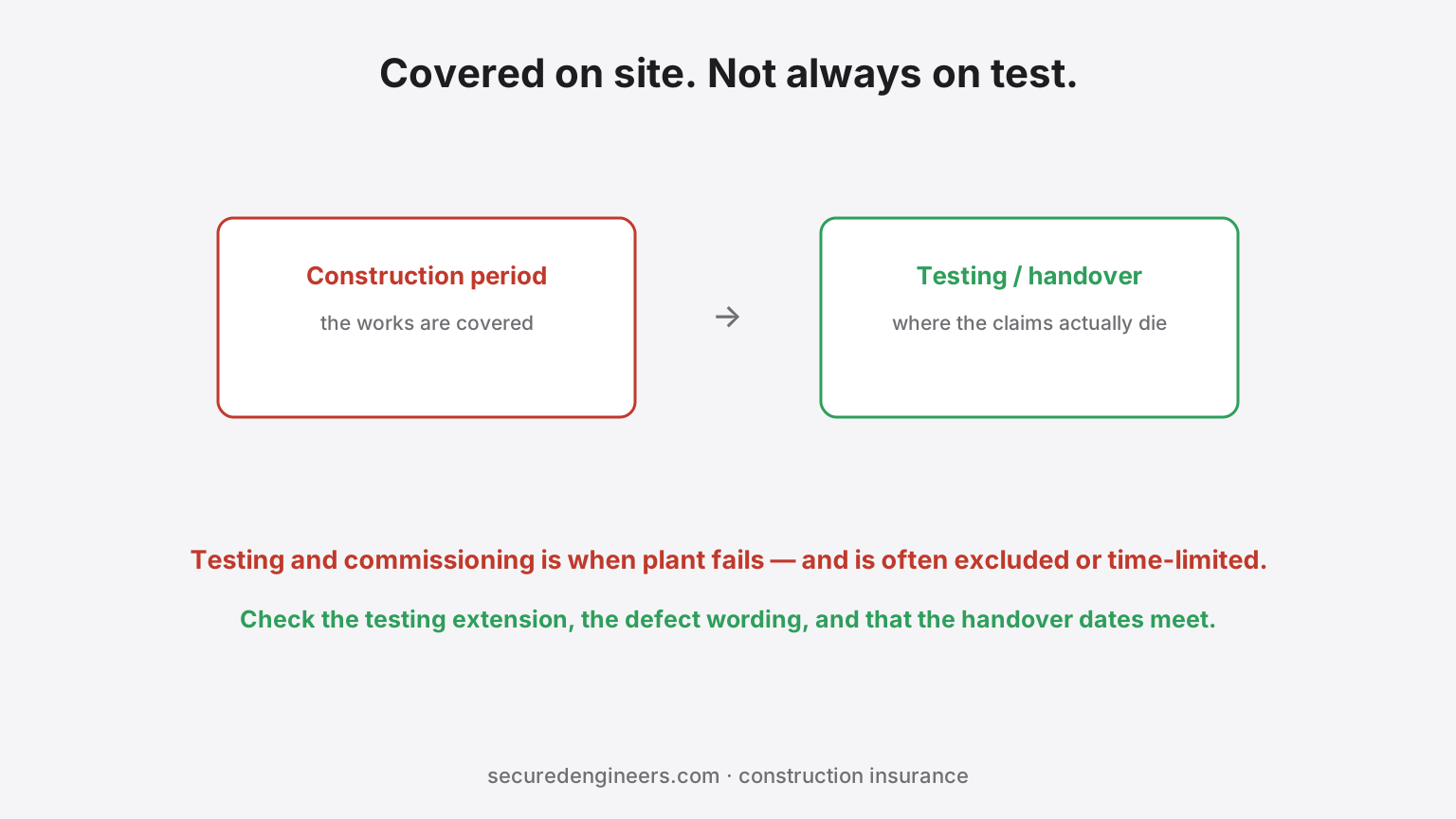
The Site Is Insured. The Chiller That Failed on Test Is Probably Not.
Erection all-risk and contractors all-risk policies cover the works during construction. The exclusions are where MEP claims die — testing and commissioning, defective design, and the gap between practical completion and the operational policy starting.
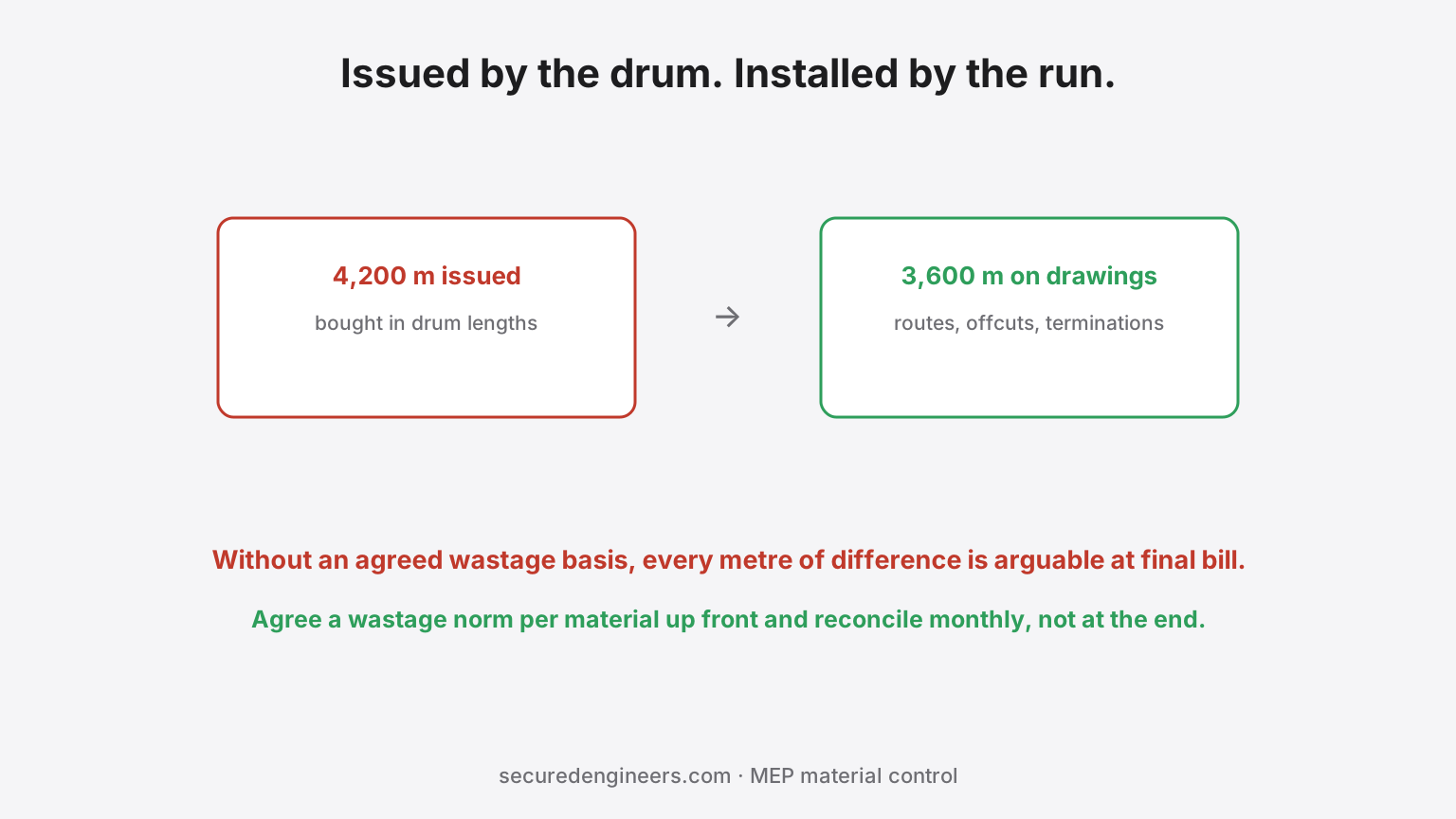
You Paid for 4,200 Metres of Cable. The Drawings Account for 3,600.
Material reconciliation on an MEP job is where trust breaks down late. Cable, pipe and tray are bought by the drum and installed by the run, and without an agreed wastage basis the difference becomes an argument at final bill.
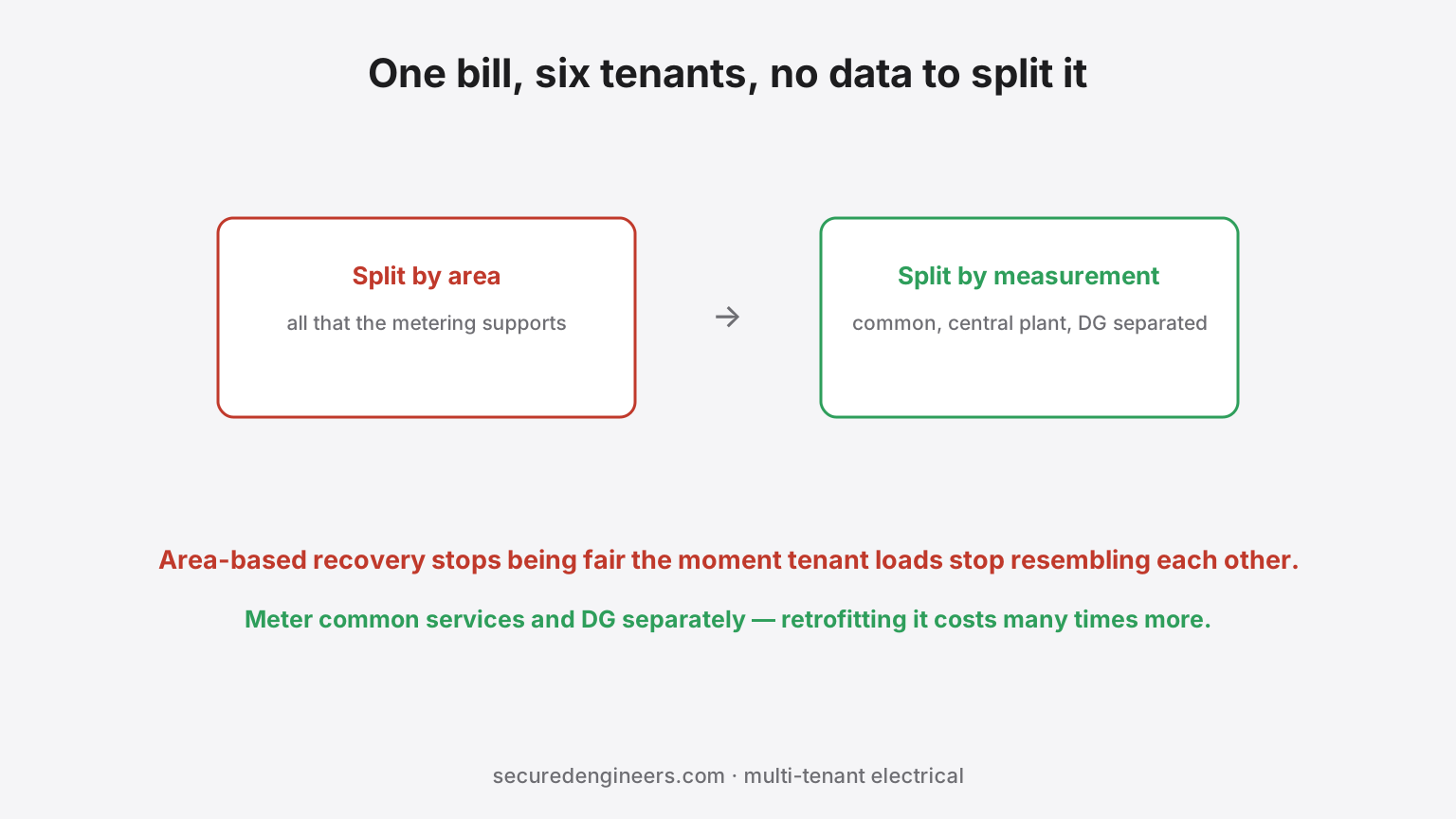
One Bill, Six Tenants, and No Way to Prove Who Used What.
Multi-tenant buildings recover electricity by area share because that is all the metering supports. The moment one tenant runs a heavier load than another, an area-based split stops being fair — and there is no data to settle the argument.
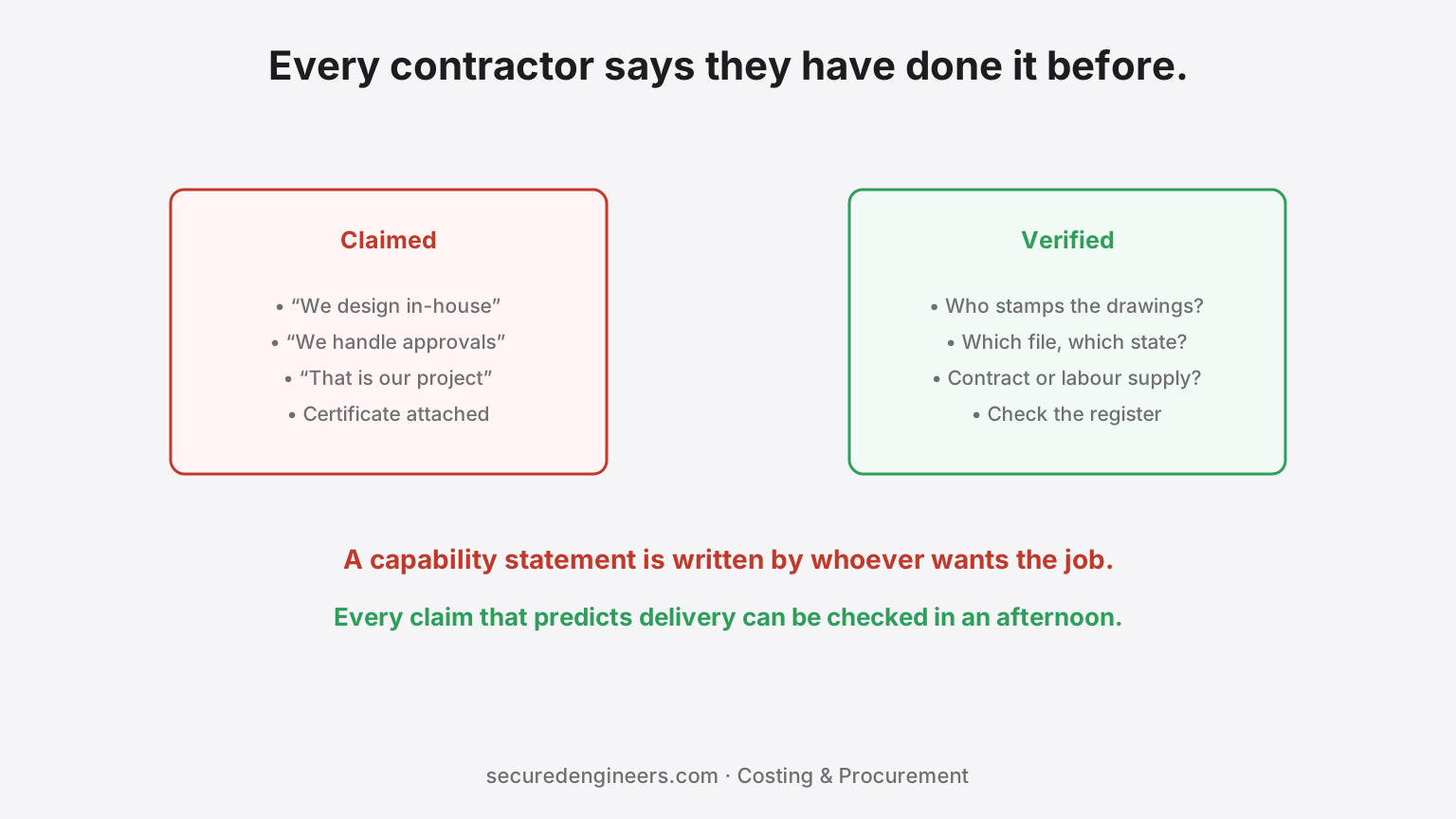
How to Verify an MEP Contractor Before You Award the Work
Capability statements are written by whoever wants the job. The claims that predict delivery — comparable work in the role claimed, engineers who will be on your job, approvals experience and a scope accepted in writing — can each be checked against evidence before award.
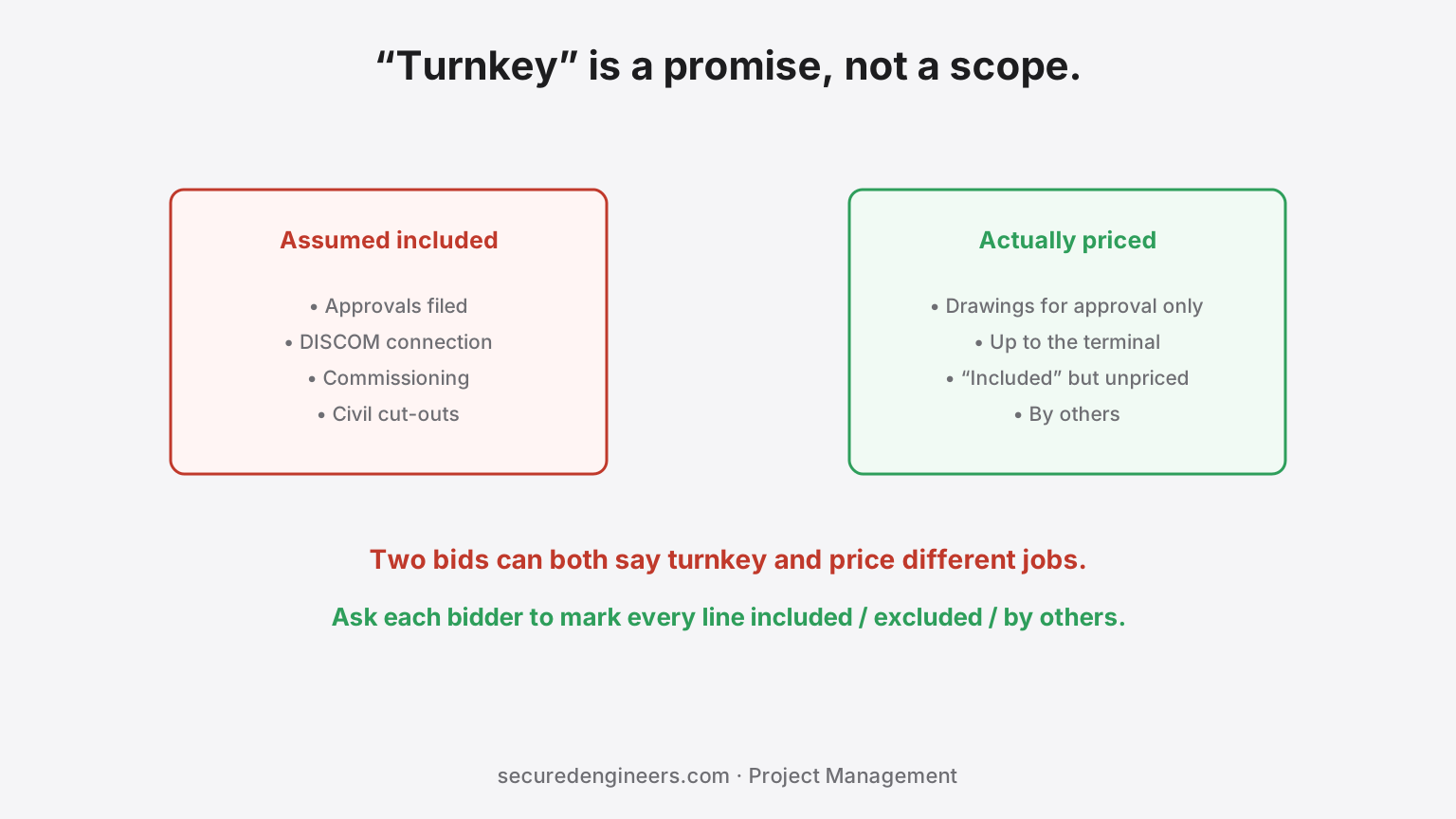
Turnkey MEPF Scope of Work: What Your Contract Should Include
Turnkey is a commercial promise, not a defined scope: two bidders can both quote turnkey MEPF and price different jobs. The design deliverables, interfaces, authority fees and handover items a contract should name, with a responsibility matrix that makes bids comparable.
Ready to start your project?
Get a free consultation and quote. We design, prepare and file your approvals, and execute — you deal with one team.
Related guides
- The Thresholds Moved. Your Factory May Have Changed Category Without Doing Anything.
- MEPF Cost per Sq Ft in India: How to Build a Budget You Can Defend
- One Bill, Six Tenants, and No Way to Prove Who Used What.
- A Digital Twin Is Not a 3D Model. It Is a Live Data Obligation.
- The Most Dangerous Electrical Installation You Will Ever Own Is the Temporary One
- MEP Design for a Mall: HVAC Zoning, Tenant Interfaces and Smoke Control
Related on this site
- termDCR Modules
- termSolar Payback Period
- termOpen Access (Solar)
- serviceBattery / Hybrid Storage (Solar EPC)
- serviceSTP / WTP / ETP (Plumbing)
- calculatorMEP Maintenance Budget Calculator
- calculatorWater Demand Calculator
- buyer's guideHow to Select an MEP Contractor
- guideFactory licence and DISH approval
- guideCTE/CTO pollution consent