
Engineering guides & industry insights — page 19
MEPF, solar and fire-safety guides — page 19
Archive page 19 of 22 — practical, no-jargon guides on MEPF, solar, fire safety and approvals.
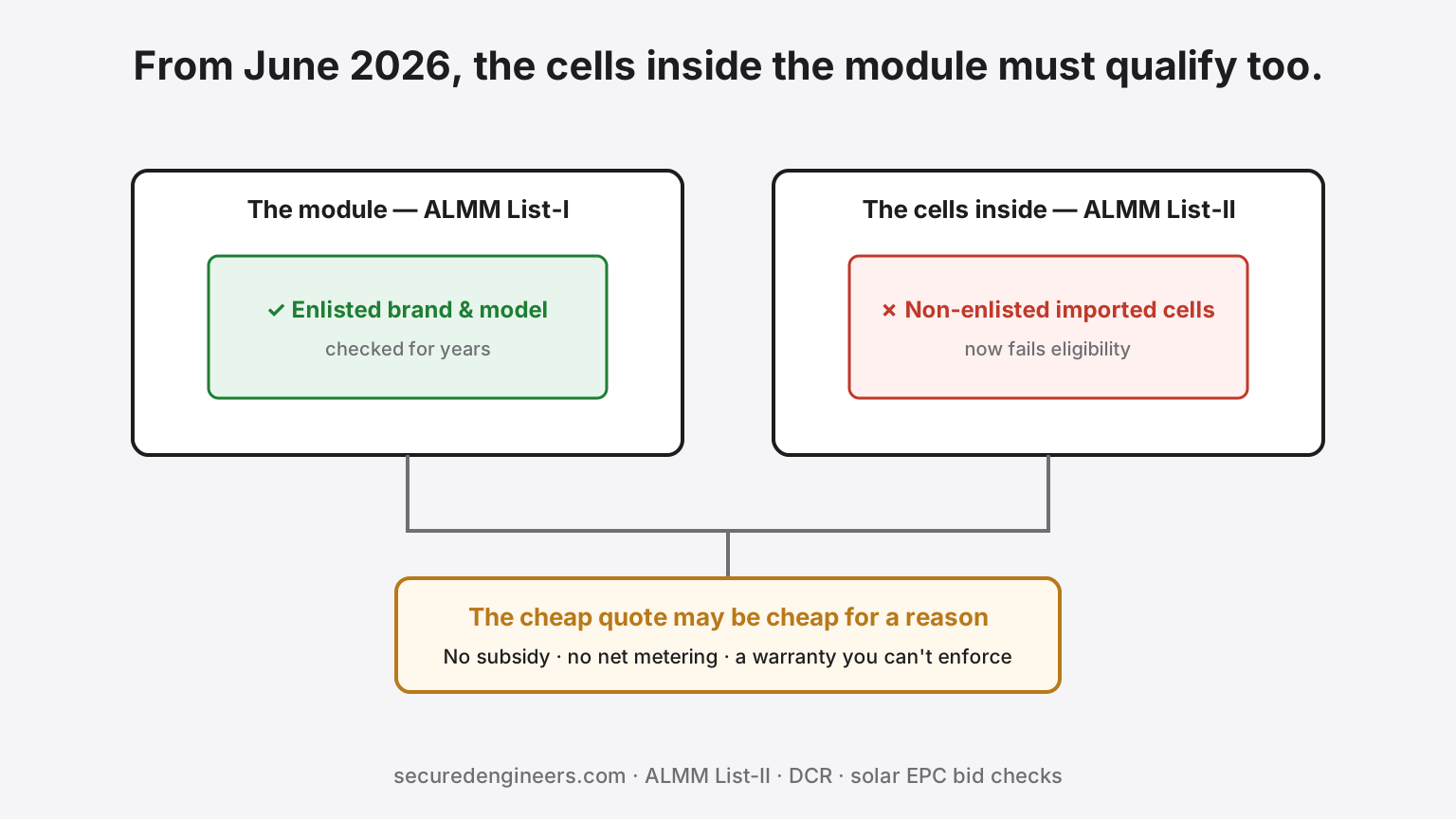
That Cheap Module Quote May Not Be an Eligible Module Anymore. ALMM List-II Changed the Rules.
From June 2026, ALMM compliance extends to solar cells (List-II), not just modules. A module that was fine to buy last year may now be ineligible for government schemes and net metering — and the cheapest quote on your table is the most likely to be built on non-compliant cells.
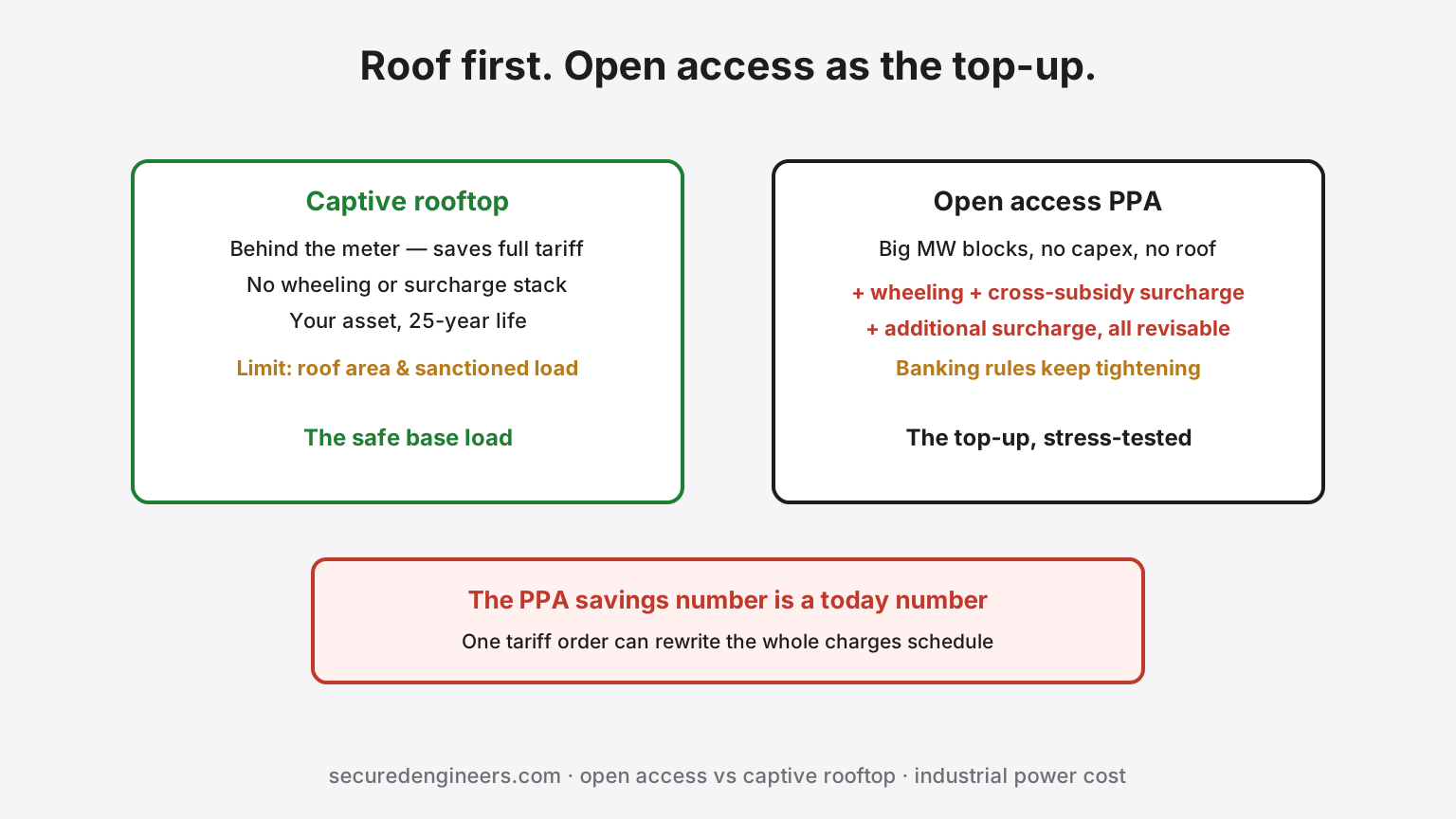
The Open-Access PPA Promised Cheaper Power Than Your Roof. Read the Charges Schedule First.
Open-access solar can deliver large blocks of cheap power without touching your roof — but its economics live and die on state-set charges that get revised, banking rules that keep tightening, and eligibility thresholds. Rooftop captive is smaller but yours. Most factories should treat roof-first as the base and open access as the top-up.
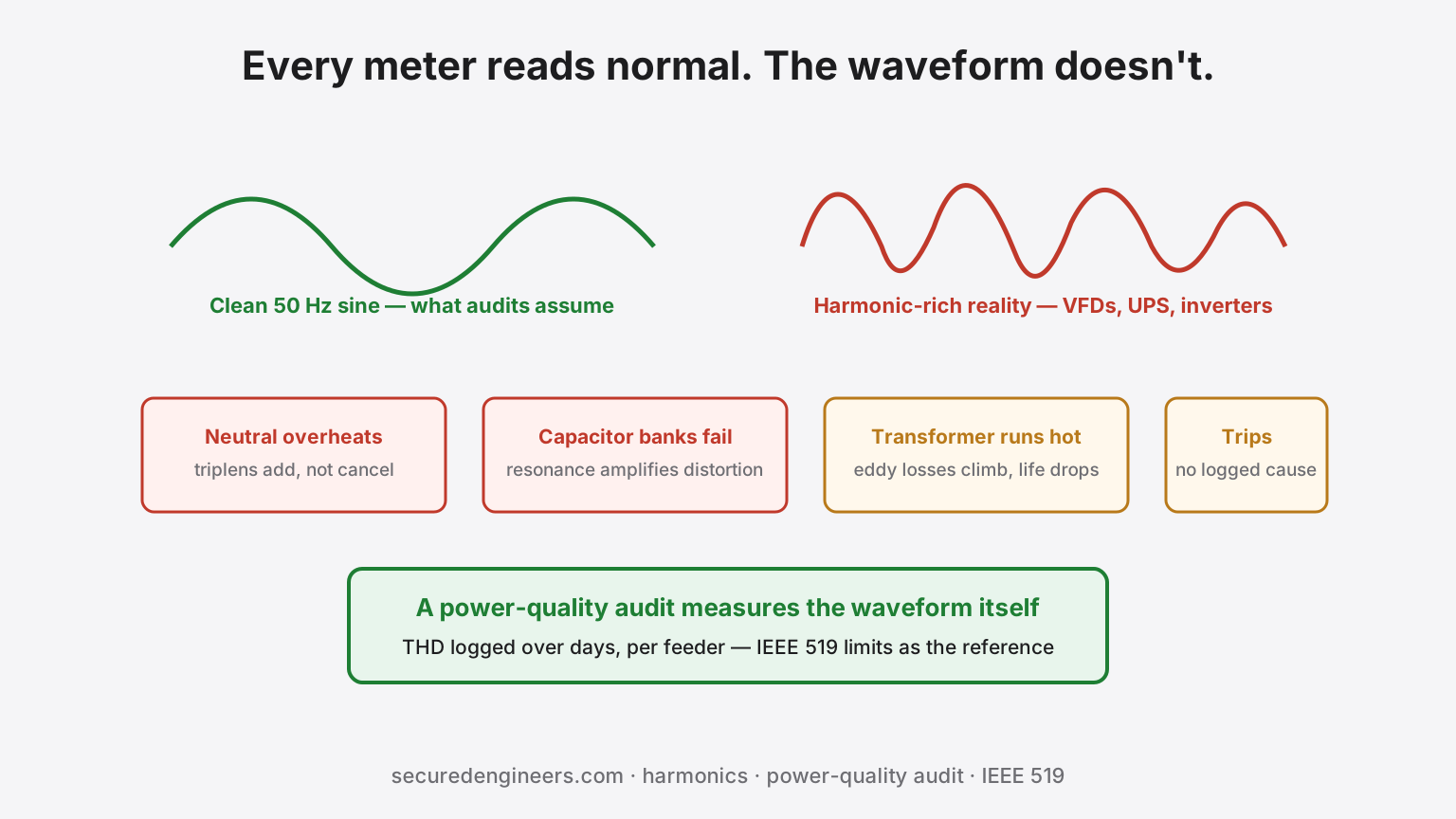
Every Meter Reads Normal. Your Neutral Is Still Overheating. That's What Harmonics Do.
VFDs, LED drivers, UPS units and solar inverters have quietly filled modern plants with non-linear loads — and the harmonic distortion they inject overheats neutrals and transformers, trips sensitive equipment and kills capacitor banks. A standard electrical audit won't see any of it; a power-quality audit is built to.
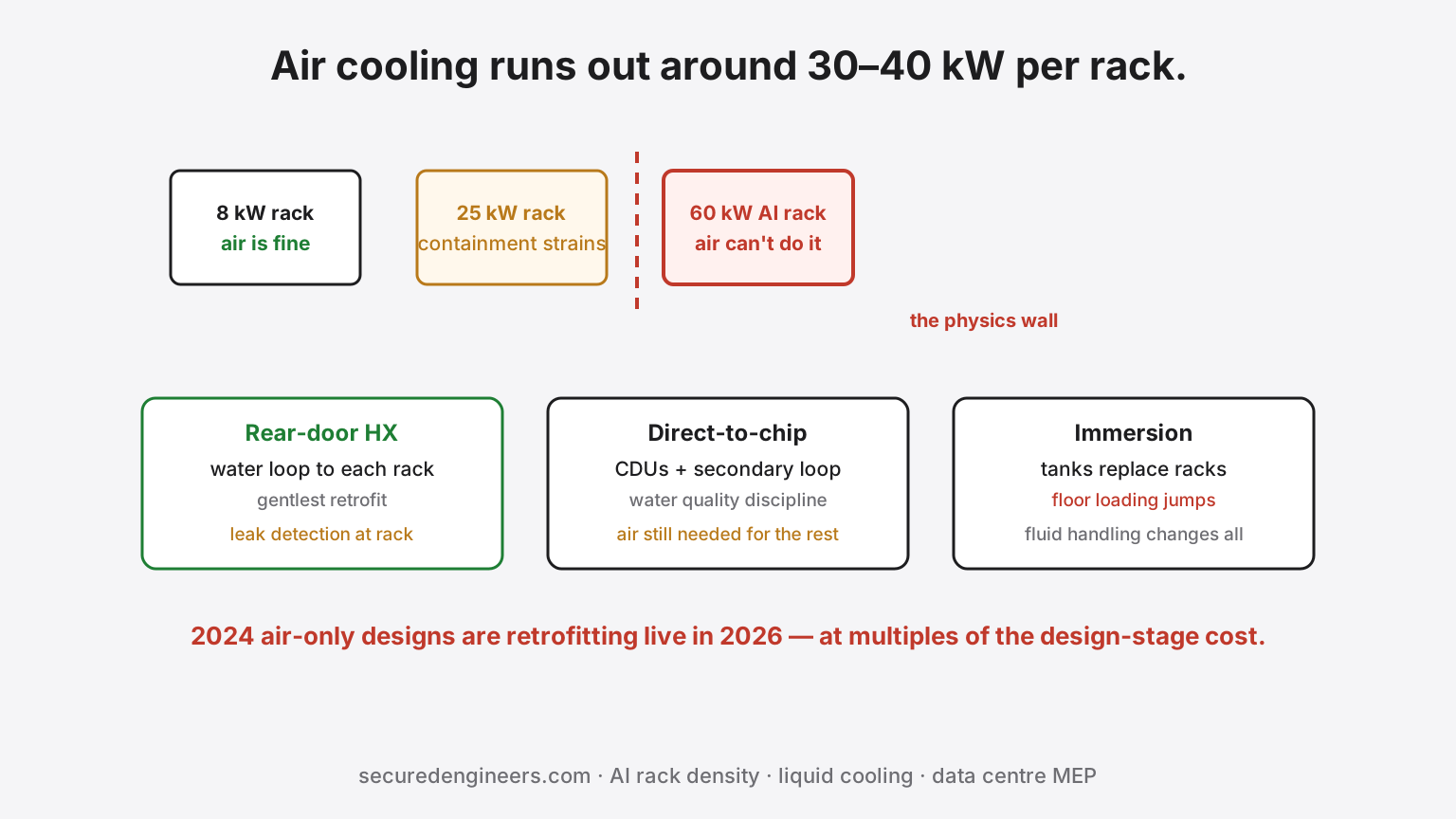
The Data Hall Was Designed for 8 kW Racks. The AI Cluster Wants 60. Air Can't Bridge That Gap.
AI-era rack densities have pushed past what air cooling can physically remove — beyond roughly 30–40 kW per rack, liquid stops being optional. What rear-door heat exchangers, direct-to-chip and immersion each demand from the building, and why Indian edge and colo sites built air-only in 2024 are retrofitting in 2026.
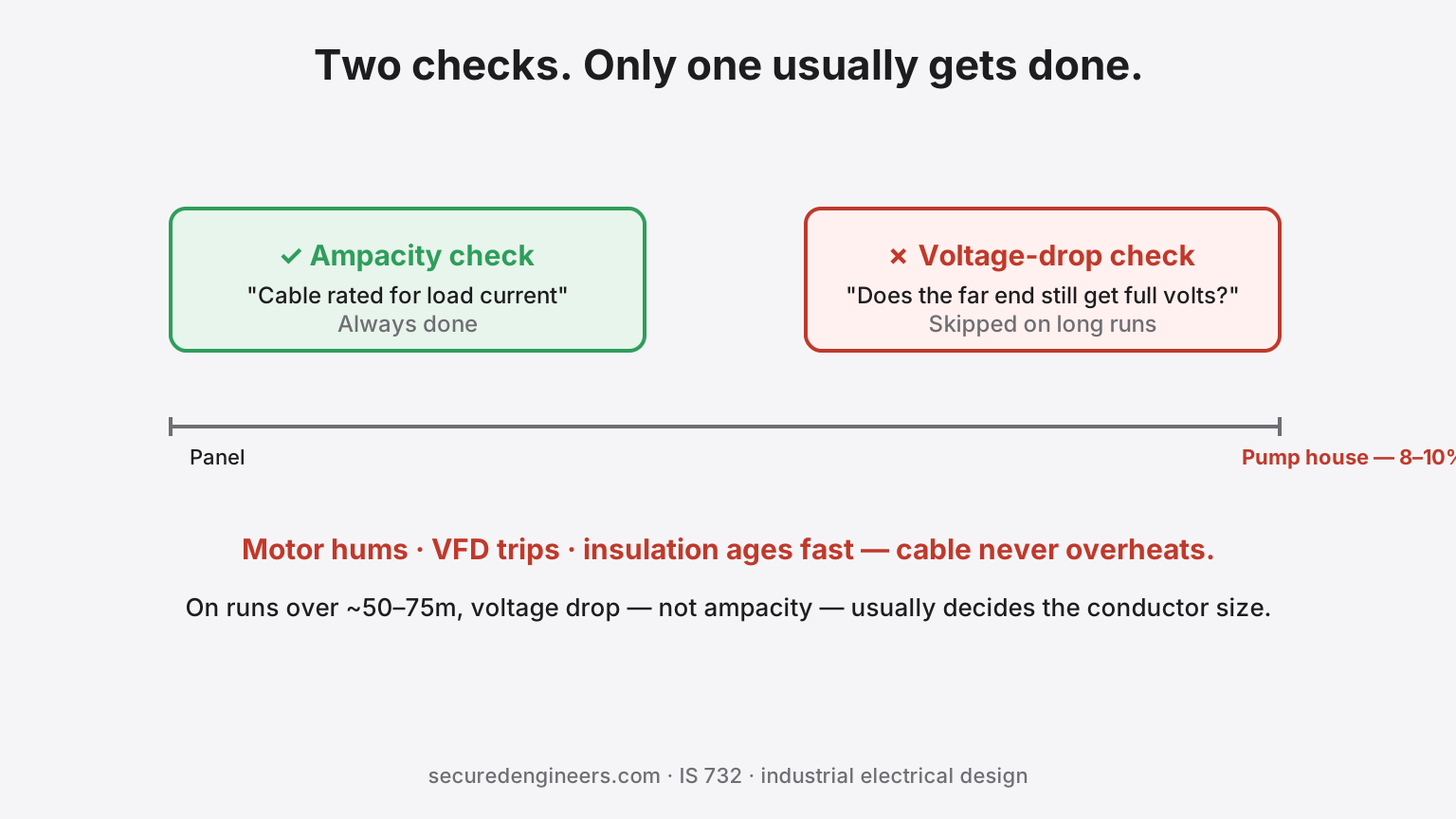
Cable Upgrade for Extra Load: The Four Checks That Decide the Size
Adding load to an existing feeder is decided by four checks, not one: installation conditions and derating, current capacity and voltage drop, short-circuit withstand, and the terminations and protection at each end of the cable.
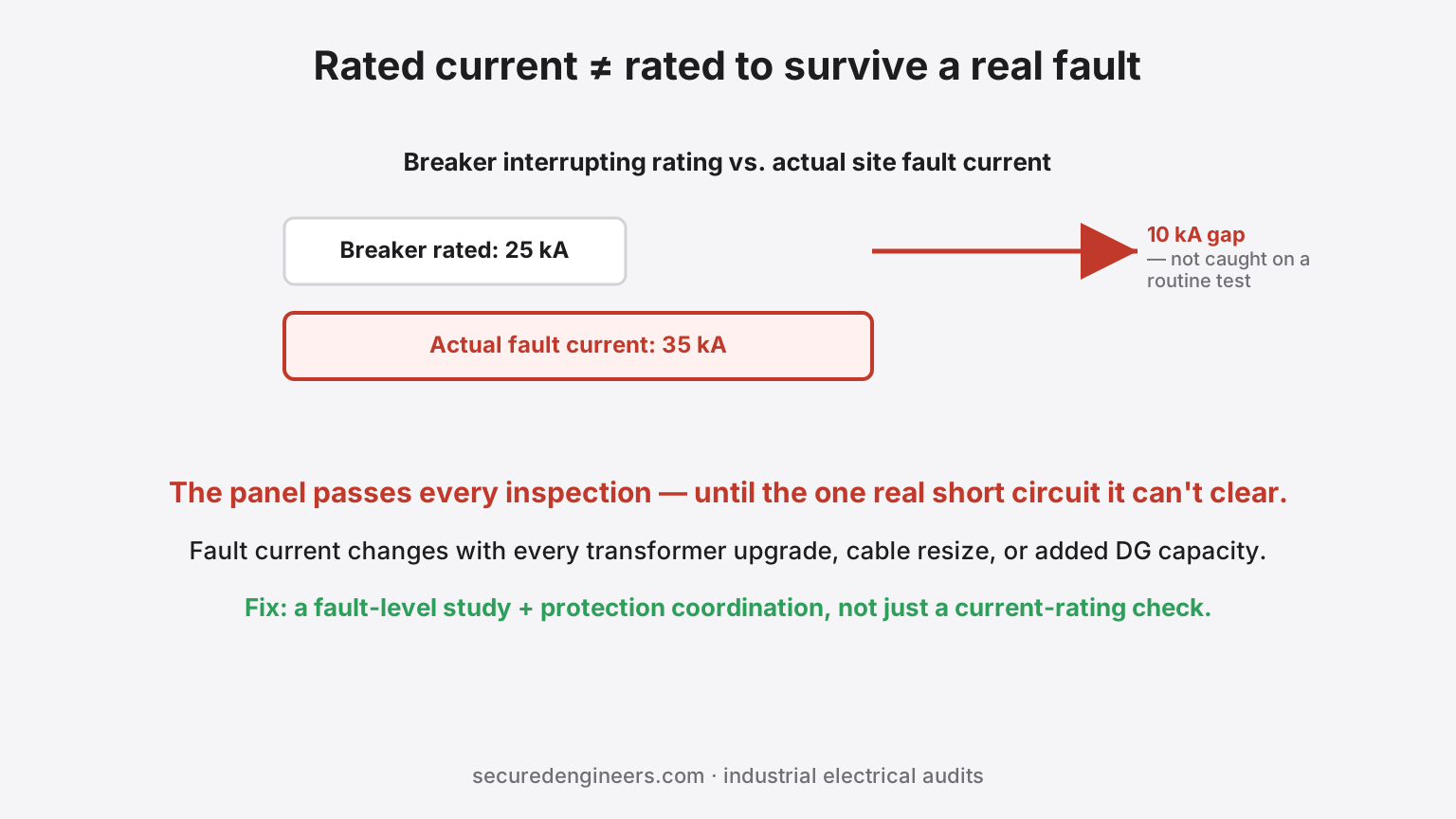
Your Panel Passed Inspection. Its Breakers Are Rated Below Your Actual Fault Current.
A breaker that trips fine on overload can still fail catastrophically on a real short circuit if its interrupting rating is below the site's actual fault level. Fault-level coordination is the study most factory panels never get — until an incident makes it mandatory retroactively.
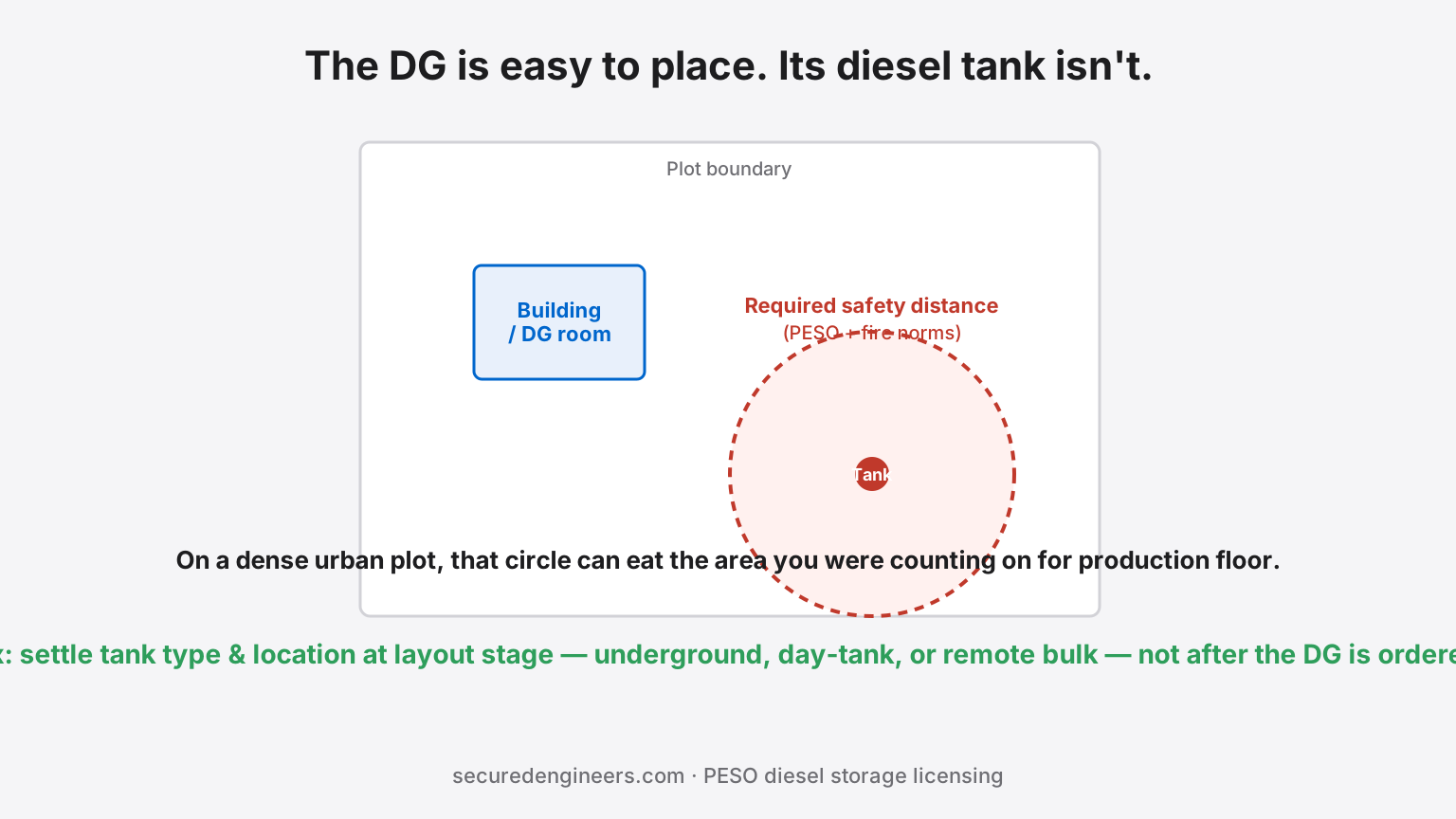
You Sized the DG. Nobody Sized the Safety Distance Its Diesel Tank Needs.
A DG set is easy to place; its diesel storage tank isn't. Safety-distance rules from the fire and PESO frameworks can push a tank — and everything around it — further from your building than the plot allows for. Decide tank type and location at layout stage, not after the DG is ordered.
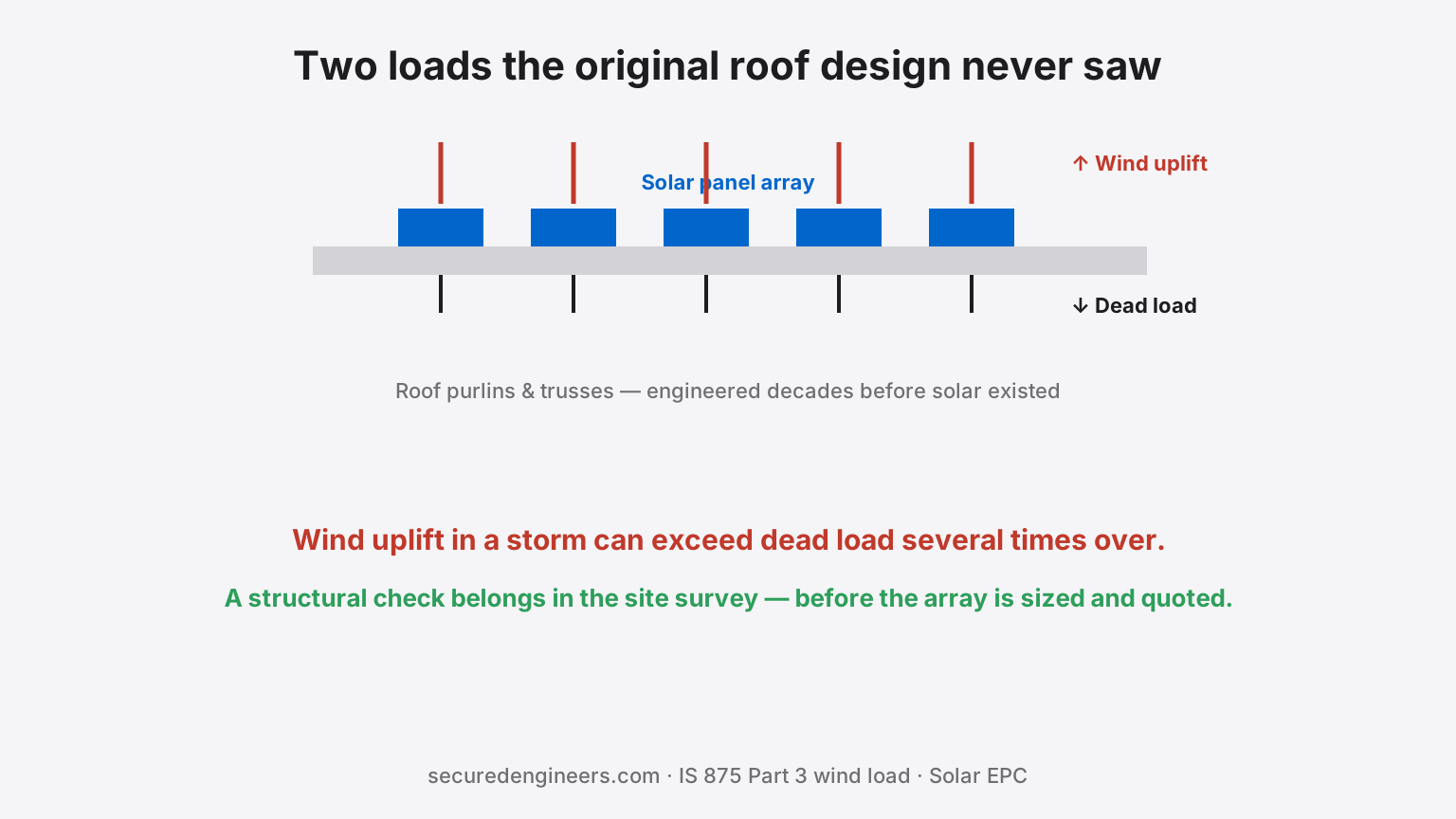
Can an Existing Factory Roof Take Solar? Four Checks Before the Quote
Whether an existing factory roof can take solar is settled by four checks before anyone fixes the kW: the roof's condition and remaining life, a structural engineer's assessment, the wind and fixing design, and how the array works with waterproofing and fire access.
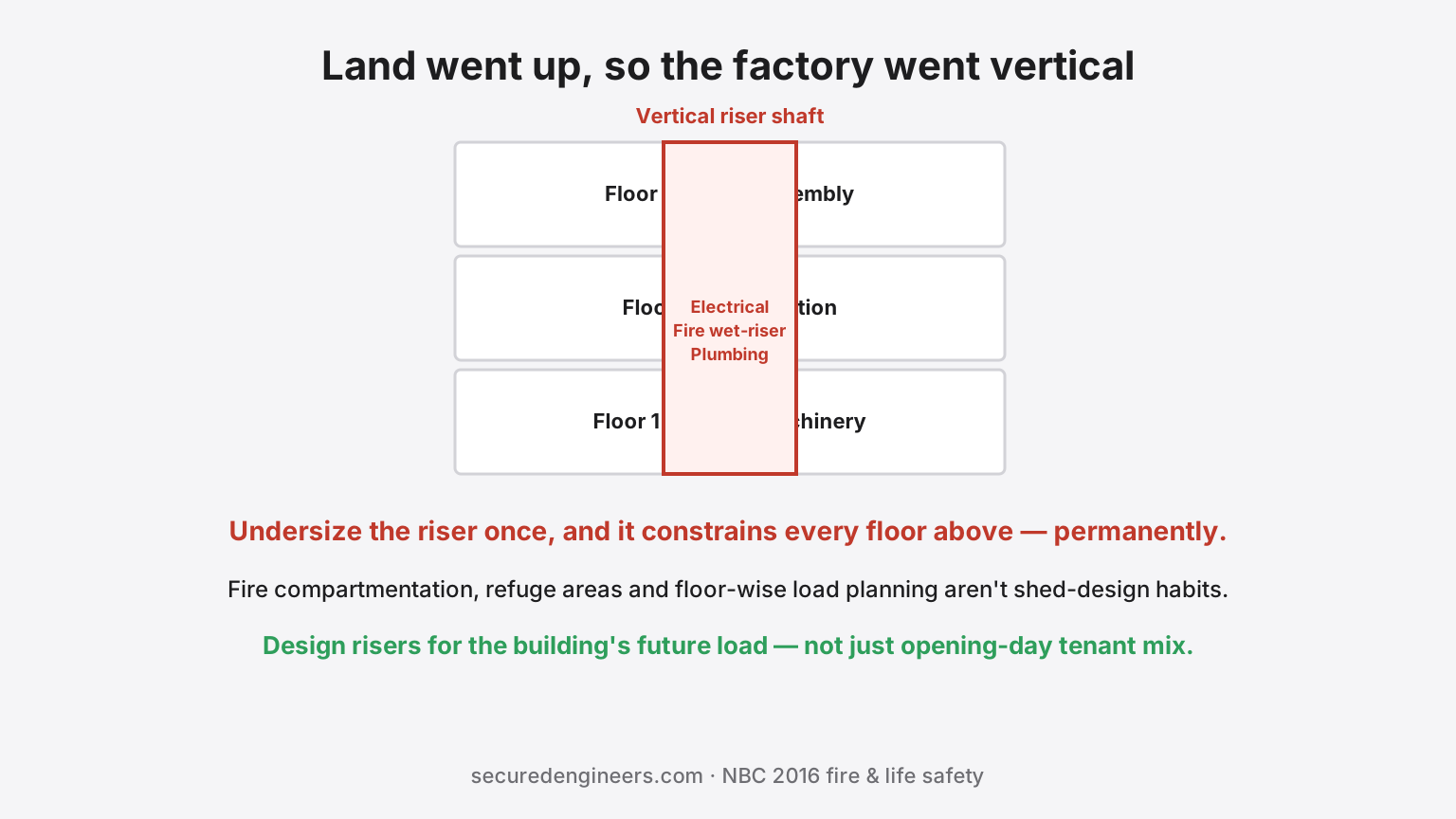
Land Got Expensive, So the Factory Went Vertical. The MEP Design Didn't Follow.
Multi-storey industrial buildings are becoming common as land prices push factories vertical instead of horizontal — but MEP design habits built for single-storey sheds don't automatically transfer. Fire compartmentation, vertical risers and floor-by-floor load all need rethinking.
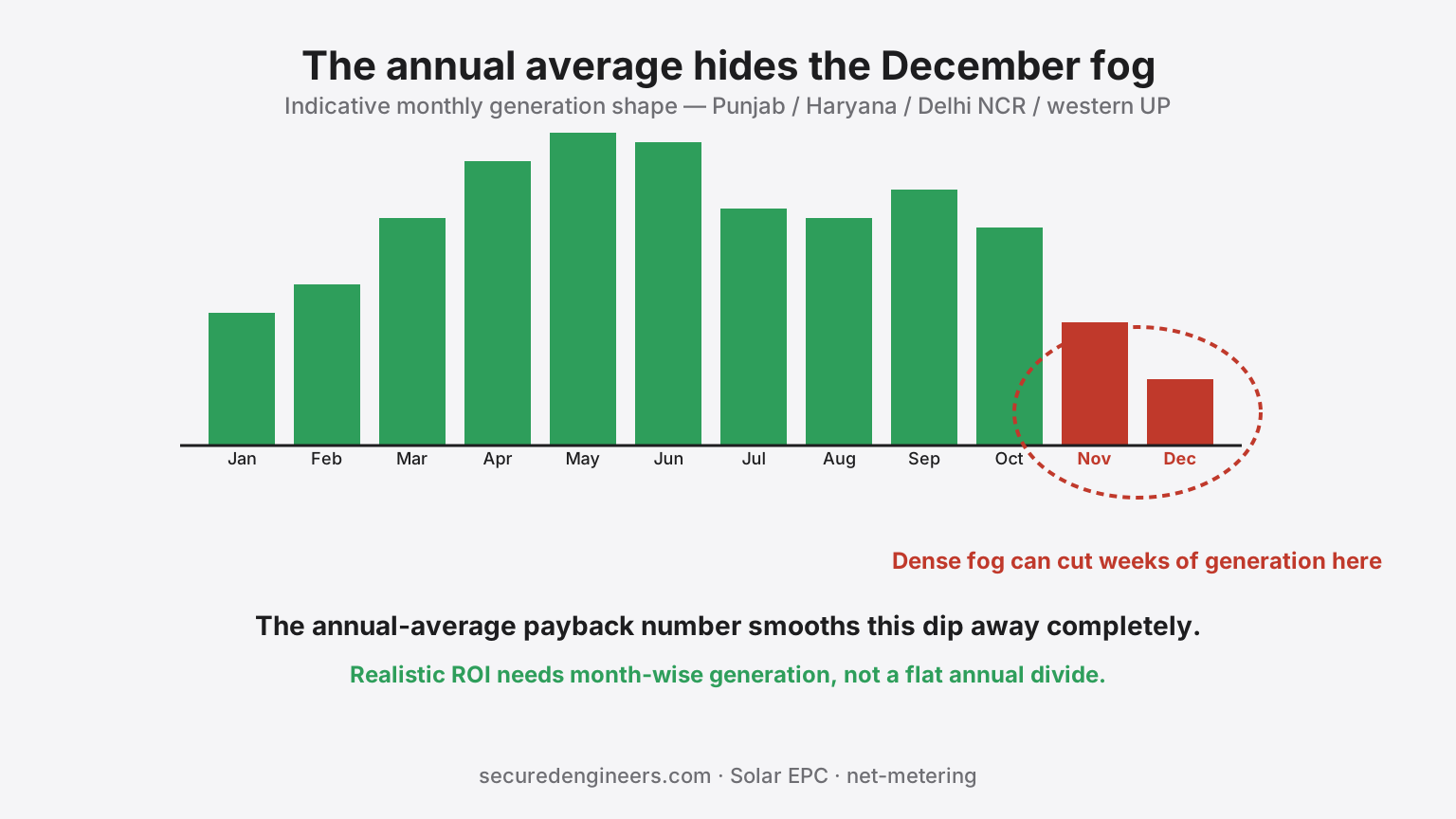
Your Solar ROI Model Assumed Average Sun. December in Punjab Isn't Average.
Rooftop solar payback models often use an annual average generation figure — but North India's dense winter fog belt (Punjab, Haryana, western UP) can cut December–January generation sharply for weeks at a time. Realistic ROI needs month-wise generation, not an annual average smoothed flat.
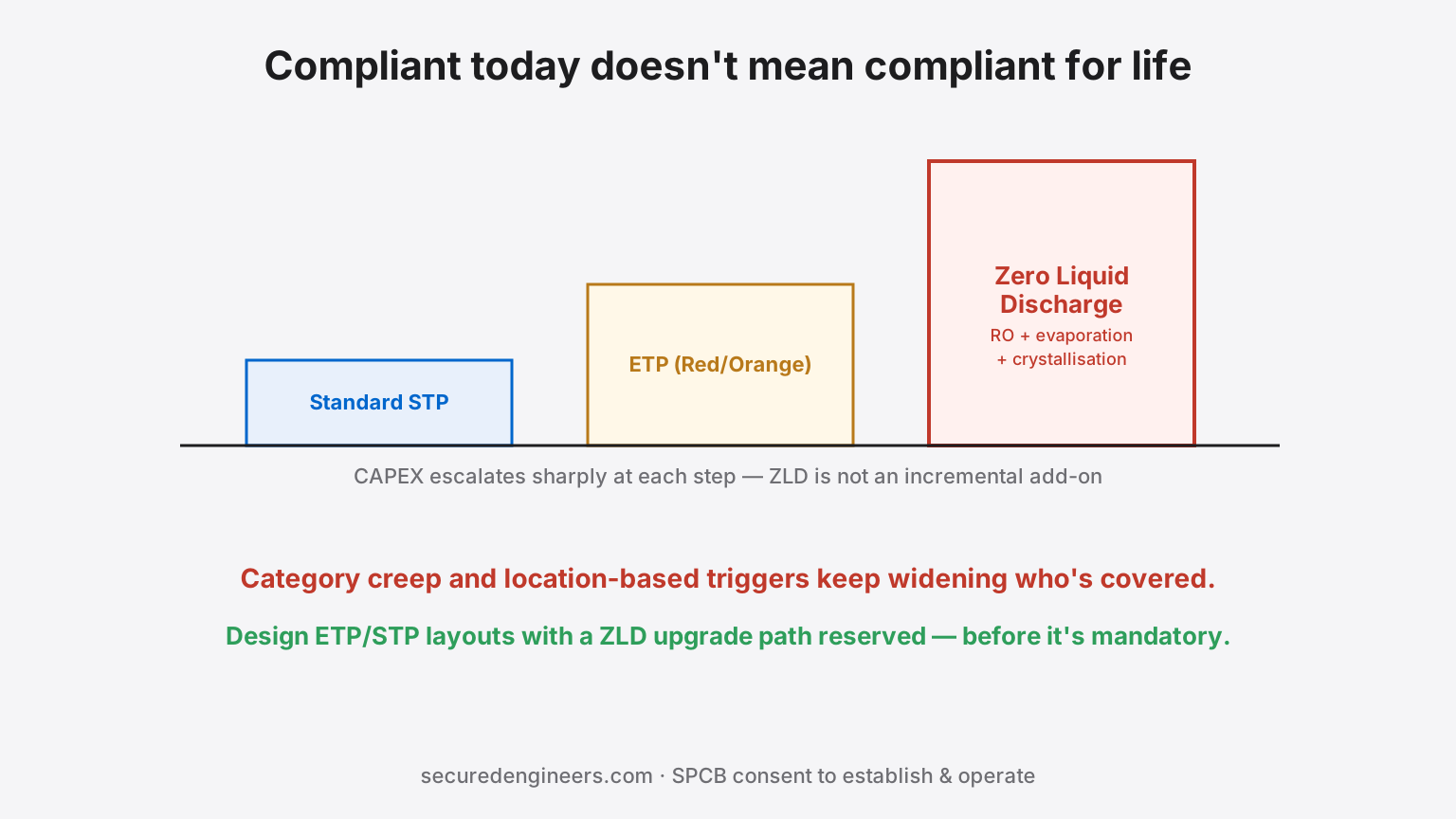
Your STP Was Compliant Last Year. ZLD Is Reaching More Categories Every Year.
Zero Liquid Discharge (ZLD) — recovering and reusing effluent instead of discharging any of it — started as a mandate for a handful of highly polluting sectors, but pollution control boards keep extending it to more industrial categories and locations. The CAPEX gap between a compliant STP and true ZLD is large enough to plan for years ahead.
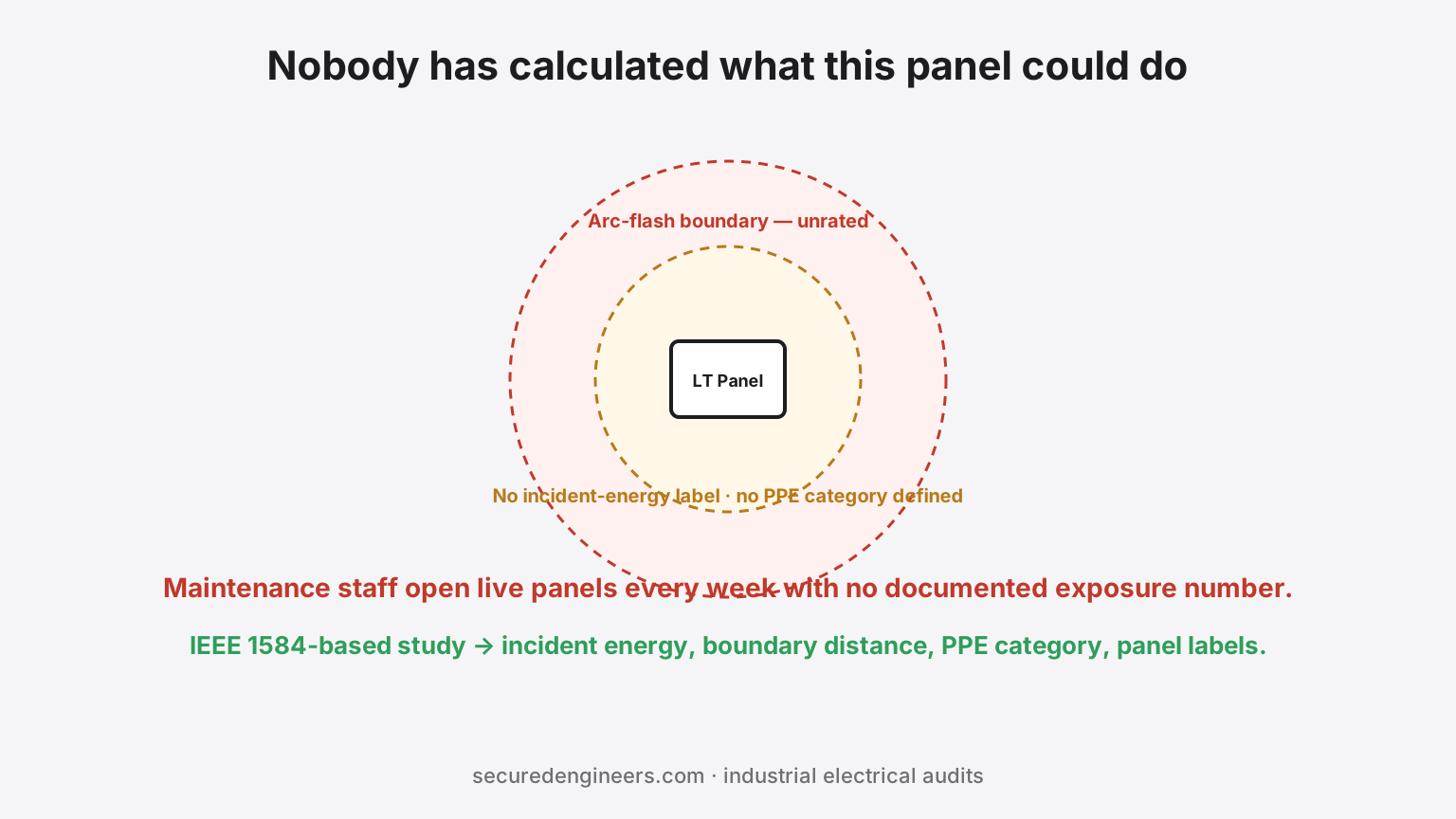
Your Electrician Opens That Panel Live Every Week. Nobody Has Calculated What It Could Do to Him.
Arc-flash — an explosive release of energy from a fault inside a live panel — is a well-documented, quantifiable risk in electrical safety practice worldwide. Indian factories routinely skip the study that quantifies it, leaving maintenance staff working on panels with no idea what the actual incident-energy exposure is.
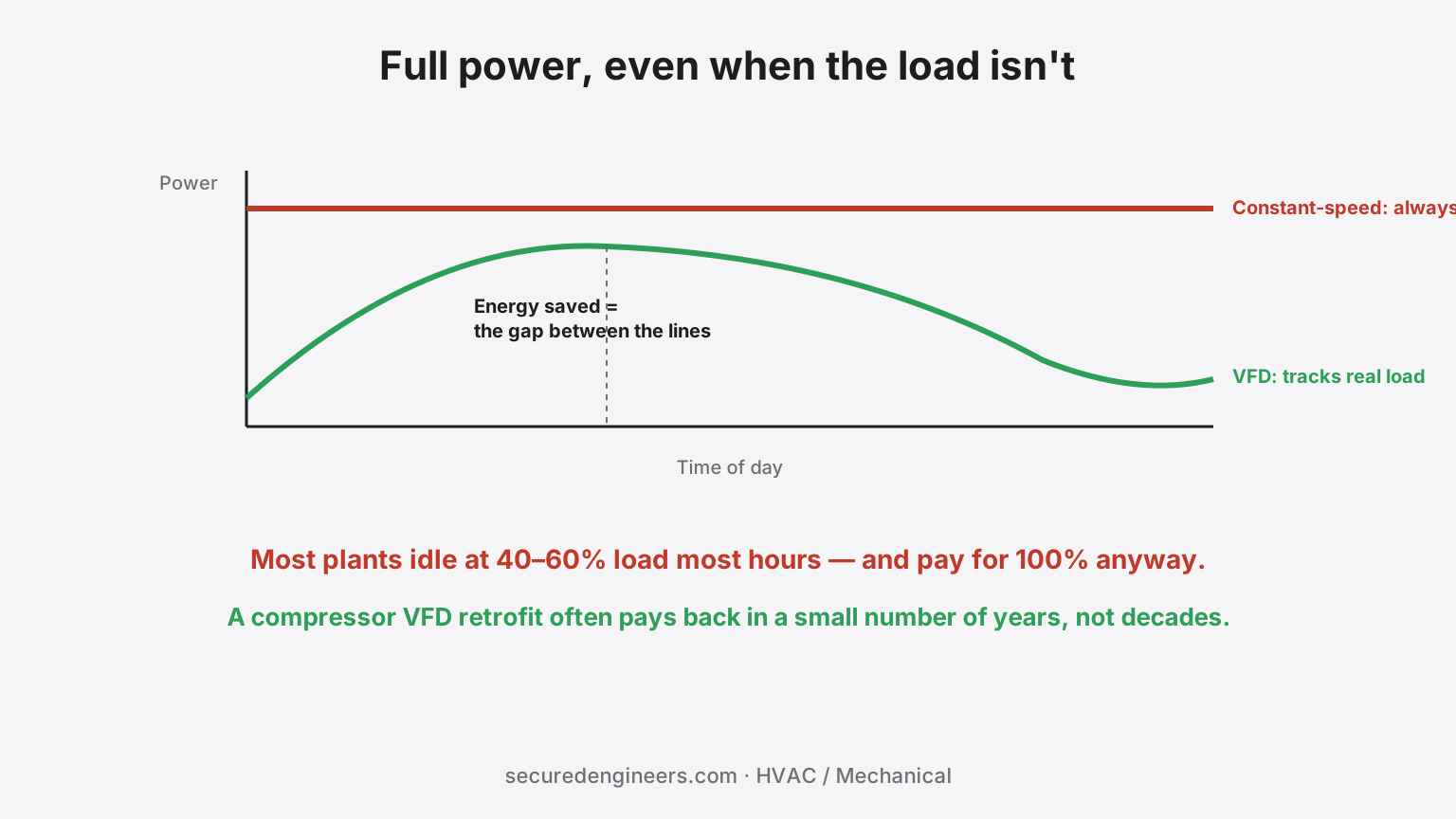
Chiller Retrofit Savings: Measure the Plant, Not Just the Compressor
A chiller retrofit pays back only on energy you can show you saved. Before choosing a compressor drive, a new chiller or pump and cooling-tower upgrades, fix the energy boundary, log the plant's part-load profile and agree how the savings will be verified.
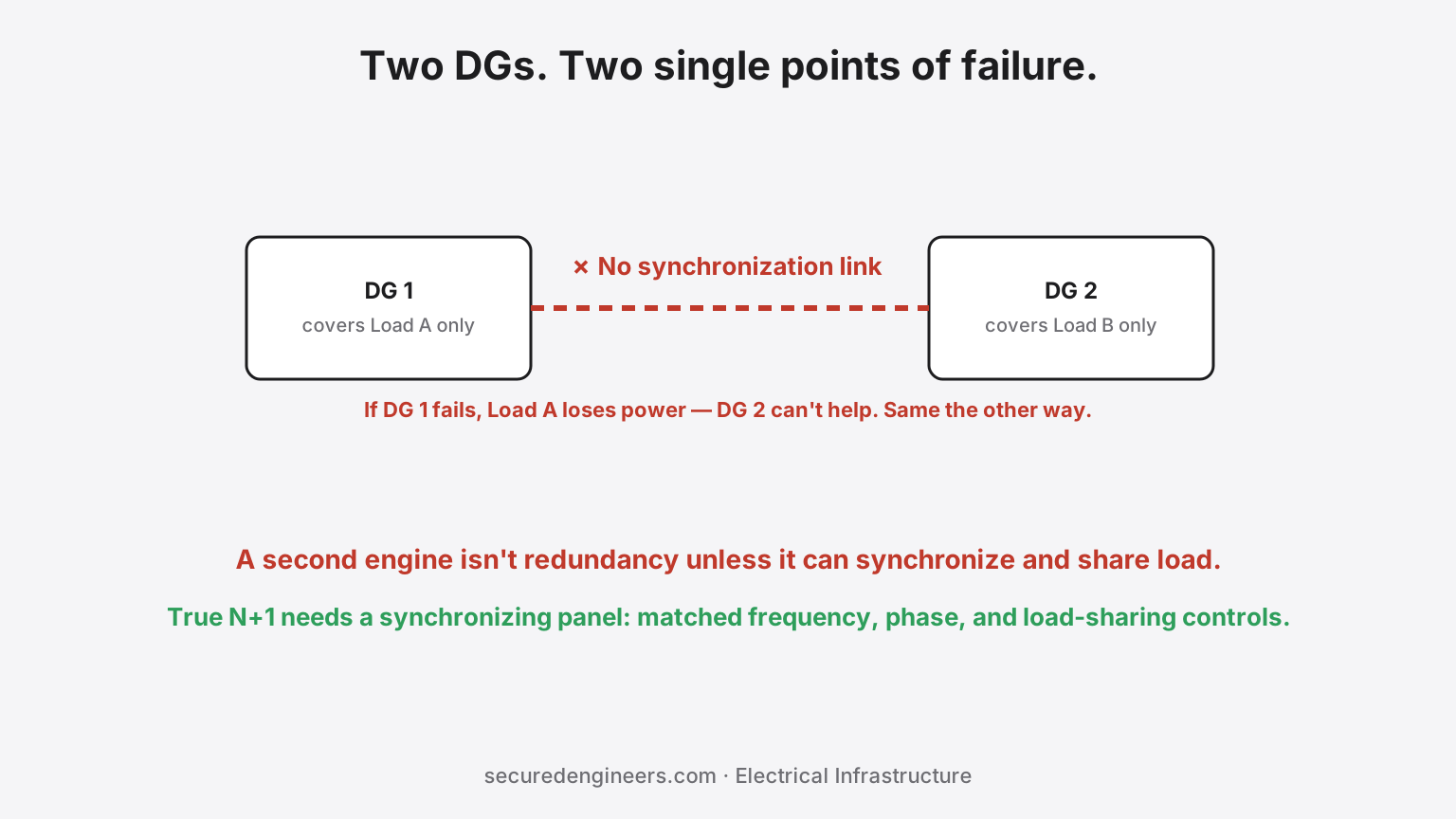
DG Expansion and Synchronisation: Set the Backup Boundary First
Adding a DG set for an expansion buys resilience only if the backup boundary is clear: which loads must stay on, what the sets can accept in one step, how they synchronise and share load, what is shed when one trips — and witnessed tests that prove it.

The Building Code Changed in May 2026. Your Consultant's Drawings Didn't.
The Bureau of Indian Standards has replaced NBC 2016 with the National Building Construction Standards 2026 — moving from a prescriptive rulebook to a performance-based framework, and relaxing the fire-safety threshold for residential high-rises from 15 metres to 24 metres. Most ongoing projects are still being designed against the old code by habit. Here's what actually changed and why "performance-based" is harder to get away with cutting corners on, not easier.

The Rain Was Predictable. The Waterlogging Was a Design Choice.
July 2026's monsoon has brought building collapses in Delhi and Pune, a Pimpri-Chinchwad structure crushed by a garbage mound loosened by rain, and the same waterlogged roads reappearing in the same low-lying pockets they flood every single year. "This happens every year" is usually the sign of a stormwater and site-grading decision made once at design stage, never revisited, and now compounding with every monsoon since.

Skip the Subsidy, Skip the Rules? PM Surya Ghar's Module Exemption, Explained.
MNRE's recent clarification lets PM Surya Ghar applicants who voluntarily forgo the subsidy use non-DCR solar modules, with some residential consumers also getting exemptions from ALMM List-II requirements. That sounds like more freedom — and for the right buyer, it is. For most homeowners, it's a trade-off between a smaller upfront cost and a set of protections the subsidy scheme was built to guarantee.
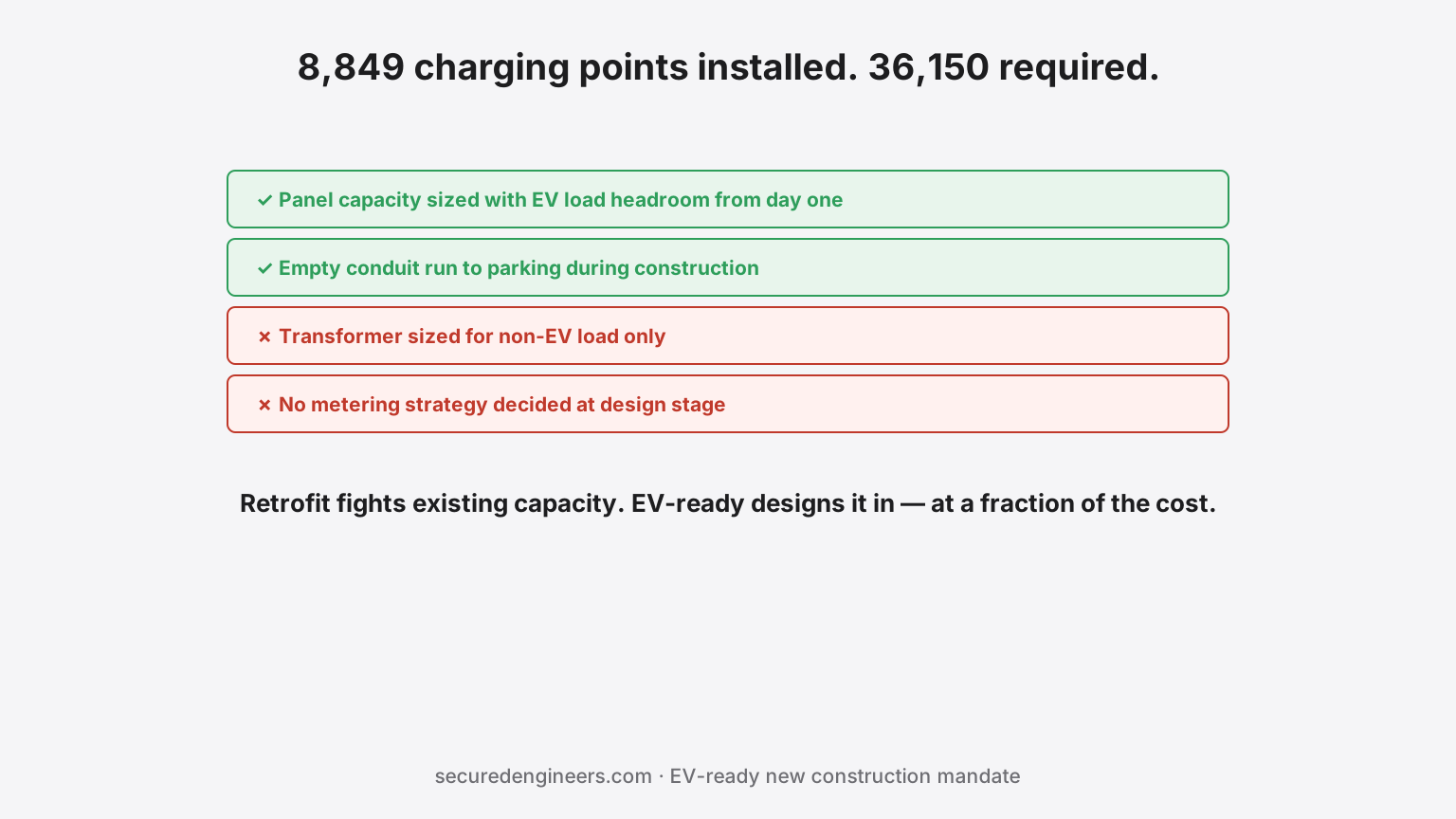
The Building Isn't Open Yet. The EV Mandate Already Applies.
Delhi's draft EV Policy 2026 requires all new infrastructure projects to be EV-charging ready from day one — not retrofitted later, designed in from the start. Delhi has roughly 8,850 charging points against a stated need of over 36,000, and the policy is closing that gap by pushing the requirement upstream, onto every new building's electrical design. If you're breaking ground on a new project, this isn't an optional add-on anymore.
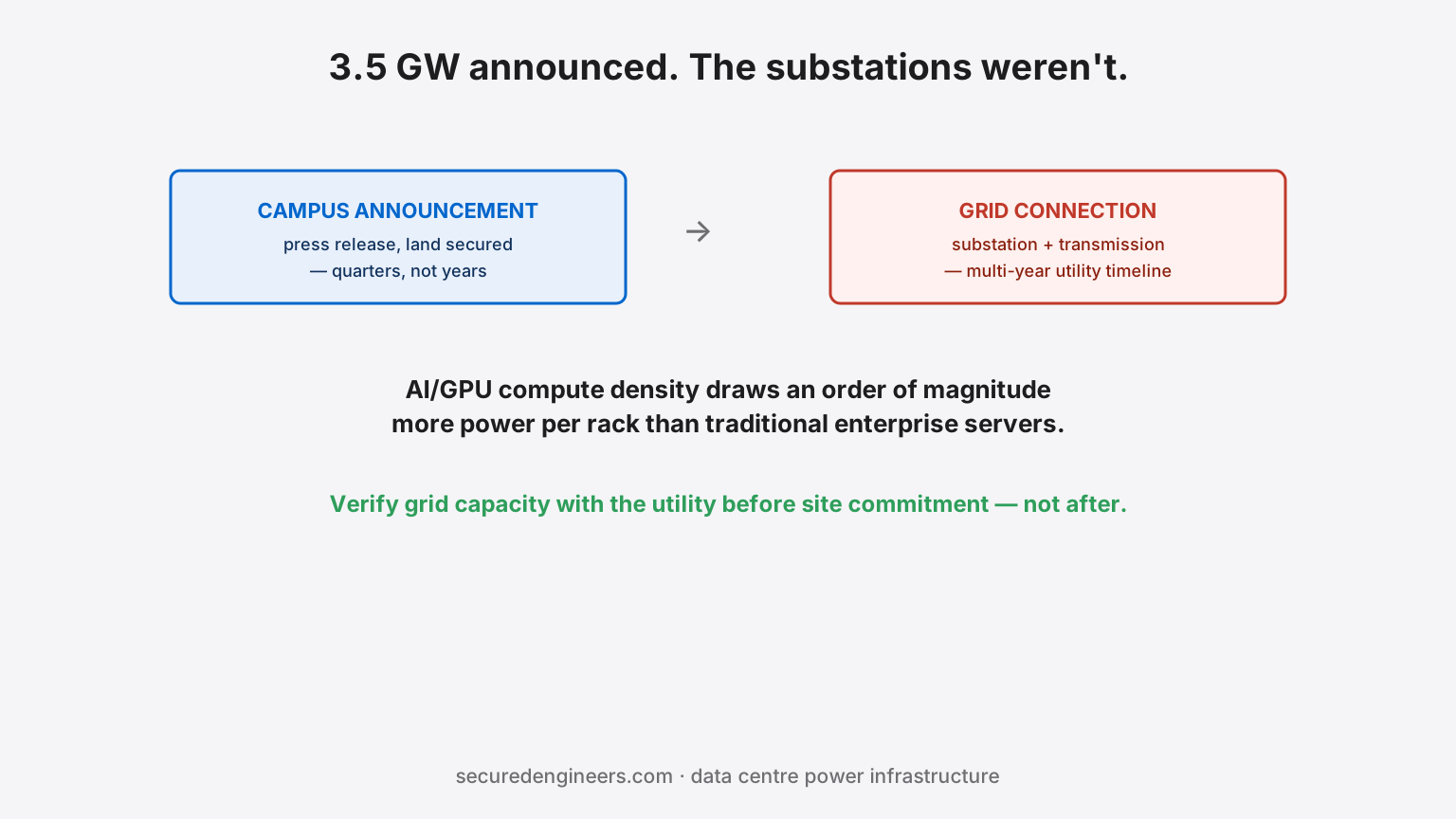
3.5 GW of Data Centres Got Announced. The Substations Did Not.
India's data centre capacity is projected to grow 30% in 2026 alone, with roughly 30 large projects announced between March 2025 and April 2026 adding 3.5 GW of planned capacity — much of it concentrated in Andhra Pradesh and Telangana's AI-centric mega campuses. Announcements move fast. Grid and substation infrastructure doesn't. The gap between the two is where data centre projects actually stall.
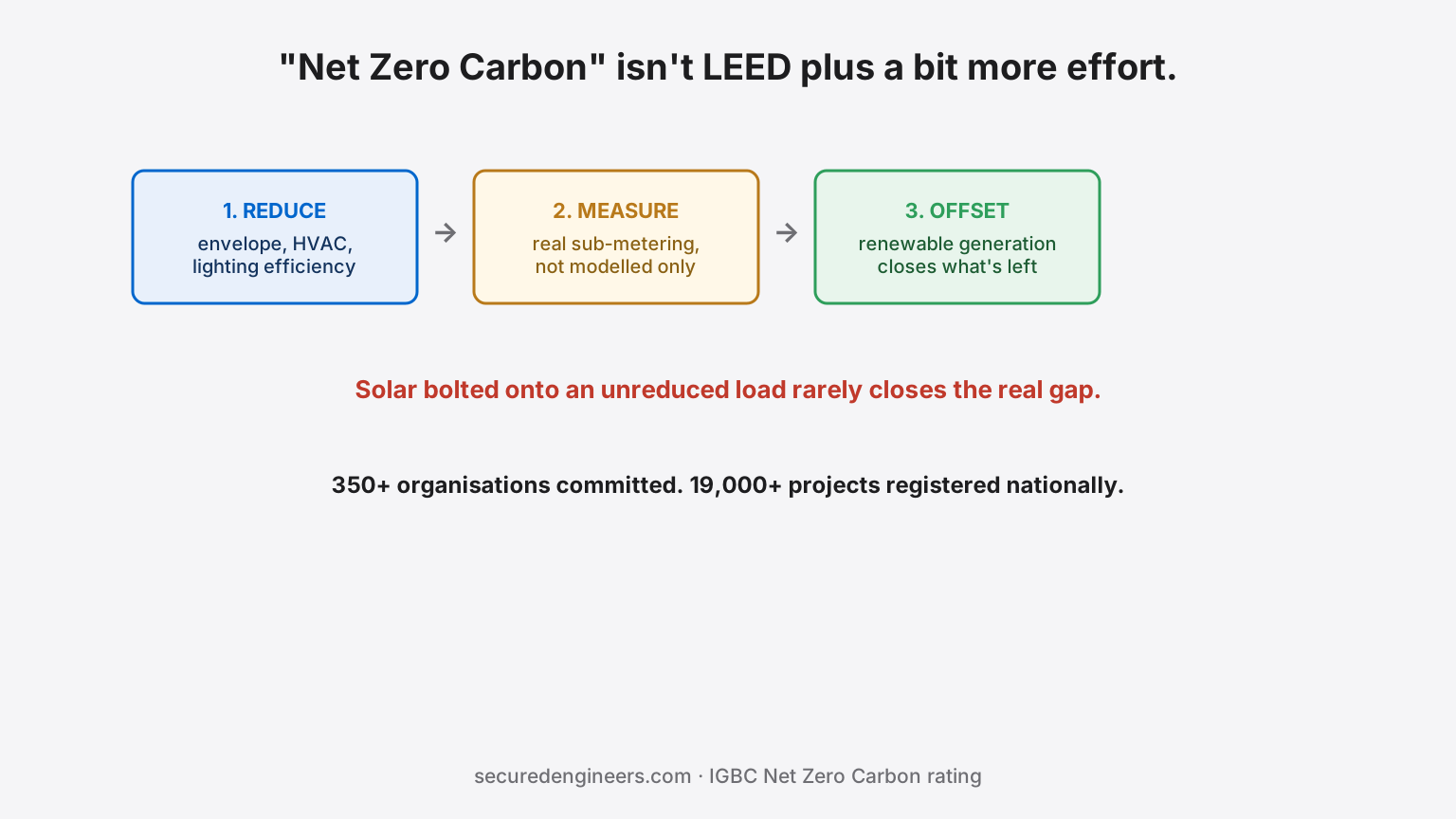
"Net Zero Carbon" Sounds Like a Certificate. It's Actually a Design Constraint.
IGBC's Net Zero Energy, Water, Waste and Carbon rating systems now have over 350 committed organisations chasing them, and the council has registered over 19,000 green building projects covering 15.74 billion square feet nationally. But Net Zero Carbon is a materially different, harder brief than a general green-building or LEED certification — it demands MEP systems designed against an actual carbon-accounting target, not a checklist of efficient-equipment credits.
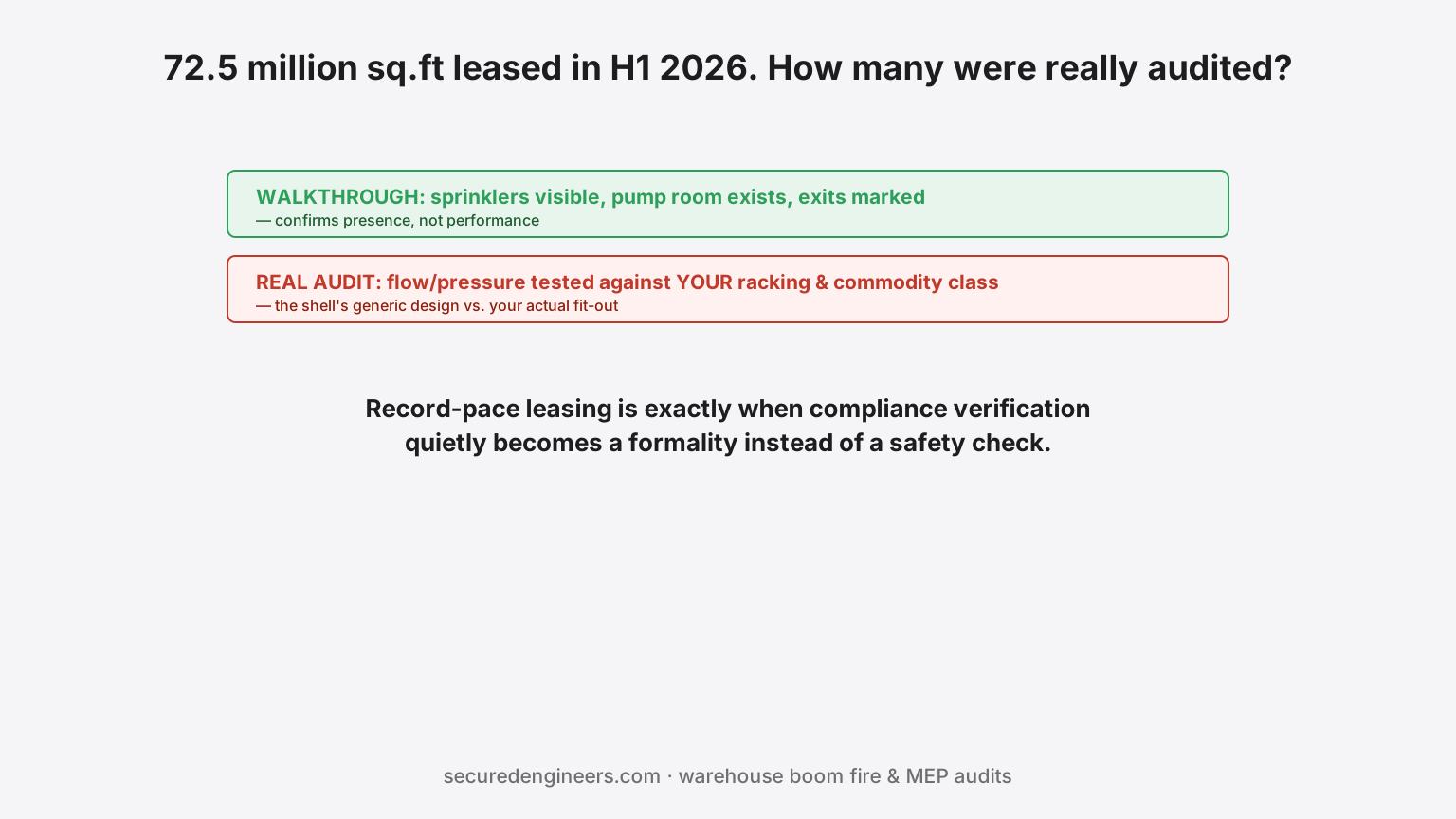
72.5 Million Square Feet Leased This Year. How Many Passed a Real Fire Audit?
India's industrial and warehousing sector transacted 72.5 million square feet in H1 2026 alone, up 29% year-on-year, with Grade A vacancy tightening fast. That pace is exactly what pushes fire and MEP compliance into the background — developers building to lease as fast as possible, operators moving in on a deadline, and full compliance audits treated as a formality to close rather than a genuine safety check.
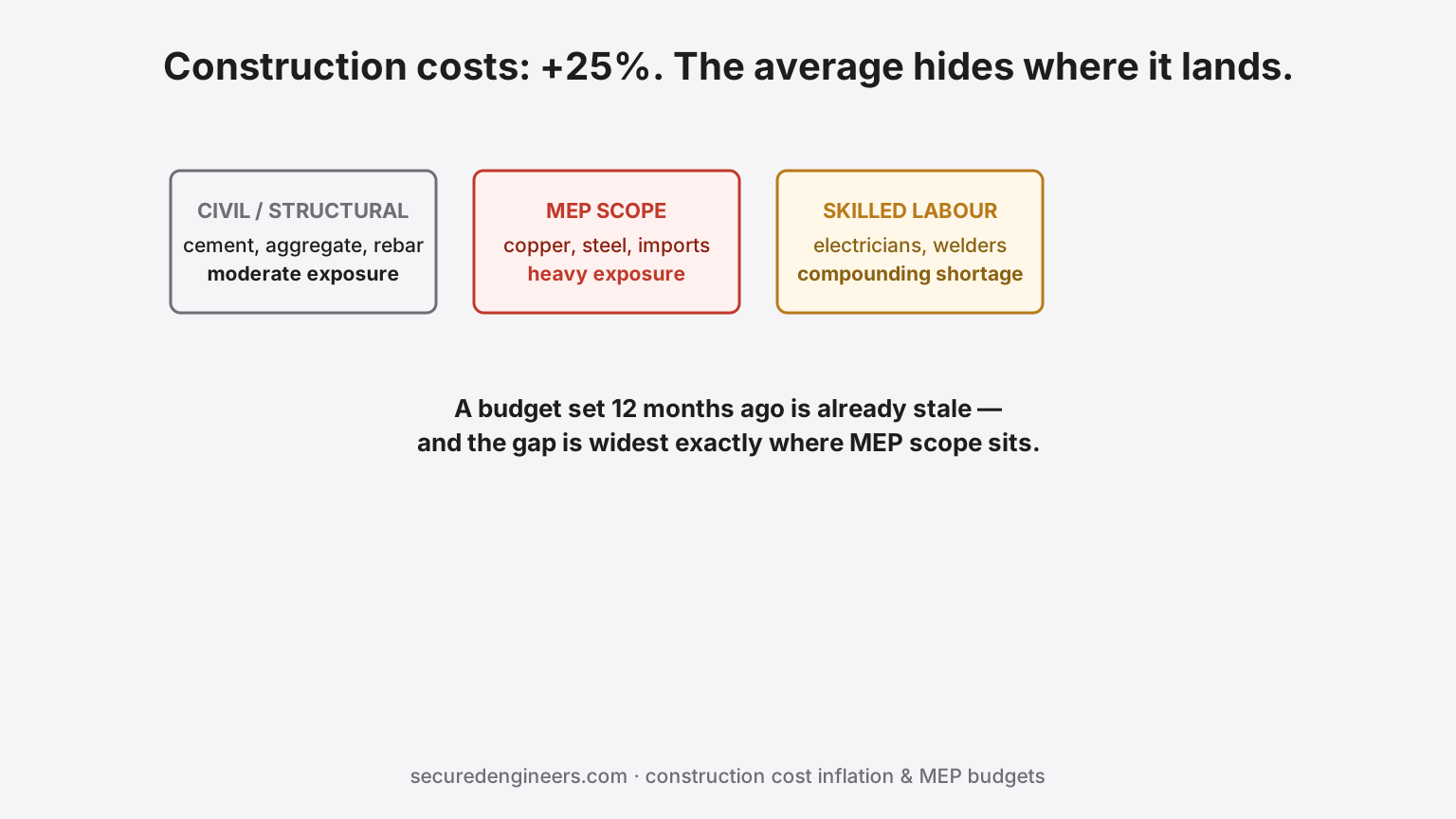
The Headline Says 25% Costlier. Nobody Says Which 25%.
India's construction sector has absorbed a widely reported 25% cost spike, forcing a cyclical moderation across the market. That number gets quoted at the project level, but it doesn't land evenly — MEP scopes, with their heavy exposure to copper, steel, and imported components, are absorbing a disproportionate share of that inflation, and budgets set even a year ago are already stale.
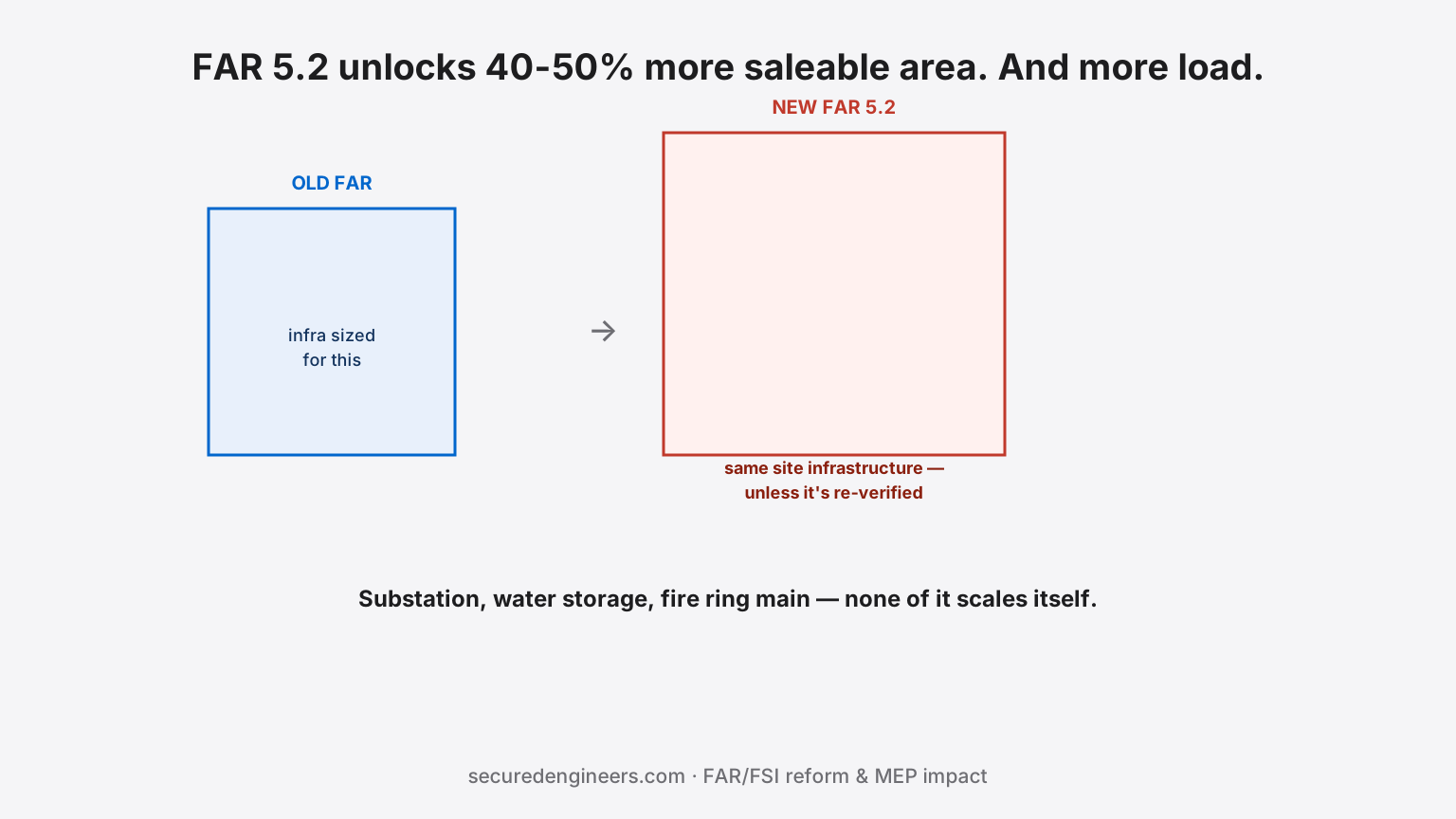
More Floor Area Ratio Sounds Like a Land Win. It's Also an MEP Redesign.
Karnataka's February 2026 reform permits FAR up to 5.2 on 30-metre roads — 40-50% more saleable area in Bengaluru — while Mumbai's expanded high-rise auto-clearance now covers buildings to 180 metres. Higher approved density is genuinely good news for a project's economics. It's also a direct, often underestimated input into every MEP system's sizing, because more floor area on the same plot means more load on the same site infrastructure.
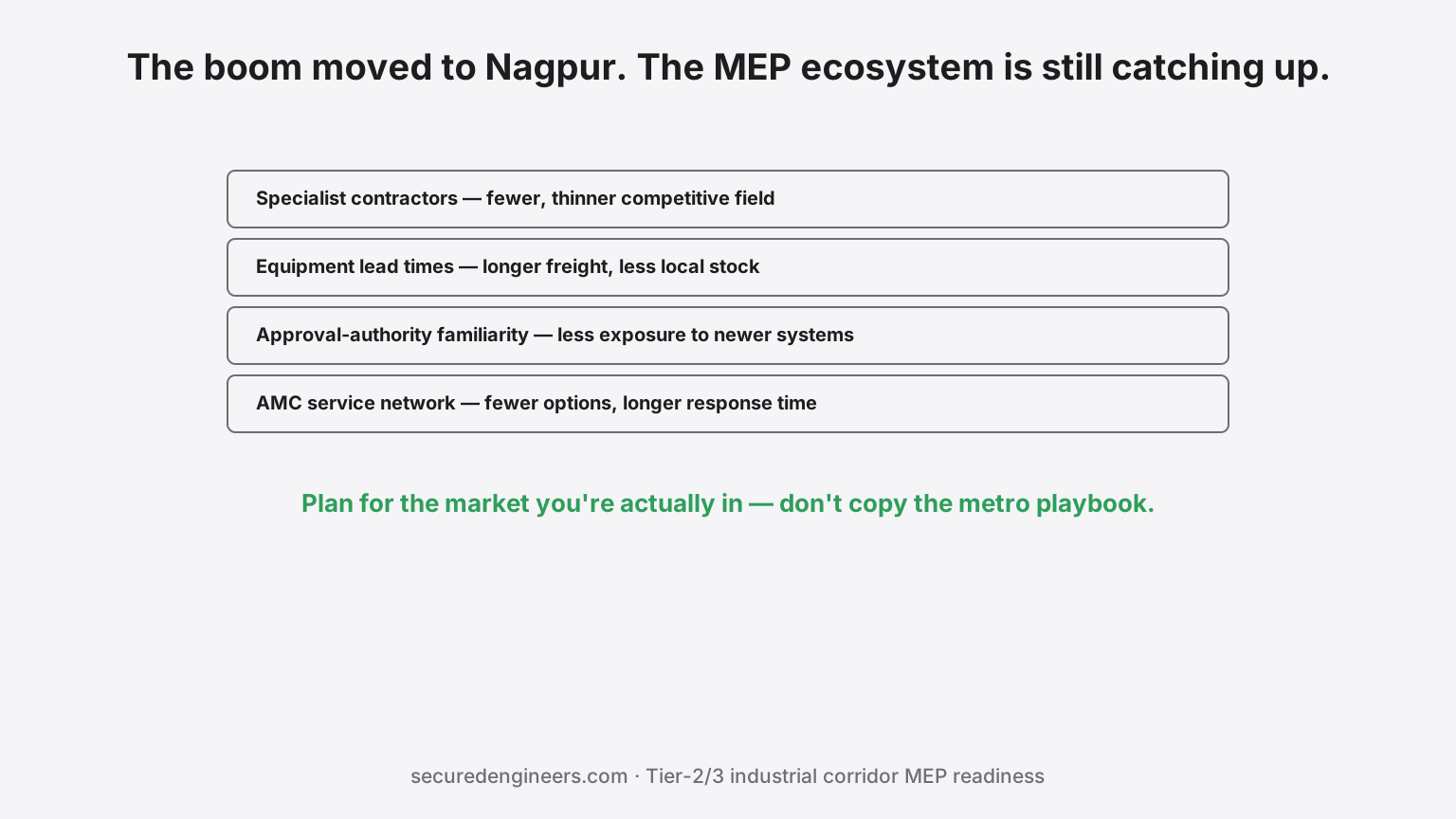
Your Warehouse Is in Nagpur Now. Your MEP Contractor Options Still Aren't.
Rooftop solar adoption, warehousing absorption and industrial corridor investment are all shifting decisively toward Tier-II and Tier-III cities — Lucknow, Nagpur, Surat, Varanasi and the Delhi-Mumbai Industrial Corridor markets are the new growth frontier. But the mature MEP contractor base, specialist vendor network and experienced approval-authority relationships that metro projects take for granted haven't relocated at the same pace. That gap is where Tier-2/3 projects actually lose time and money.
Ready to start your project?
Get a free consultation and quote. We design, prepare and file your approvals, and execute — you deal with one team.
Related guides
- The Chiller Gave Three Weeks of Warning Before It Failed. Nobody Was Listening.
- A Plant Down 8% Looks Exactly Like a Plant Working Fine.
- The Site Is Insured. The Chiller That Failed on Test Is Probably Not.
- You Paid for 4,200 Metres of Cable. The Drawings Account for 3,600.
- Supplying a PSU? Your Invoice Now Has to Go on TReDS.
- Your MEP Contractor Left. So Did the Only People Who Understood the System.
Related on this site
- termBOQ (Bill of Quantities)
- termPM Surya Ghar Subsidy
- termOpen Access (Solar)
- serviceO&M & Performance (Solar EPC)
- serviceCCTV & IP Video Surveillance (Low Voltage / ELV)
- calculatorMEP Renovation Budget Calculator
- calculatorFire Noc Calculator
- buyer's guideHow to Compare MEPF Quotations
- guideFactory licence and DISH approval
- guideCTE/CTO pollution consent